 Retro Replay Retro Replay gaming reviews, news, emulation, geek stuff and more!


Retro Replay Review
Gameplay
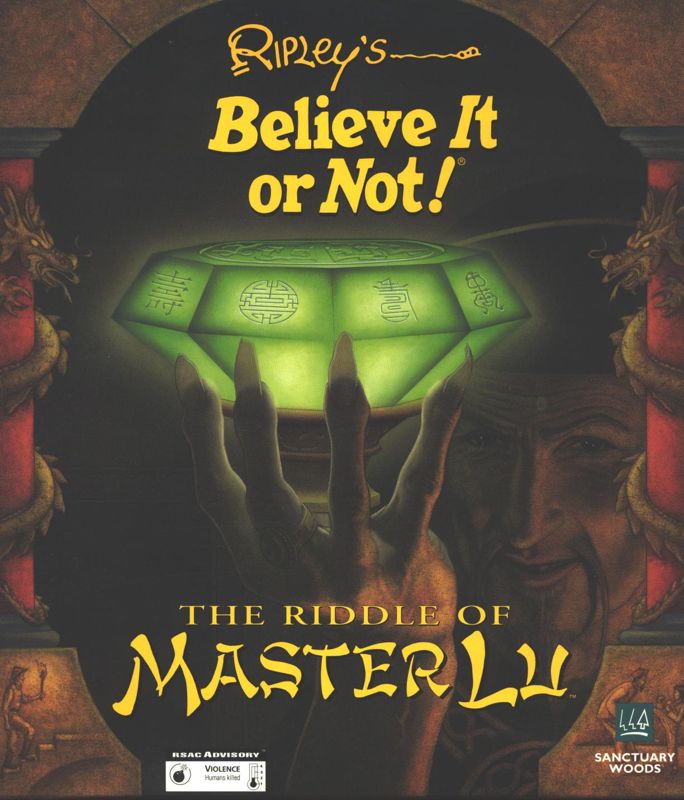
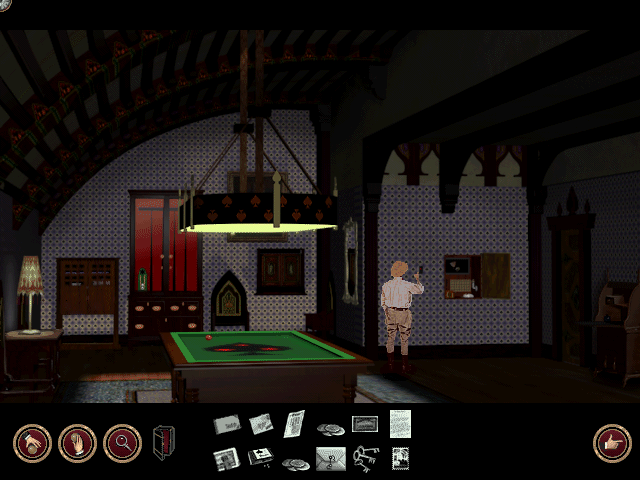
Ripley’s Believe It or Not!: The Riddle of Master Lu leans heavily into the classic point-and-click adventure paradigm, offering a series of interconnected inventory puzzles and dialogue challenges. You’ll spend much of your time clicking through richly detailed environments—ancient temples, busy Egyptian marketplaces, and the winding corridors of the Forbidden City—searching for clues, hidden objects, and keys to the next stage of the mystery. The interface is intuitive for its era, with simple cursor icons that denote actions like “look,” “talk,” and “use,” making it accessible even if you’re new to retro adventures.
(HEY YOU!! We hope you enjoy! We try not to run ads. So basically, this is a very expensive hobby running this site. Please consider joining us for updates, forums, and more. Network w/ us to make some cash or friends while retro gaming, and you can win some free retro games for posting. Okay, carry on 👍)
One of the game’s primary draws is its puzzle variety. While some tasks demand careful observation—spotting patterns in wall carvings or decoding cryptic manuscripts—others are more inventory-centric, forcing you to experiment with combining items in unexpected ways. Although a handful of puzzles can feel obtuse or linger too long without clear guidance, most challenges strike a satisfying balance between brain-teasing and reward. Frequent dialogues with key characters also break up the inventory grind, providing fresh context and occasionally opening new puzzle branches.
In addition to environmental exploration, the inclusion of full-motion video cutscenes—presented in small inset screens—adds a cinematic flair. These live-action snippets, while modest by today’s standards, heighten immersion by showing Robert Ripley and Mei Chen in crucial story beats. Your choices during conversations can steer the timing of when and how these scenes trigger, giving a slight sense of agency beyond simple puzzle solving. Overall, the gameplay pacing is deliberate, encouraging patience and close inspection rather than rapid progression.
Graphics
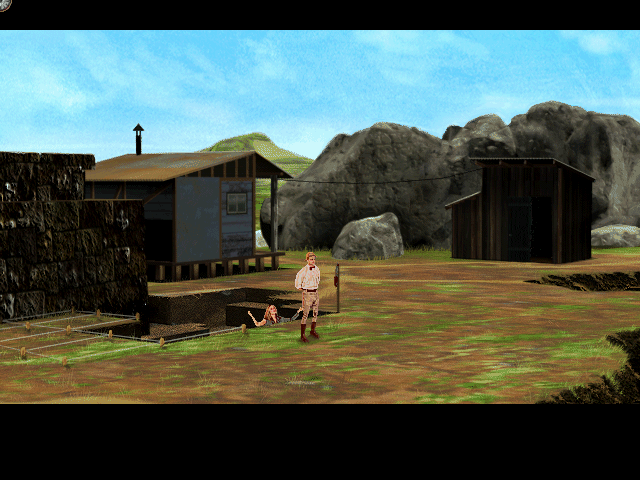
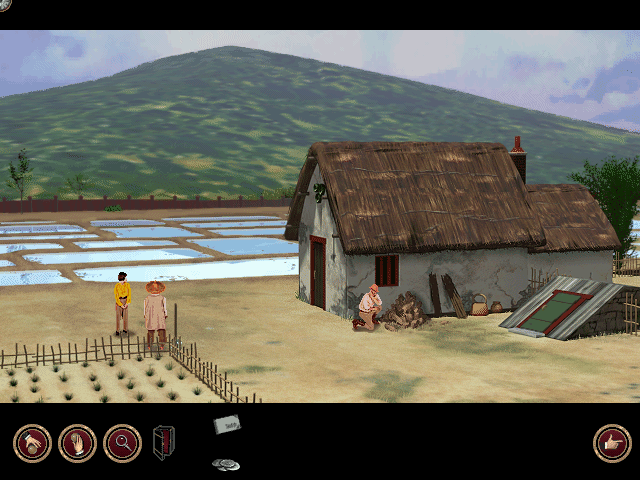
Graphically, The Riddle of Master Lu showcases the mid-’90s advantage of pre-rendered 3D backgrounds paired with live actors. Each location is rendered with painstaking detail: crumbling stonework in Egyptian tombs, lacquered screens in imperial Beijing, and lush jungles hinting at Ripley’s globe-trotting adventures. Despite the technical constraints of the time, the backgrounds retain a striking sense of atmosphere, with well-chosen color palettes and convincing lighting that evoke mystery and antiquity.
The full-motion video sequences insert real actors into these backgrounds via chroma key, a technique that can occasionally look grainy or suffer from green-screen artifacts. Still, Ripley himself—played by a dedicated performer—brings charisma to the role, while Mei Chen’s portrayal lends the narrative emotional stakes. These FMV moments, though brief, punctuate the visual experience with authentic human expressions and gestures, making the static backgrounds feel more alive.
Although modern gamers may find the resolution and frame rate of these videos dated, they should be viewed through a lens of nostalgia. The art direction and attention to historical detail help the game maintain a distinct visual identity. From intricately carved jade artifacts to swirling desert sands, each scene is crafted to spark curiosity—an essential trait for a title bearing the “Believe It or Not!” banner.
Story
The narrative thrust of The Riddle of Master Lu centers on Robert Ripley, the famed traveler and oddities collector, who stumbles into danger while exploring an Egyptian dig site. A sudden ambush by faceless assassins propels Ripley and his resourceful companion, Mei Chen, on a globe-spanning quest that leads straight to the heart of Beijing’s Forbidden City. Along the way, ancient secrets and mystical riddles hint at a centuries-old conspiracy linked to the enigmatic Master Lu.
What begins as a pulse-pounding escape quickly evolves into a deep dive into Chinese history, folklore, and treasure lore. Conversations with scholars, guards, and shady antiquities dealers reveal fragments of a lost manuscript that purportedly unlocks supernatural powers. The game weaves real-world locations—Egypt’s pyramids, the Great Wall, remote monasteries—into the fiction, creating a sense of authenticity that encourages further exploration.
Character interactions drive much of the momentum. Ripley’s wry humor and Mei Chen’s steadfast loyalty form a compelling partnership, and minor NPCs often surprise you with tidbits of backstory or red herrings that fuel the puzzling. While the overarching plot sometimes meanders, the promise of uncovering Master Lu’s ultimate mystery keeps you invested until the final revelation.
Overall Experience
Ripley’s Believe It or Not!: The Riddle of Master Lu offers a nostalgic trip for fans of classic adventure games, balancing challenging puzzles with live-action drama. Its deliberate pacing and emphasis on observation reward players who take their time to soak in each environment. Although some inventory puzzles can feel obtuse, the sense of discovery—uncovering hidden chambers, piecing together ancient codes—remains deeply satisfying.
The game’s audiovisual package, while dated by contemporary standards, exudes period charm. Pre-rendered backdrops and FMV actors combine to create an atmosphere that’s equal parts educational tour and mystical treasure hunt. For those captivated by historical mysteries and globe-trotting escapades, the game’s thematic focus on artifacts and antiquity is consistently engaging.
In the end, The Riddle of Master Lu stands as a testament to Sierra’s adventurous spirit in the mid-1990s. It may not boast cutting-edge mechanics or high-definition graphics, but its strong narrative thread, memorable characters, and intricate puzzles make it a must-play for aficionados of retro adventure gaming and anyone curious about the legendary exploits of Robert Ripley.


Reviews
There are no reviews yet.