 Retro Replay Retro Gaming History, Reviews & Emulation



Retro Replay Review
Gameplay
The first hour gives you a clear reason to move: Atnas has been rescued by villagers despite remembering almost nothing, and helping them recover their kidnapped child makes for a grounded opening objective. That immediate debt of gratitude is more engaging than being told to save the world from the outset. Once you leave for the forest, though, Shiluo de Fengyin settles into a firmly old-fashioned RPG loop of traveling the overworld, entering towns, speaking with NPCs, and pushing through dungeons.
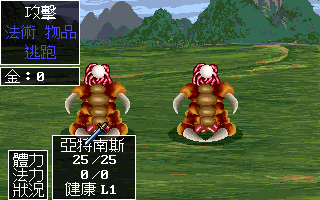
Combat is first-person and strictly turn-based. You choose physical attacks or magic spells, then work through encounters at the measured pace expected of a 1993 DOS role-playing game. There is a pleasing simplicity to that: battles ask you to make straightforward choices rather than wrestle with elaborate systems. Characters level up automatically, so growth comes naturally through progress and fighting rather than through a complicated build process.
Random enemy encounters are likely to be the dividing line. If you enjoy the steady cadence of exploration interrupted by battles, they make dungeon travel feel appropriately risky and give character progression a dependable rhythm. If random fights wear you down, the dungeons may become frustrating before the next story beat arrives. The largely linear structure helps avoid aimless wandering, but it also means you should come for a directed adventure rather than an open-ended fantasy journey.

Graphics
Exploration uses a top-down view for traveling with your party through the fantasy world, while battles switch to a first-person perspective. That contrast is classic for the era: you get a broad view while moving between towns and dungeons, then a more immediate enemy-facing view when combat begins.

Story
Atnas’s lost memory gives the adventure its strongest early pull. The opening disaster leaves him washed ashore with only his name and a mysterious crystal found beside him, which is enough to make his search for answers feel personal rather than merely procedural. His decision to help the family that saved him also gives him a believable first step into danger.
The plot gradually grows from that local rescue into a larger battle between humans and demons. It is familiar fantasy material, but the pacing direction makes sense: you begin with one person trying to repay kindness and slowly learn why he matters to a much bigger conflict. That is a reliable shape for a classic RPG story, even if you have seen its broad themes before.
Expect a story carried through the places you visit and the NPCs you talk to, not one that constantly breaks up the journey with spectacle. The mystery around Atnas and the crystal is the reason to keep pressing ahead, especially if you enjoy uncovering an amnesiac hero’s place in a larger war piece by piece.
Overall Experience
Shiluo de Fengyin is worth a look if you have patience for the plainspoken pleasures of early Japanese-style RPGs: a party on an overworld map, towns full of conversations, dungeon expeditions, random battles, and dependable level gains. It does not disguise its traditional structure. Instead, it asks whether that structure is enough for you, with Atnas’s mystery providing the forward pull.
The payoff depends on your tolerance for repetition. The turn-based battles are easy to understand, and the linear route means you generally know that continued progress will bring another location or story development. But random encounters and conventional progression can turn that steady momentum into a grind if you want combat to evolve dramatically over time.
For the right gamer, its directness is a virtue. You can settle into the rhythm without needing to master a maze of systems, and the opening’s shipwreck-and-amnesia setup gives the familiar fantasy quest a useful emotional anchor. Give it a chance if you want a period Taiwanese RPG that plays by the classic rulebook; skip it if the thought of frequent random, first-person turn-based fights already sounds exhausting.


Reviews
There are no reviews yet.