 Retro Replay Retro Gaming History, Reviews & Emulation

Retro Replay Review
Gameplay
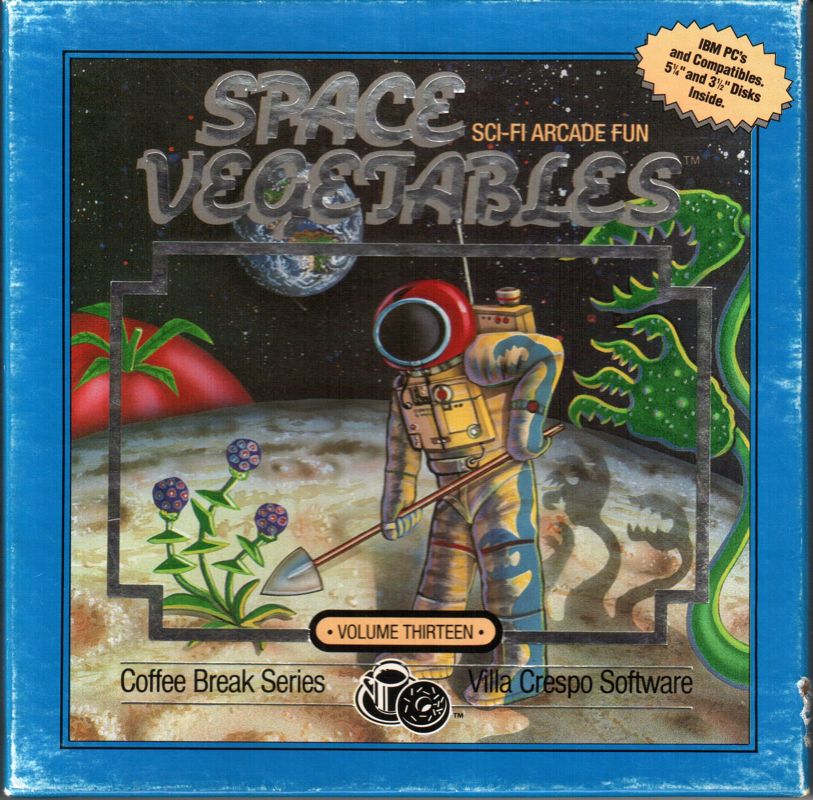
The first few minutes put you in a wonderfully undignified sci-fi job: a spacesuited worker bouncing around a moon, tending vegetable domes and shooting at alien pests. That simple setup quickly becomes more demanding than it sounds. You need to gather sufficiently grown vegetables toward each day’s quota, but the domes housing them are vulnerable and your own oxygen reserve is never somebody else’s problem.
The jetpack is the heart of the action. Flying lets you chase aerial threats and move across the moon surface with more freedom than a basic side-view shooter, yet it also makes positioning matter. Aliens can try to steal a dome, and shooting one too high can result in the dome breaking. That turns a successful kill into the wrong decision if you have not considered where it will fall. Space Vegetables earns points for making you think about the aftermath instead of treating every enemy as a target to erase immediately.
Oxygen adds another layer of urgency. Some creatures leave oxygen behind when killed, so combat can replenish the resource that keeps you alive. You are constantly weighing harvest timing, defense, ammunition-like enemy management, and movement. Lose every vegetable dome or drain the suit’s oxygen and the run ends, which can make failure feel abrupt, but it also gives the game its tense arcade rhythm.
There are three moons to work through—Phobos, Diemos, and Riscos—with days and new quotas standing between each transfer. That structure gives the game a clear reason to keep pushing beyond a single successful harvest. The top-ten galactic gardener table suits the design, too: this is built for replaying, learning how aggressively to fly, and trying to turn a messy shift into a cleaner one.
Graphics
Space Vegetables uses a 2D side-view view of a lone spacesuited engineer working across moon surfaces and greenhouse domes. The action should be easy to parse at a glance because the crucial objects are concrete and immediate: your character, the crops inside the domes, airborne aliens, and the oxygen they can leave behind.

Story
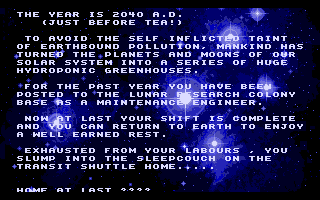
The story has a dry, blue-collar sci-fi joke at its center. In 2040, humanity is converting planets and moons into giant hydroponic greenhouses, and your maintenance engineer winds up stranded on a distant world by mistake. Being broke leaves him with one practical route home: enlist in the Space Vegetable Corps and take the worst work available.
That premise fits the game better than a grand war or heroic mission would. Protecting crops from alien theft is deliberately small-scale, and the desperation of needing to pay for passage home gives every quota a little more personality. You are not doing this because you believe in the job. You are doing it because the job is standing between you and being stuck there.
The three-moon progression keeps that goal in view. Each completed work stretch is another step toward getting off the outer rim, while a destroyed set of domes or empty oxygen tank cuts the dream short. It is a thin story, but it is the right kind of thin: a clean excuse for an arcade challenge about survival, labor, and very expensive gardening.
Overall Experience
Space Vegetables is at its best when its systems start colliding. You are trying to hit the harvest quota, an alien is threatening a dome, oxygen is getting low, and the convenient shot may cause exactly the damage you are trying to prevent. That is much more interesting than a straightforward shooter, and it gives the game a distinctive edge.
It will frustrate you if you want frictionless action. The possibility of breaking a dome by killing an enemy in the wrong place means that imprecise flying and panic shooting have consequences. The same is true of crop timing and oxygen management. Still, that harshness feels purposeful rather than random; the game asks you to learn restraint, not merely react faster.
Give it a chance if you enjoy compact DOS-era action games with score-table motivation and a pressure-cooker loop. The payoff is not a sweeping adventure but the satisfaction of mastering a hostile workday: harvest efficiently, protect the domes, collect oxygen when it appears, and survive long enough to leave the gardening corps behind.



Reviews
There are no reviews yet.