 Retro Replay Retro Replay gaming reviews, news, emulation, geek stuff and more!


Retro Replay Review
Gameplay
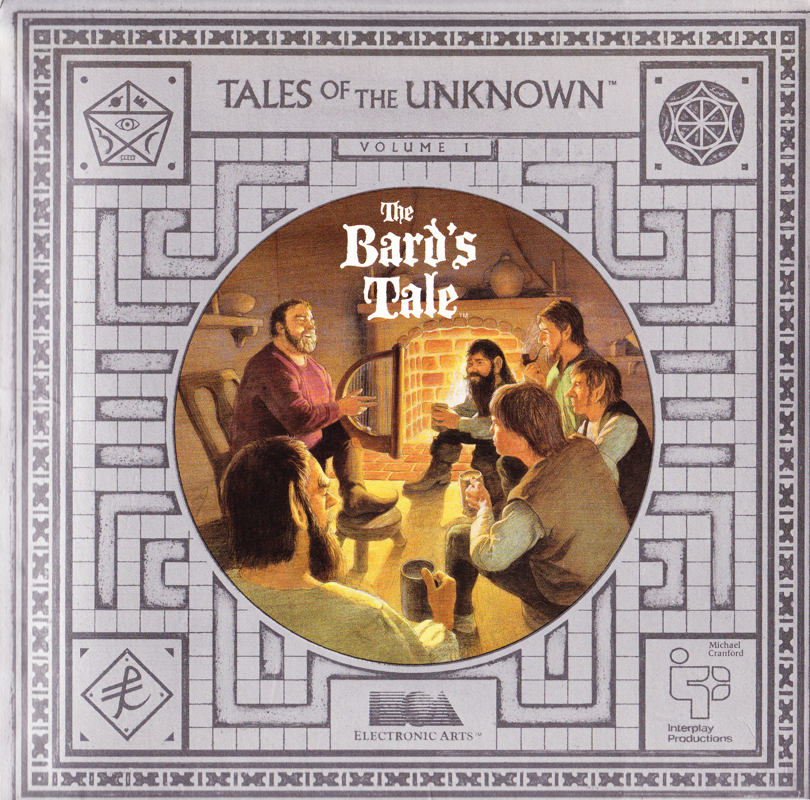
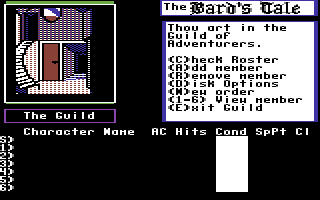
Tales of the Unknown: Volume I – The Bard’s Tale delivers a richly layered role-playing experience that hooks players from the moment they form their first party of six adventurers. The game’s blend of first-person dungeon exploration and turn-based combat feels both familiar and refreshingly unique compared to its peers. Drawing inspiration from earlier Wizardry titles, it enhances the formula with the ability to physically wander through the town of Skara Brae, visit shops, and interact with NPCs in real time.
(HEY YOU!! We hope you enjoy! We try not to run ads. So basically, this is a very expensive hobby running this site. Please consider joining us for updates, forums, and more. Network w/ us to make some cash or friends while retro gaming, and you can win some free retro games for posting. Okay, carry on 👍)
The turn-based battles take place on a simple, grid-like battlefield, but the inclusion of the Bard’s songs adds an innovative twist. Players must strategically choose when to unleash magical melodies that can buff allies, debuff foes, or solve environmental puzzles. Managing song usage alongside traditional spells and melee attacks gives combat an extra strategic layer, encouraging a balanced party composition and thoughtful resource management.
The progression system allows for deep character customization. Six classes—Bard, Hunter, Monk, Paladin, Rogue, and Warrior—are available from the outset, with Magician and Conjurer unlockable upon meeting specific in-game milestones. As adventurers gain levels, they unlock new abilities and spells, making late-game encounters both challenging and rewarding. Random enemy encounters in overworld passages and dungeons maintain a steady tension, while the ability to cast “Recall” or “One Hit Kills” offers viable survival tactics.
Exploration is at the core of the experience. Maze-like dungeons are filled with hidden doors, secret staircases, and deadly traps that demand patience and careful mapping. The overworld sections, although smaller in scale, provide welcome respite between grim corridors and introduce side quests that deepen the sense of immersion. For RPG enthusiasts who relish methodical exploration and strategic combat, The Bard’s Tale stands as a compelling testament to classic design.
Graphics
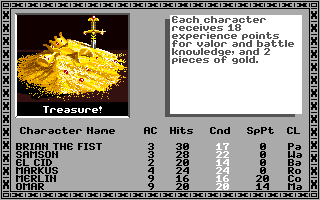
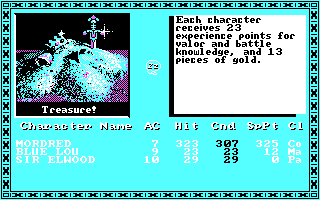
For a game released in the mid-1980s, The Bard’s Tale’s visuals remain impressive in their clarity and atmosphere. The pseudo-3D dungeon corridors are rendered with simple yet effective shading and textures that evoke a sense of claustrophobia and dread. Each turn in the maze, each flicker of torchlight, feels deliberate, drawing the player deeper into the dark heart of Mangar’s domain.
The character portraits and town scenes, while limited by the hardware of the era, convey personality and detail. Shop interfaces employ bold icons that clearly communicate equipment stats and pricing. Even on low-resolution displays, the icons for swords, shields, and potion bottles are instantly recognizable, minimizing frustration during quick inventory checks in the heat of battle.
Enemy sprites in combat are small but distinctive, representing skeletons, trolls, ogres, and other fiends with surprising vibrancy. The animations—such as an orc’s axe swing or a spider’s skittering approach—may appear rudimentary by modern standards, but they carry a certain charm and serve their purpose effectively. Combined with the occasional flashing spell effect, the battles possess a visceral energy that keeps the adrenaline pumping.
Overall, the graphical presentation strikes a balance between functionality and ambiance. While it lacks the polish of contemporary titles, its stylistic cohesiveness and purposeful design ensure that each pixel contributes to the mood. Players who appreciate retro aesthetics and can look past blocky textures will find the visuals both nostalgic and engaging.
Story
The narrative framework of The Bard’s Tale is delightfully straightforward: the once-peaceful town of Skara Brae lies under the cruel freeze of Mangar’s Eternal Winter, its guardians gone missing, and townsfolk trapped in fear. This classic “save the town from dark forces” premise gains depth through the game’s atmospheric writing and the sense of urgency conveyed in NPC dialogues. Every rescued villager and recovered item feels like a tangible victory against encroaching darkness.
While the primary quest centers on locating and defeating Mangar, side stories abound. Tavern patrons offer rumors that hint at hidden treasures or puzzle solutions. Ancient tomes discovered in dusty libraries reveal hints about the Bard’s magical songs, implying a lore that extends beyond the immediate crisis. Although not groundbreaking in complexity, these threads enrich the world and reward diligent explorers who pay attention to detail.
The Bard class plays a uniquely narrative role, their songs not only boosting party prowess in combat but also unlocking secret passageways and deciphering cryptic runes. This mechanic creates a natural bond between story and gameplay, making the Bard feel indispensable to the party’s success. Players quickly learn that narrative progression and strategic use of music go hand in hand, fostering a sense of camaraderie with their digital minstrels.
Despite the game’s age, the tale of Skara Brae remains compelling. The growing tension as winter tightens its grip, the thrill of reclaiming lost wards, and the final confrontation with Mangar deliver satisfying dramatic beats. For RPG fans who value atmosphere and classic storytelling over cinematic flair, The Bard’s Tale’s plot retains a timeless appeal.
Overall Experience
Tales of the Unknown: Volume I – The Bard’s Tale offers an RPG experience that has aged remarkably well. Its blend of strategic combat, intricate dungeon design, and engaging exploration strikes a delicate balance between challenge and reward. While the learning curve can be steep—especially for newcomers to first-person, grid-based adventuring—persistent players will uncover a deeply satisfying progression loop.
The game’s pacing, alternating between tense dungeon crawls and moments of respite in Skara Brae’s taverns and shops, keeps the adventure fresh. Sound design, though limited, leverages simple beeps and melodies to heighten key moments, from discovering treasure to casting powerful spells. The unique mechanic of the Bard’s songs solidifies the title’s identity, ensuring it stands out within a crowded field of mid-80s RPGs.
Replayability stems from varied party compositions and multiple difficulty settings. Experimenting with different class mixes can dramatically alter combat dynamics and puzzle-solving approaches. The inclusion of permadeath and resource scarcity ensures that each decision carries weight—a feature that modern RPGs rarely replicate with equal intensity.
For anyone seeking a taste of classic role-playing history or yearning for a challenging, methodical adventure, The Bard’s Tale remains a must-play. It succeeds in marrying simple yet effective graphics and sound with a robust gameplay loop and a story that, while archetypal, never fails to capture the imagination. The Bard’s Tale is more than a relic—it’s a testament to the enduring power of thoughtful RPG design.


Reviews
There are no reviews yet.