 Retro Replay Retro Gaming History, Reviews & Emulation


Retro Replay Review
Gameplay
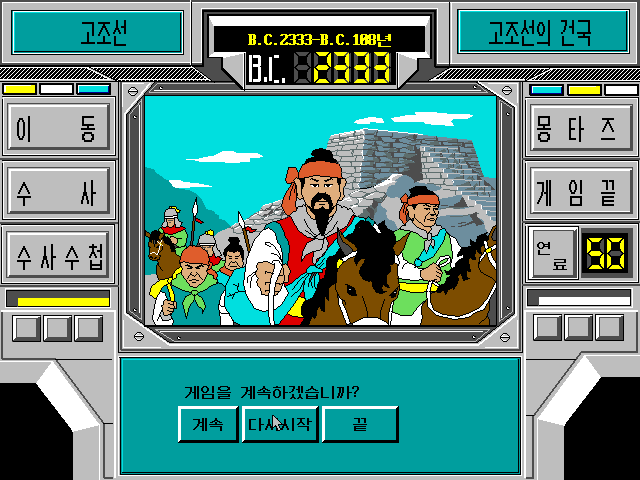
The first hour’s hook is stronger than the usual educational-game setup because you are not just asked to memorize dates or places. You are a detective chasing a fugitive through time, selecting eras to investigate and using the historical and geographical information you find to narrow down their whereabouts. That gives the learning material a purpose: every clue has the potential to move the case forward.
The structure will click for anyone who likes following a trail of deductions. You move between periods ranging from prehistory to modern history, read the details attached to each epoch, and try to connect them to the criminal’s route. It is deliberately more investigative than action-driven. The reward is the small satisfaction of recognizing that a fact is not trivia here, but a lead.
Its limitation is also its defining choice: the journey stays on the Korean peninsula. That narrower map may disappoint anyone hoping for an all-purpose world-history tour in the style of Where in Time is Carmen Sandiego?, but it lets the game concentrate on one country’s long historical arc. Give it a chance if you enjoy learning through context and deduction. Skip it if reading clues and selecting destinations sounds more like homework than a game.
Graphics
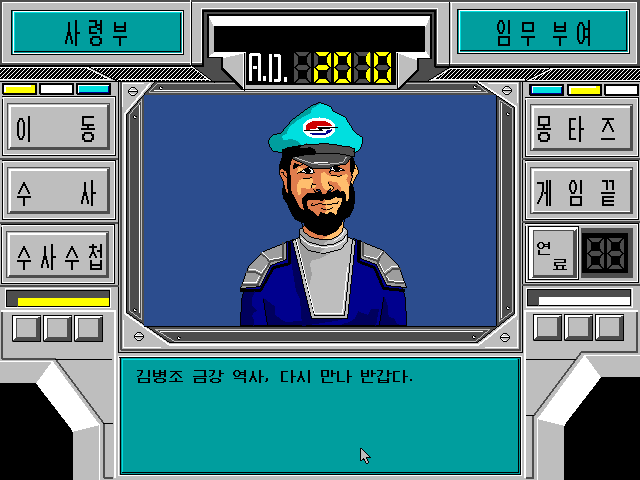
Time Machine I uses a first-person viewpoint, placing you in the detective’s role as the case moves across Korean eras from prehistory to modern history. The central visual attraction is that sweep through historical settings rather than a cast of action characters or vehicles.
Story
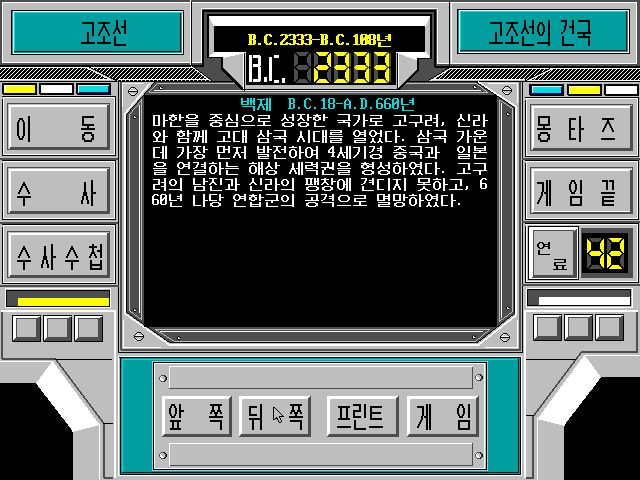
The story is simple, but it is an effective frame for an educational mystery. A criminal escapes with a time machine; your futuristic agency in 2010 sends you after them. That premise immediately answers the question educational games often struggle with: why should you care about the next fact you are shown?
The chase gains character from its location. Instead of treating history as a scattered collection of famous global stops, it follows a path across the Korean peninsula. That focus makes the mystery feel tied to a particular historical landscape, even as it crosses an enormous stretch of time.
Do not expect a dense detective drama. The narrative chiefly exists to turn historical and geographical knowledge into evidence. For this kind of game, that is the right priority: the criminal’s escape is a reason to investigate, and each era becomes another piece of the case.
Overall Experience
This is a thoughtful piece of early educational game design when you meet it on its own terms. It wants you to read, compare clues, and make a reasoned choice about where to search next. The mystery gives the lessons momentum, while the Korean setting keeps the material from dissolving into a generic parade of historical facts.
The pace can become frustrating if you arrive looking for immediate adventure. Progress depends on paying attention to the information attached to each time period, so impatience works against you. But if that loop sounds inviting, the payoff is more satisfying than a straightforward quiz because you have used what you learned to pursue a suspect.
For a related detour, take a look at Time Machine on Amiga. Time Machine I itself is best recommended to curious history-minded gamers, especially anyone interested in Korean history who would rather solve a case than answer a stack of disconnected questions.


Reviews
There are no reviews yet.