 Retro Replay Retro Gaming History, Reviews & Emulation
Retro Replay Review
Gameplay
The first few puzzles establish the central bargain quickly: neither character can solve everything alone. You need to bring both the mouse and elephant to the exit, and their contrasting abilities turn each room into a small coordination problem rather than a straight run to the goal.
The elephant’s ability to push heavy objects is the clearest source of hands-on puzzle solving. A blocked route is not necessarily a dead end; it may be something the elephant needs to move before the mouse can make progress. That back-and-forth gives the game a more purposeful feel than a basic maze, and it is the reason the premise can hold up across a large puzzle count.
More than 150 puzzles is generous, but it also asks for real patience. The structure favors gamers who enjoy pausing to study an arrangement, working out which character should act first, and retrying when a plan does not work. If you want quick action from an action/puzzle label, the steady isometric problem solving may feel slow. If you enjoy compact spatial challenges, it has a respectable amount to chew on.
Graphics
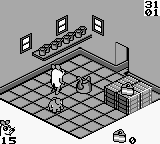
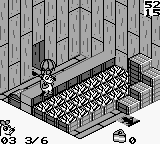
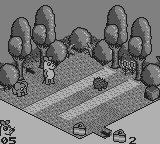
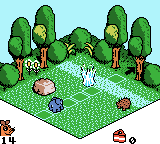
The action takes place in isometric puzzle rooms, with the diagonal view built around following the mouse and elephant as they navigate each layout. It is a practical fit for a game concerned with routes, obstacles, and getting two characters to the same exit.
Story
The story is deliberately light: the duck has disappeared, and the mouse and elephant set out to find it. That is enough to give the succession of puzzle worlds a clear destination without getting in the way of the main attraction.
Its strongest story asset is familiarity. Fans of Die Sendung mit der Maus will recognize the central duo and the missing duck immediately, so the game starts from a warm, accessible premise rather than asking you to learn a new fantasy world.
Do not come in expecting the search itself to carry the experience. The plot is a frame for the puzzles, and that is fine; the question is whether you enjoy solving rooms with this pair, not whether their quest delivers dramatic surprises.
Overall Experience
Die Maus is more substantial than its children’s-TV license might suggest. The dual-character setup gives it a genuine puzzle hook, and five worlds with more than 150 stages make it a game you can return to in short, thoughtful sessions.
Frustration is likely to arrive when a room’s solution is not obvious and you have to reconsider how the two characters interact. Yet that is also where the game has its best chance to click: progress comes from understanding the pair, not merely pushing ahead.
Give it a chance if you want an old-school isometric puzzle game with a gentle license wrapped around a sizable set of brainteasers. Skip it if you need fast-moving action or a story-led adventure. For patient puzzle fans, the core idea is strong enough to make the search for the duck worth following.


Reviews
There are no reviews yet.