 Retro Replay Retro Gaming History, Reviews & Emulation

Retro Replay Review
Gameplay
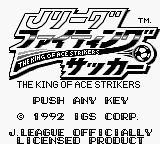
The first few minutes are pleasingly uncomplicated. You choose from 16 teams, pick a tactical approach, and start moving the ball toward goal. J.League Fighting Soccer: The King of Ace Strikers keeps its on-pitch interaction to the essentials: pass, shoot, and tackle. That simplicity gives each possession a clear shape rather than burying you under options.
The control assignment makes sense for this kind of game. With the ball, you are controlling the active athlete; without it, control shifts to the nearest defender. Once that rhythm clicks, the game becomes about switching from attack to recovery quickly and making clean decisions before the scrolling field carries the play onward. A mistimed tackle or a careless pass matters because there is no long list of special actions to rescue a bad choice.
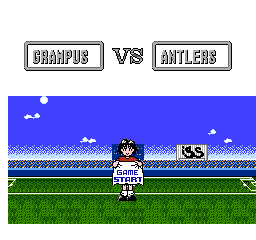
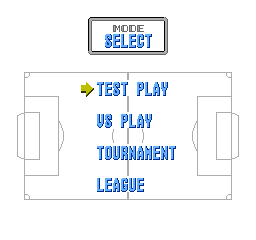
There is decent variety around the matches. League and tournament play give you longer-term reasons to stick with a chosen side, while exhibition matches let you get straight to the pitch. The link-cable two-player option is especially valuable for a game this stripped back: a human opponent can turn its basic passing and tackling into a sharper contest than solo play alone.
Frustration is likely to set in for anyone expecting the tactical depth or player-level control of a later football sim. The angled side view and left-to-right scrolling make this a compact, focused version of the sport. Still, if you enjoy older football games that ask you to master a small set of actions rather than juggle a crowded command list, its directness is a virtue.
Graphics
Matches use an angled side view, with the field scrolling from left to right as play moves upfield. That viewpoint keeps the direction of an attack immediately clear and suits the quick handoff between the ball carrier and the nearest defender.

Story
This is not a football game built around a character drama; its sense of occasion comes from the J.League setting. Using the inaugural season as its foundation gives the league and tournament modes a real sporting frame instead of making every match feel like an isolated friendly.
Your chosen team supplies the through-line. A league run has a natural purpose—keep playing fixtures and chase the result—while a tournament offers a more concentrated route through the competition. That is a modest structure, but it is appropriate for a game that puts the match itself first.
The licensed teams are the important bit here. If the early Japanese J.League has personal nostalgia for you, choosing a side carries more weight than it would in an unlicensed football game. If that connection means nothing to you, the context is still clear enough, but it will not add much beyond the selection screen.
Overall Experience
J.League Fighting Soccer: The King of Ace Strikers is a lean football game with a welcome amount of mode choice around a very simple match engine. It does not waste time explaining itself: take possession, pass into space, shoot when the chance appears, and tackle when the other side has the ball.
The payoff depends heavily on what you want from a 1992–1993 football game. You may find it too bare if you want elaborate tactics and extensive control over every phase of play. You may enjoy it more if the thought of fast, fundamentals-first matches sounds refreshing, especially with another person connected by link cable.
Give it a chance for the period J.League flavor, the 16-team roster, and the clean arcade-like focus on football’s basic exchanges. It is not trying to be a sprawling season-management game. It is a compact match game, and it is at its best when you treat every turnover as an immediate chance to create something.


Reviews
There are no reviews yet.