 Retro Replay Retro Gaming History, Reviews & Emulation

Retro Replay Review
Gameplay
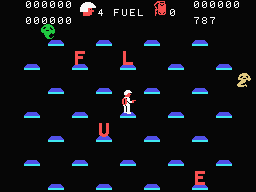
The first stage gets straight to the point: collect FUEL before time runs out, and do not fall. That directness is Tetra Horror’s strongest quality. You can understand the target almost instantly, but landing jump after jump while hazards interfere is another matter. The pressure comes from trying to keep momentum without turning a hurried leap into the lost life that sends you back with less room for error.
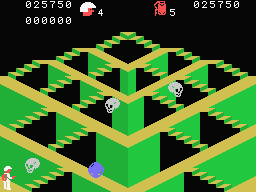
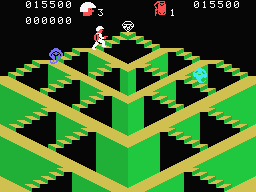
The second stage changes the rhythm rather than merely asking you to repeat the same route. Now you are following paths in an isometric view, using the fuel gun to destroy flying skulls while rolling boulders threaten to interrupt the chase. Stairs offer a way around danger, so the stage has more of a route-planning feel than the opening platform section. It is still brisk arcade action, but you have to watch where a safe path leads instead of only focusing on the next jump.
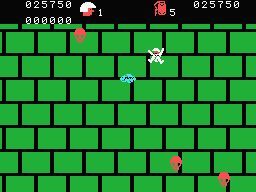
The final stage brings the action back to the side-view platform layout, except monsters now attack as you work toward clearing the remaining skulls and revealing the treasure. That return makes the game feel like a tougher exam on the skills the opening taught you. With three starting skill levels and a higher difficulty after each recovered treasure, Tetra Horror is built for players who like getting knocked down, learning the pattern of danger, and immediately trying to do better.

Graphics
Tetra Horror alternates between side-view platform screens and isometric battle screens. The side-view areas put platforms, falling skulls, and monsters directly around your jumps, while the isometric stage lays out paths, stairs, flying skulls, and rolling boulders from above at an angle. That switch gives its three-part structure a more varied look than a single-screen challenge would have.
Story
You play an adventurer who discovers a treasure map leading to the ancient South American city of Tetra. It is a clean arcade setup: there is treasure at the end, danger between you and it, and no time to waste.
The story mostly lives in the goal rather than in extended plot development. Fuel is collected to arm the fire gun, skulls are destroyed, and the treasure appears after the final threats are cleared. Each objective has a clear place in the journey, even if the game keeps its attention firmly on surviving the next obstacle.
Recovering the treasure does not close the book so much as restart the expedition at a harder level. That fits the game’s old-school arcade mindset well. The map and lost city give the action a bit of adventure flavor, but mastery—not discovery—is the real destination.
Overall Experience
Tetra Horror is a compact, demanding arcade game that earns its interest from changing the way it tests you across three stages. The first hour is likely to be defined by brisk restarts and near misses: jump too early, fall; linger too long, lose the timer; take a careless path in the isometric section, meet a boulder. If that sounds tiring rather than exciting, the game will probably feel harsh.
What starts to click is the relationship between its stages. The platforming asks for nerve and timing, the isometric skull hunt asks you to navigate under pressure, and the final return combines the platform format with a more hostile field of monsters. The variation is modest, but it keeps the treasure run from feeling like one idea stretched too far.
Give Tetra Horror a chance if you enjoy concise MSX-era action games where lives are precious and improvement is the reward. The payoff is not a sprawling adventure; it is the satisfaction of pushing through a strict three-part gauntlet, reaching the treasure, and accepting the invitation to do it again on a harder difficulty.


Reviews
There are no reviews yet.