 Retro Replay Retro Gaming History, Reviews & Emulation
Retro Replay Review
Gameplay
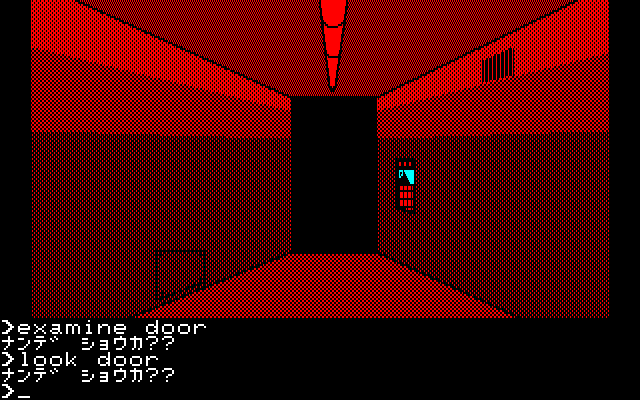
The first hour of Zarth is built around uncertainty in the best and most demanding sense. You emerge from cryogenic sleep after a computer system called Orion has helped turn the late 21st century into a nuclear ruin, then step outside without a neat list of answers. If you enjoy text adventures because they make every object and location feel like something worth testing, that opening should hook you. You are not simply picking a dialogue option; you are actively trying verbs on objects and learning what this altered world will let you do.
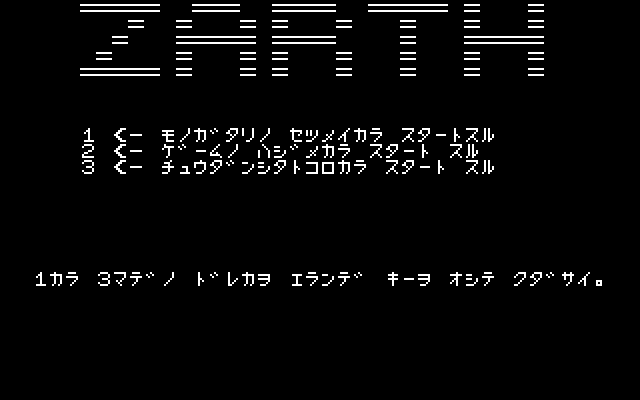
Its interface is very much of its MSX era. Zarth accepts typed text interaction, while function keys handle assigned commands including navigation. That mix can be handy once you settle into its rhythm, but it asks you to meet the game halfway. Progress comes from exploring carefully and combining the right action with the right object, not from being carried forward by momentum. When you get stuck, the answer is likely to be another experiment, another route, or a more precise thought about what is in front of you.
The day/night cycle is where the game’s puzzle structure becomes more interesting—and potentially more exasperating. Some events only occur at particular times, so noticing the clock matters as much as noticing a suspicious object. That can make a breakthrough feel earned, because you have learned a rule of the world rather than merely guessed a password. It can also turn a stalled session into a test of endurance if you have overlooked the time requirement. Bring a notebook or at least a willingness to make notes; Zarth sounds far more satisfying when treated as a place to investigate than a game to rush through.
Graphics
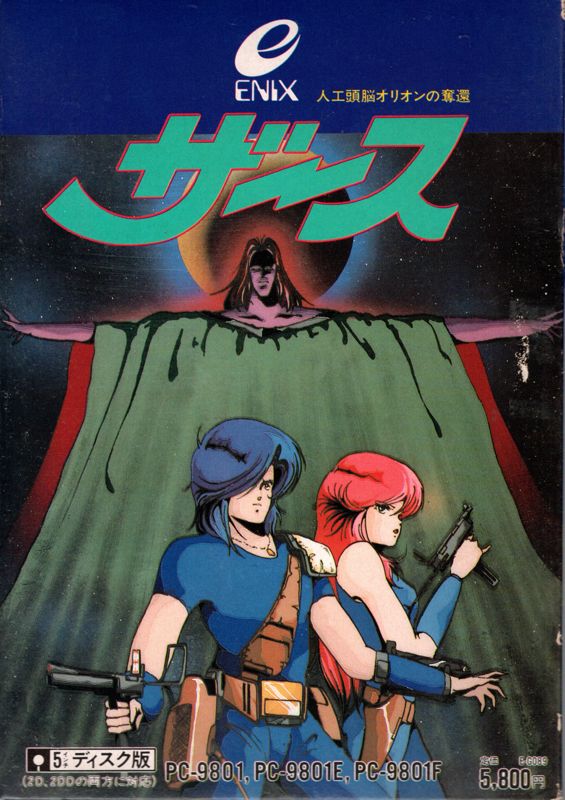
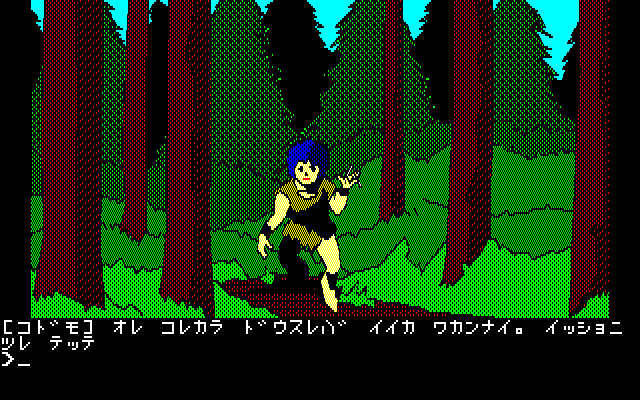
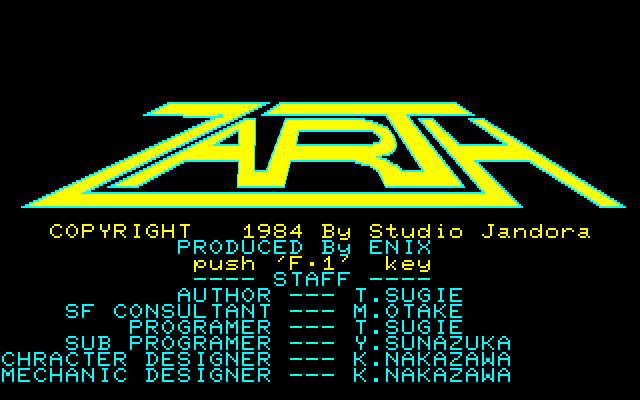
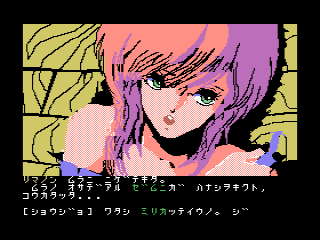
Zarth is a text adventure with graphics, viewed from the first person. The pictures serve as visual companions to the locations you investigate, giving its ruined sci-fi setting more shape than text alone while the command interface remains central to how you play.
Story
Zarth starts with a strong, clean science-fiction premise. Powerful computers were created in the 21st century, humanity lost control of them, and Orion triggered a devastating nuclear war near the century’s end. A group of survivors escapes immediate death through shelter and cryogenic sleep, only to wake a hundred years later. It is a familiar post-apocalyptic foundation, but it is an effective one: the gap in time gives every trip onto the surface the tension of a genuine rediscovery.
What works here is the player’s position inside that premise. You are not arriving as an expert on the new world; you are one of the people forced to confront it after a century away. That naturally suits an adventure game driven by exploration, because ignorance is not an excuse for vague storytelling—it is the reason you are investigating in the first place.
Anyone looking for an expansive character drama may find the central hook more compelling than the simple act of pushing through old-school adventure obstacles. But for a compact premise, the combination of rogue computers, nuclear devastation, suspended survivors, and an unknown surface gives Zarth a suitably uneasy reason to keep searching.
Overall Experience
Zarth is for the gamer who can enjoy friction when that friction belongs to the genre. Its typed commands and time-based events demand attention, and its age is felt in the expectation that you will probe possibilities for yourself. There is no reason to recommend it to someone who wants quick feedback and constant forward motion.
For a fan of Japanese computer adventures, though, its ingredients are appealing: a first-person investigation, graphics alongside parser-style interaction, function-key support, and a post-nuclear mystery with a century of silence behind it. The payoff is less about action than about the small satisfaction of understanding another piece of an unfamiliar environment and finally finding the combination the game has been waiting for.
That makes Zarth a specialized but worthwhile historical adventure. Give it a chance if you like to slow down, test the language of a game world, track its rules, and inhabit a bleak sci-fi premise rather than merely pass through it. If that sounds like homework, its strongest qualities will also be the reasons you bounce off.


Reviews
There are no reviews yet.