 Retro Replay Retro Gaming History, Reviews & Emulation
Retro Replay Review
Gameplay
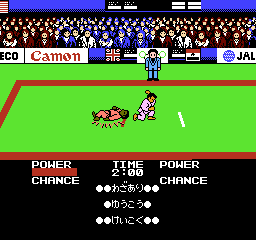
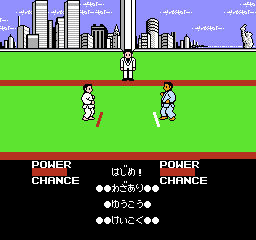
The first few bouts make Moero!! Jūdō Warriors feel less like a conventional brawler and more like a contest of timing and nerve. Winning means putting your opponent on the ground with a throw, but you cannot simply chase that result without watching the two meters. Power tracks current strength, while the chance meter tells you how likely a successful takedown is. That creates a satisfying little question in every exchange: push now, or wait until the odds improve?
What starts to click is the game’s insistence that a throw should feel earned. A favorable chance meter makes your opening matter, and power gives the match a sense of changing momentum rather than turning every encounter into the same button-mashing race. The flip side is frustration: when the throw chance is against you, progress can feel stubborn, especially if you come in expecting immediate, free-flowing fighting-game offense. This is a game that asks you to respect its gauges.
The world tour has a clear purpose beyond padding out the route to the Olympics. Each win leads to a choice to improve strength, technique, or stamina, so you can shape your fighter between matches instead of merely moving to the next opponent. That small bit of ownership is the best reason to stay with it. Lean into the stats and the tournament becomes a test of preparation as much as match-by-match execution.
Once you reach the Olympic stage, nine opponents stand between you and a medal. Bronze, silver, and gold give the campaign a sensible ladder of outcomes, and the climb has more pull than a one-off exhibition match. It is not a deep simulation of judo, but it does turn the basic objective—land the takedown—into a disciplined arcade challenge.
Graphics
This is a 2D NES game built around a diagonal-down view during its judo action. That angle suits the basic task well: you are watching two competitors share the mat and trying to judge when a takedown is worth attempting, rather than dealing with a crowded field of distractions.
Story
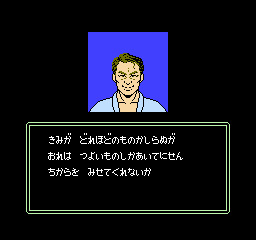
There is not much plot to untangle, and that is appropriate. You begin with the straightforward goal of qualifying for an Olympic judo tournament, traveling the globe to defeat opponents on the way there. The hook is sporting ambition, not melodrama.
At the Olympics, each of the nine rivals represents their home country, giving the final stretch a clean international-tournament frame. The game lets the opponents and the medal chase carry the stakes rather than stopping for elaborate story detours.
That simplicity works because the campaign has a tangible finish line: bring home bronze, silver, or gold. If you want additional background on Moero!! Jūdō Warriors, its release history is easy to trace, but the game itself keeps the focus squarely on advancing through the competition.
Overall Experience
Moero!! Jūdō Warriors is a niche NES sports-fighting game with a better progression loop than its simple premise first suggests. The meters make the matches deliberate, and the upgrade decisions give losses and wins some longer-term weight. You will get the most out of it if you enjoy learning a limited system instead of demanding a huge move list or constant spectacle.
Its biggest obstacle is also its defining quality: the chance meter can make bouts feel restrictive before you learn to work with it. Players who want instant control over every exchange may bounce off the waiting and uncertainty. Players willing to treat each match as a small tactical puzzle will find that the tension of choosing a throw attempt is the whole point.
The Olympic payoff is worth the climb if a medal run and a customized fighter build sound satisfying. It is a focused game rather than a broad one, but Jaleco’s tournament structure gives it enough purpose to recommend to retro fans who want a judo-themed challenge with real pressure behind each takedown.



Reviews
There are no reviews yet.