 Retro Replay Retro Gaming History, Reviews & Emulation

Retro Replay Review
Gameplay
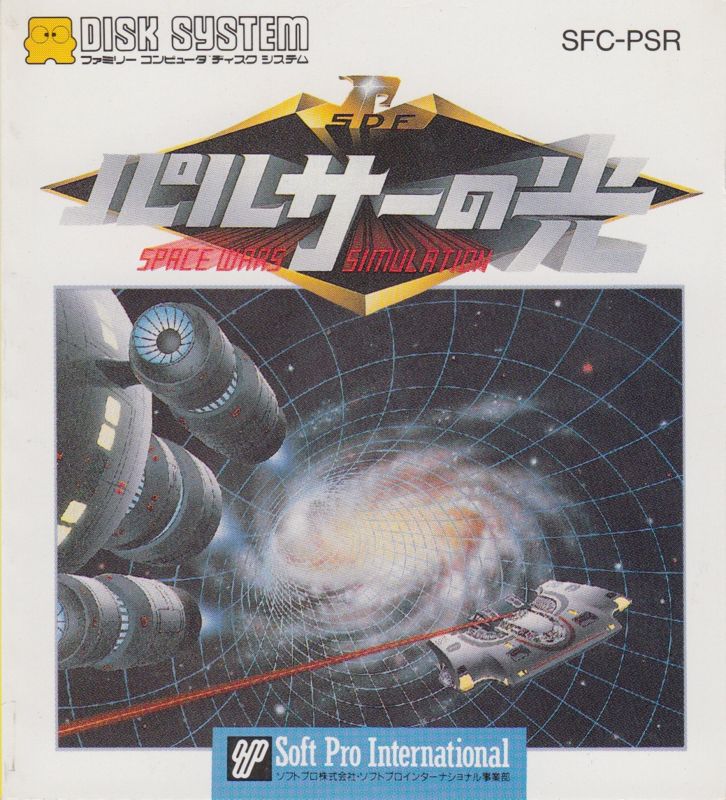
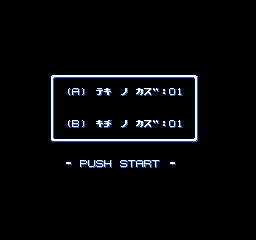
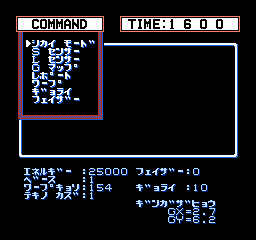
The first stretch of Pulsar no Hikari: Space Wars Simulation is less about blasting enemies than learning to act like a cruiser captain. Before heading into view mode, you sit at a command-center menu and check reports on enemy movement, examine the surrounding fields, look over the galaxy map, assess damage, load torpedoes, and adjust phaser power. That deliberate pre-flight routine is the heart of the game. If you enjoy the idea of preparing for a fight rather than simply spawning into one, it starts to make sense quickly.
Once you enter a sector, control becomes much more immediate. You fly the cruiser around, fire phasers and torpedoes at hostile ships, and can warp to other parts of the galaxy. The contrast between menu-based planning and direct action is the game’s strongest idea: intelligence informs movement, movement leads to combat, and combat creates damage that has to be dealt with.
Damage has consequences beyond a momentary setback because you need to dock at a base for repairs. That makes a bad engagement feel costly, and it gives the galactic map more purpose than a simple travel screen. You are not only hunting targets; you are also judging when your ship is healthy enough to press forward and when it is time to retreat.
Frustration is likely to set in if you want constant action or fast-moving arcade spectacle. Pulsar asks you to repeatedly consult information screens, make practical adjustments, and accept a measured pace between battles. But for an NES space game, that insistence on managing a ship’s condition and position gives it more texture than a straightforward shooter.
Graphics
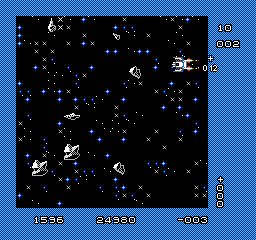
The game moves between a command-center menu, a galactic map, and top-down sector views where you pilot the cruiser against enemy ships. The battle view’s overhead perspective suits the practical task of steering, lining up shots, and deciding whether to stay in the fight or warp away.

Story
The story is a clean mission setup: you command a space cruiser and must clear the galaxy of hostile enemies. There is no need for a more elaborate hook for the game’s purposes; the command assignment gives every report, scan, warp, and repair stop a clear military context.
What little drama there is comes from your ship’s condition. Enemy movement reports imply pressure beyond the current sector, while a damage report can turn a successful skirmish into a reason to head for a base. It is a functional kind of sci-fi tension, built from responsibility rather than character drama.
Come here for a starship mission framework, not a richly told space opera. The narrative mainly exists to put you in the captain’s chair, and the game is most convincing when your next decision—fight, warp, or repair—feels like it matters.
Overall Experience
Pulsar no Hikari: Space Wars Simulation is an unusual little hybrid: part top-down space combat, part command-console routine. Its best moments come when the two halves connect. You study the galaxy, enter a sector with a plan, take fire, and suddenly the nearest repair base matters as much as the next enemy ship.
The game will not win over anyone who wants a loose, immediately explosive shooter. Its menus and methodical preparation are not a side activity; they are the main flavor. Give it a chance if you enjoy old games that make you handle a vehicle’s weapons, damage, location, and route instead of treating those concerns as automatic.
For the right mood, the payoff is real. Pulsar no Hikari turns a simple order to eliminate enemies into a steady exercise in caution and command. It is modest, demanding in an old-school way, and more interesting when you meet it on its own deliberate terms.


Reviews
There are no reviews yet.