 Retro Replay Retro Gaming History, Reviews & Emulation

Retro Replay Review
Gameplay
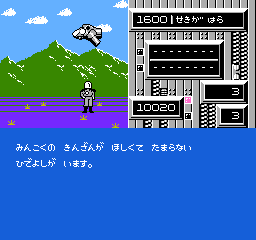
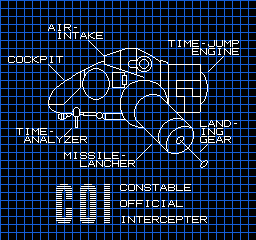
The first draw is immediate: you are not merely visiting the past, but pursuing fugitives as Time Patrol Officer Toshito Kutajima. That gives each historical stop a clear reason to exist, and the COI time-travel vehicle makes the jumps between eras feel like part of an investigation rather than a detached history tour.
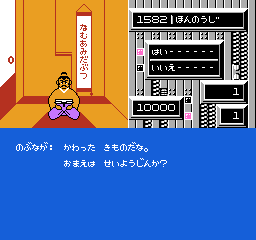
Interaction centers on talking with Japanese historical figures and answering questions with yes or no. It is a stripped-down format, but that simplicity puts weight on each response. You are not mastering a dense command system; you are deciding how Toshito responds, then living with the route that decision opens.
The limitation is also the potential frustration. If you want exploration, action, or elaborate puzzle-solving, this will feel narrow quickly. The payoff comes from treating an initial run as one branch of a larger story and returning to test different answers. That makes it a better fit for patient, curious players than for anyone who needs constant mechanical variety.
Graphics
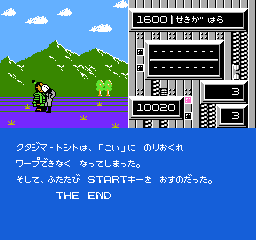
The game’s most concrete visual hook is its sweep through Japanese history, spanning the sixteenth century through 1941, with Toshito’s COI serving as the science-fiction counterpoint to those periods.

Story
Time travel often becomes an excuse for disconnected stops, but the fugitive pursuit gives Toki no Tabibito a useful throughline. Toshito has a job, a destination, and people to question, which is enough to keep the historical encounters pointed toward something larger.
The story’s real strength is its branching shape. Yes-or-no answers lead to multiple endings, so the game asks you to think about consequence in a very literal way. A choice does not just color a conversation; it can determine where the whole trip ends up.
That also means its storytelling depends on your investment in alternate outcomes. One route may satisfy your curiosity, but the structure clearly invites comparison: what changes if Toshito answers differently? If you enjoy seeing how a small decision tree bends a narrative, that question is the reason to keep going.
Overall Experience
This is a modest but intriguing kind of adventure: a licensed NES time-travel story built around conversation and divergent conclusions. Its strongest idea is not complexity, but focus. You travel, question people, make a clean decision, and watch that decision carry forward.
Come to it for the period-hopping detective premise and the branching narrative, not for a broad set of game systems. The yes-or-no format can feel restrictive, yet it also makes the game easy to understand and gives replaying a practical purpose.
For more background on Toki no Tabibito: Time Stranger, its release history is worth a look. As a game, it is most rewarding when you meet it on its own terms: a concise interactive story where the pleasure lies in seeing how different answers redirect a trip across time.



Reviews
There are no reviews yet.