 Retro Replay Retro Gaming History, Reviews & Emulation
Retro Replay Review
Gameplay
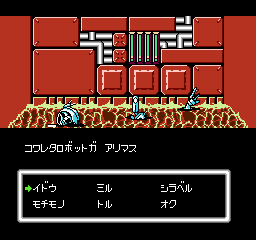
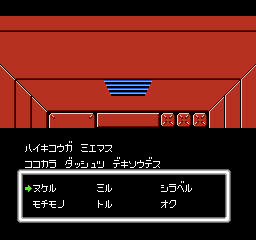
Dead Zone asks you to slow down almost immediately. Kirk wakes up trapped in an underground facility, and progress comes from poking at the environment through a menu of commands rather than fighting your way forward. Move, look, inspect, take, set, drop, insert, open, exchange, and communicate are the tools at your disposal. That makes the first stretch feel like a compact sci-fi escape room: you are not being tested on reflexes, but on whether you have paid attention to what a location and its objects might allow.
The command-driven structure is both the game’s hook and its biggest barrier. When you hit on the right interaction, advancing feels earned because you have actively chosen an action instead of merely selecting an obvious highlighted prompt. On the other hand, this kind of adventure design can become frustrating when you understand the broad goal but cannot tell which specific command the game expects. Patience matters. Inspect thoroughly, revisit objects after acquiring something new, and do not treat an unhelpful result as proof that an idea was wrong; it may simply need a different verb.
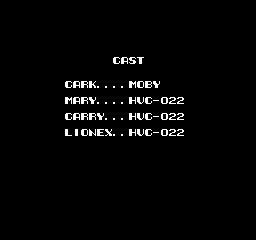
Carry is more than background company in a lonely facility. The ability to communicate with Kirk’s robot sidekick gives the puzzle solving another avenue beyond manipulating objects yourself. That is a welcome touch in a game built around verbs, because it encourages you to think about the companion as part of the solution process rather than just part of the setup. Dead Zone is for the gamer who likes methodical experimentation and can enjoy the small victory of finally finding the one interaction that opens the next area.
Graphics
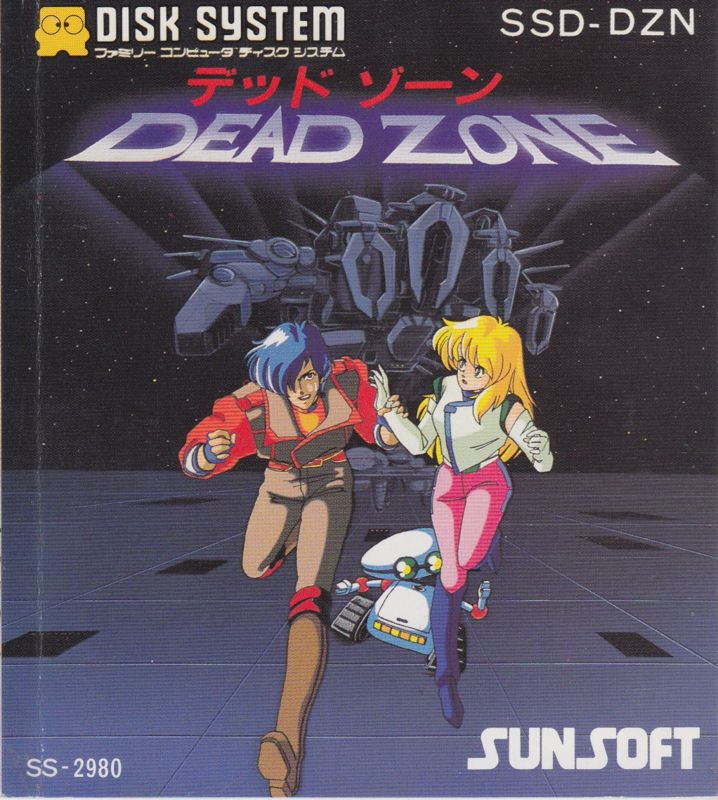
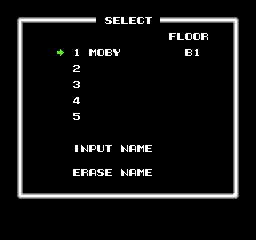
Dead Zone uses a first-person viewpoint for its underground exploration, keeping your attention on the spaces and objects you need to examine. Carry gives the confined sci-fi premise a recognizable on-screen companion rather than leaving Kirk entirely alone with the facility’s puzzles.
Story
The story is simple but effective in the way many mid-1980s sci-fi adventures are effective: it gets Kirk somewhere unpleasant quickly and gives him a personal reason to get out. Earth’s overpopulation has pushed the Federation toward space-colony construction, Kirk has been working on that effort, and he is finally heading back to Mary when the mysterious ray interrupts everything.
That setup gives the underground prison more urgency than a generic locked-room scenario. Kirk is not just searching for an exit; he is trying to get back to the life he had been building toward. Mary’s place in the premise is straightforward, but it gives the escape a human destination, while Carry keeps the journey from becoming a completely solitary trek.
Do not expect the narrative to eclipse the puzzles. Dead Zone’s story works primarily as a sturdy frame for moving from one area to the next and uncovering a route out. The unanswered question of who abducted Kirk and why is enough to keep the premise pointed forward, especially if you enjoy old sci-fi mysteries that let the setting do most of the talking.
Overall Experience
Dead Zone is a narrow, purposeful adventure: one man, one robot, an underground facility, and a menu full of possibilities. Its best moments come when the game turns an obstacle into a question you can actually work on. You inspect, try an item, reconsider the room, speak with Carry, and eventually make the connection. That rhythm can be satisfying precisely because it is so hands-on.
Its age is most apparent in the potential for command-based puzzle friction. You need to be willing to test combinations and accept that progress may depend on phrasing your intention through the right available action. If that sounds tedious, the game’s deliberate pace is unlikely to win you over. If it sounds like the point, Dead Zone offers a concentrated dose of classic adventure-game problem solving on the NES.
The payoff is worth it for patient puzzle fans and for anyone curious about a first-person console adventure from an era better known for immediate action. Go in ready to take notes if needed, inspect everything, and treat Carry as an active part of the escape. Dead Zone will not charm you through speed; it earns its place through persistent, methodical discovery.


Reviews
There are no reviews yet.