 Retro Replay Retro Gaming History, Reviews & Emulation
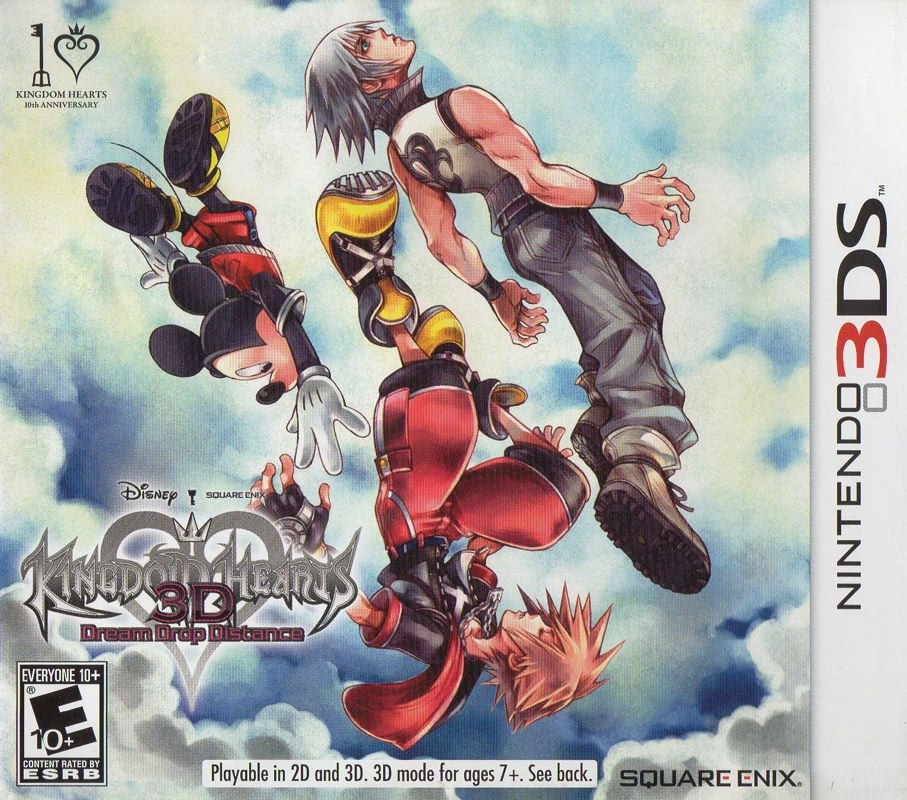
Retro Replay Review
Gameplay
Flowmotion makes Dream Drop Distance feel unusually liberated. Sora and Riku can bounce off walls and scale buildings in short, fast bursts, so getting from one place to another has a kinetic snap that suits Kingdom Hearts beautifully. You are not simply running toward the next fight. You are looking for surfaces to launch from and routes that let you keep your momentum.
Combat follows the action RPG approach of Birth by Sleep, with a Command Deck built around quick access to attacks, items, and spells. That customization gives you room to shape how each character handles. Dream Eaters add another layer: hostile versions are the new enemy force, while recruitable Spirit Dream Eaters can strengthen your powers and open up new attacks. There is a pleasing sense of building a more capable party rather than relying only on basic swings of the Keyblade.
The Drop system is the major complication. Once the gauge runs out, control shifts from Sora to Riku, potentially moving you to another world and another point in the story. The idea fits the game’s paired perspective, and switching heroes keeps both sides of the journey moving. In practice, the timer can be aggravating when you are in the middle of a stretch you wanted to finish. It creates urgency, but it can also make the adventure feel like it is interrupting itself.
That trade-off defines much of the game. When its systems line up, you get rapid movement, busy battles, and two different routes through the Sleeping Worlds. When they do not, the forced handoff can break your concentration. If you enjoy tinkering with command setups and moving through environments with a little flair, the good moments easily justify pushing through the disruptions.
Graphics
The Disney locations give the 3DS adventure a welcome variety of scenery, from La Cité des Cloches to the stylized worlds drawn from Pinocchio, Fantasia, and Tron. The changing settings help Sora and Riku’s trip feel like a genuine tour rather than a long stay in one fantasy realm.
Story
Dream Drop Distance picks up after Kingdom Hearts II with King Mickey and Yen Sid preparing for Xehanort’s return. Sora and Riku enter the Mark of Mastery exam, traveling through seven Sleeping Worlds in search of the Keyholes of Sleep. On paper, that is a clean enough setup: two longtime friends prove they are ready for the next threat.
The game has more on its mind than a simple exam, though. Sora learns that people connected to him, including Ventus, Aqua, and Terra, need saving, which gives his side of the journey a personal pull. Riku’s parallel path matters just as much, and the split structure turns their growth into the heart of the story rather than treating one of them as a sidekick.
This is firmly a Kingdom Hearts story, meaning it carries a lot of baggage from earlier games and quickly moves into its larger mythology. If you know Kingdom Hearts II and Birth by Sleep, the references have weight and the continuing concerns feel earned. If you are jumping in cold, expect to spend time sorting through names, connections, darkness, and the stakes surrounding Xehanort.
Overall Experience
Dream Drop Distance is easy to recommend to a Kingdom Hearts fan who wants a portable entry with real mechanical energy. Flowmotion gives it a personality that is more than nostalgia for Disney worlds, and the ability to customize commands and recruit Spirit Dream Eaters gives you reasons to stay engaged between story scenes.
Its biggest frustration is not that it lacks ideas. It has plenty. The problem is that the Drop timer can make a clever dual-protagonist premise feel less like a narrative rhythm and more like an imposed pause. Some gamers will enjoy being pushed to maintain both campaigns; others will wish they could finish what they started before being whisked away.
At its best, this is a lively, inventive action RPG that understands why Sora and Riku work better together than alone. The story can be demanding, and the systems do not always cooperate with your preferred pace, but the payoff is a memorable chapter with some of the series’ most enjoyable movement. Give it a real chance if you are already invested in the ongoing saga or want a handheld RPG where traversal can be as entertaining as combat.


Reviews
There are no reviews yet.