 Retro Replay Retro Gaming History, Reviews & Emulation

Retro Replay Review
Gameplay
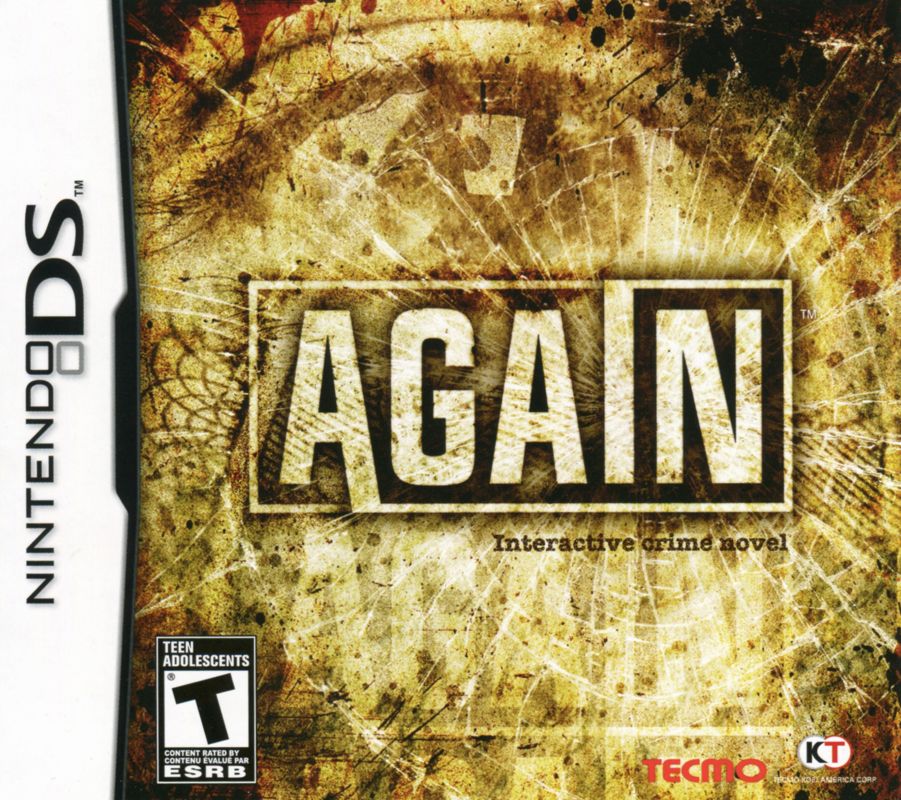
The first hour has an easy pull because Again puts you in the shoes of an FBI agent investigating a case that is both active and deeply personal. J can look into the past, and the investigation turns that supernatural gift into something practical: you compare a location as it is now with its earlier state, then mark changes with the stylus to trigger flashbacks. It is an intuitive detective-game fantasy. You are not merely being told what happened; you are looking for the physical traces that let J reconstruct it.
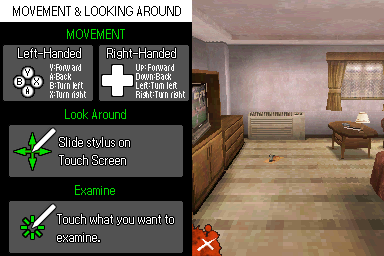
Using the Nintendo DS sideways is more than a novelty. One screen can hold the person J is questioning while the other tracks clues and conversation topics, giving interrogations a useful case-file rhythm. Exploration moves into 3D locations with the D-pad, while the stylus handles the close observation that matters. That split makes sense once you settle in, especially if you enjoy slower adventure games that ask you to pay attention rather than rush from one objective to another.
The psyche gauge is where the game’s best idea becomes its most divisive one. Each trip into the past costs energy, and exhausting that reserve ends the game. Since it refreshes only at the start of a new day, you need to make deliberate choices about what is worth examining. That adds pressure to each potential clue, but it can also turn an otherwise satisfying search into anxious guesswork. If you enjoy conserving a limited resource and treating every flashback as a commitment, the system gives the investigation teeth. If you want to freely test theories, it is likely to be the point where frustration sets in.

Graphics
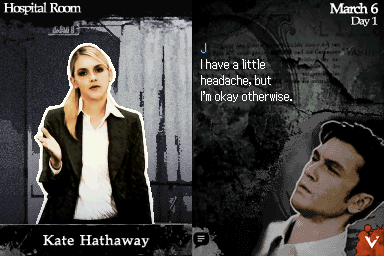
Again leans toward realistic character depictions rather than exaggerated cartoon faces, which fits its contemporary FBI murder-case tone. The sideways DS layout also makes the two versions of a location—the past and present—easy to compare while you search for meaningful differences.
Full-motion video sequences add a more dramatic punctuation to the investigation. They sit alongside 3D walkable locations and the conversational two-screen layout, giving the game a more grounded look than a typical stylus-led puzzle adventure.
Story
The mystery has a dependable crime-thriller engine: 19 years ago, an unknown killer murdered most of Jonathan Weaver’s family in Clockford, Pennsylvania, leaving an Eye of Providence fragment from a dollar bill at every crime scene. J survived. When similar killings begin again, his professional assignment and personal trauma become impossible to separate.
That premise gives every clue a built-in emotional charge. J is not a detached investigator dropping into somebody else’s tragedy; he is chasing the answer to the event that defined his life. His ability to see the past is therefore more than a convenient puzzle excuse. It places him repeatedly in contact with the aftermath and causes behind the case he never escaped.
The strongest story material is in that overlap between cold evidence and personal memory. The recurring symbol promises a connected pattern, while the new crimes force J to ask whether the old case was ever truly over. Go in for a procedural mystery with a supernatural investigative angle, not a lighthearted detective romp.
Overall Experience
Again is easiest to recommend to patient mystery fans who want a case they can inspect rather than simply watch unfold. The present-versus-past scene comparison is a genuinely fitting way to turn J’s power into player involvement, and the book-like DS orientation gives the game a distinct, tactile rhythm.
Its limitations are tied directly to its central hook. The psyche gauge creates stakes, yet it also discourages carefree experimentation at precisely the moments when you may want to investigate every suspicious detail. The payoff is strongest when you accept that caution as part of being an agent working with an unreliable, finite gift; it is weaker when it feels like a barrier between you and the next lead.
At its best, Again makes you feel like you are combing through a crime scene with one foot in another time. It does not have the relaxed comfort of a purely conversational visual novel, nor the open-ended freedom of a conventional detective game. But if its grim family mystery and careful clue work sound like your kind of evening, there is enough here to make the investigation worth reopening.


Reviews
There are no reviews yet.