 Retro Replay Retro Gaming History, Reviews & Emulation
Retro Replay Review
Gameplay
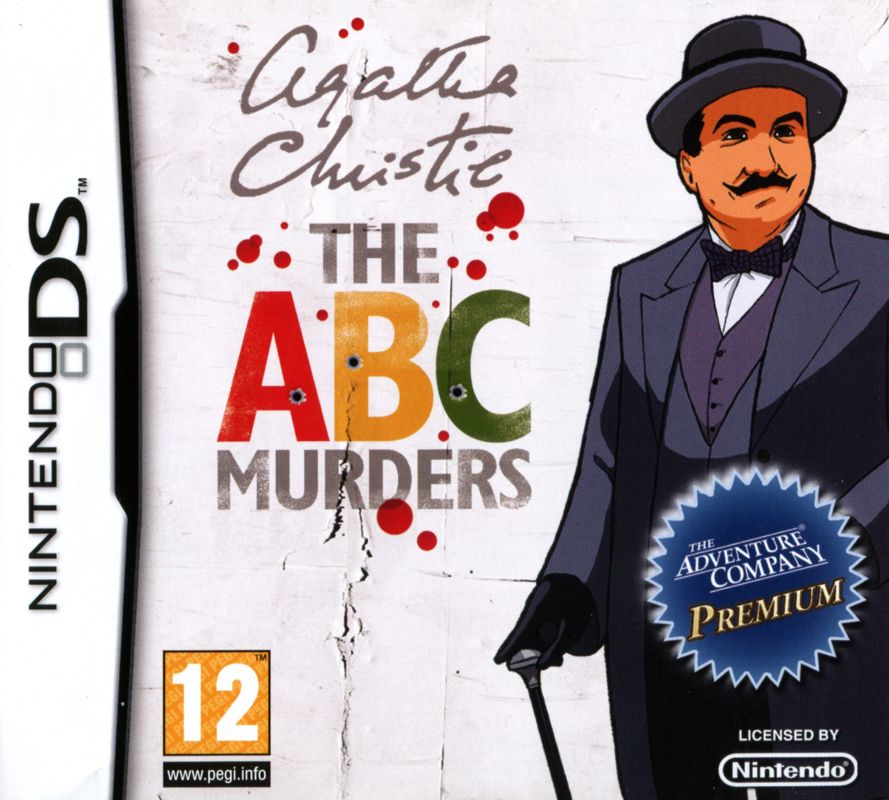
The first hour has an easy pull if you enjoy a proper whodunit. You are not playing Poirot himself, but Captain Hastings, helping him trace a murderer whose crimes follow an alphabetical trail through victims and locations. Searching crime scenes, questioning witnesses, and moving on to the next stop gives the investigation a clear, satisfyingly deliberate structure.
What starts to click is the way the puzzles are tied to the case. You may need to work out which train is quickest or decide which suspect could actually have been near a murder scene. These are not random locks bolted onto the adventure; at their best, they make you pause and think like someone trying to establish a timeline rather than merely exhaust dialogue options.
The awkward part is the frequency of the maths and logic barriers. Having to solve a problem before travelling or continuing a conversation can turn a good bit of narrative momentum into a roadblock. Writing answers on the DS touchscreen is a neat fit for the format, but it does not make a puzzle any less irritating if its solution is the only thing between you and the next clue. Patient puzzle fans will get more from it than anyone wanting a brisk, conversation-led mystery.
There is worthwhile replay value in Free Story mode. It uses the same victims, suspects, and witnesses as the Classic Story, but changes testimonies, motives, and the murderer’s identity. That is more meaningful than simply replaying for collectibles: it asks you to reconsider the people and evidence you thought you understood.
Graphics
The clearest visual flourish is the use of small hidden icons around locations. Finding them rewards you with Agatha Christie trivia and clues for Poirot’s Lost Puzzle, giving observant players another reason to inspect each area rather than rushing from one interrogation to the next.
Story
The central case is hard to resist. A serial killer following the alphabet is exactly the sort of clean, escalating premise that makes every new destination feel ominous: after Ascher in Andover, you know the pattern is not going to stop by itself. It gives the investigation direction without needing to overcomplicate the basic question of who is responsible.
Classic Story mode follows the novel’s original storyline, so it is the natural place to begin if you want the familiar Poirot case. The pleasure comes from following the evidence and suspects through a structured mystery, with Hastings serving as your route into Poirot’s investigation.
Free Story is the more interesting extra for anyone who already knows the book. Changing witness accounts, motivations, and the culprit means prior knowledge does not automatically spoil the exercise. That twist turns the adaptation into something more than a straight retelling and gives the mystery a second life.
Overall Experience
This is a modest, puzzle-heavy detective adventure with a strong literary engine. When the investigation is moving, the combination of crime-scene inspection, witness questioning, and practical deduction feels appropriate to an Agatha Christie story. You are steadily assembling a case rather than being carried through a spectacle.
Its biggest weakness is also baked into its structure: the same logic exercises that make you participate in the investigation can make progress feel fussy. If you like doing the arithmetic and reasoning yourself, that friction is part of the game’s charm. If you mainly want to absorb Poirot’s next revelation, it may feel as though the game keeps holding the conversation hostage.
Give it a chance if you enjoy classic mysteries and do not mind stopping often to solve a problem on the touchscreen. The payoff is a case with a memorable premise and a genuinely useful alternate mode, even if the route to the solution is uneven. It is a better fit for a patient armchair detective than for someone after a fast-moving adventure.


Reviews
There are no reviews yet.