 Retro Replay Retro Gaming History, Reviews & Emulation
Retro Replay Review
Gameplay
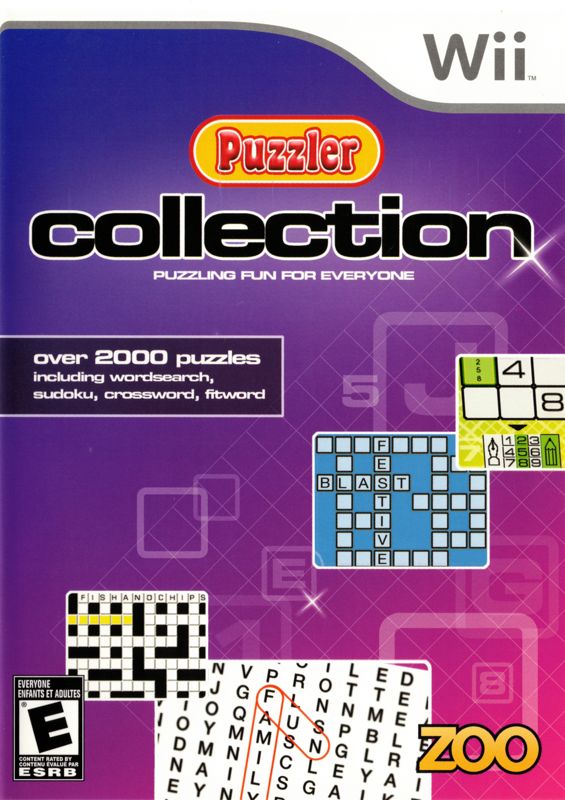
The first hour is pleasantly uncomplicated: pick the kind of puzzle you are in the mood for and get solving. Puzzler Collection does not try to disguise its roots in newspaper pages and puzzle books. Fitword asks you to arrange supplied words in a grid, crosswords ask you to enter answers from clues, Sudoku follows the familiar no-duplicates rule, and wordsearches ask you to hunt down listed words. That directness is a strength when you want a mental snack rather than a game that needs an introduction.
Its real advantage is flexibility. Simply Puzzle is the right place to relax with no score hanging over you, while Quick Blast makes good on the idea of fitting a few puzzles into a set chunk of time. Fast & Fun is there when a timer makes familiar formats feel sharper, and Head to Head gives two people a reason to compare solving speed instead of passing the system back and forth without a goal.
Tournament is the mode with the clearest sense of momentum, taking you through puzzles from Easy to Pro. That progression matters because these formats live or die on whether you are ready for a harder challenge. You will get more out of the collection if you enjoy switching between word work and number logic; staying with only one category can make even a huge pile of puzzles feel routine.
The DS version makes a sensible home for this material. Holding the system like a book matches the old-fashioned pleasure of working through a puzzle page, and the left- or right-handed Touch Screen option is a genuinely considerate touch. This is less about flashy reinvention than making a long session feel like your own familiar puzzle habit.
Graphics
Puzzler Collection is a text-and-grid game first and foremost. The important things you see are crossword clues and answer spaces, Sudoku grids, letter fields, and Fitword layouts; the book-like DS orientation gives those puzzle pages a natural fit. Clear grids and words are far more valuable here than decorative artwork.
Story
There is no narrative campaign to carry you from one puzzle to the next. The motivation is the small, immediate satisfaction of filling a gap, spotting a hidden word, or untangling a grid that looked obvious until it was not.
Tournament supplies the closest thing to an arc by moving from Easy to Pro. It is an abstract progression, but that suits a collection whose subject is solving rather than storytelling.
Quick Blast can also turn the game into a daily ritual. A short scheduled puzzle session has its own modest rhythm, even without characters, plot turns, or a larger fictional hook.
Overall Experience
Puzzler Collection earns its place through quantity and convenience, not novelty. Four enduring puzzle types and several ways to play mean you can meet it at your own energy level: a calm untimed crossword, a timed burst, a competitive round, or a longer Tournament run.
Frustration will mostly come down to your tolerance for these traditional formats. If wordsearches already feel like busywork or standard Sudoku leaves you cold, extra modes cannot change that. Conversely, anyone who still enjoys working through printed puzzle books will understand the draw immediately.
The payoff is a portable collection that respects short sessions without running out of material quickly. Give it a chance if you want a straightforward DS puzzle companion with both word-based and number-based challenges. Skip it only if you need every puzzle game to offer a new twist beyond the classics.


Reviews
There are no reviews yet.