 Retro Replay Retro Gaming History, Reviews & Emulation

Retro Replay Review
Gameplay
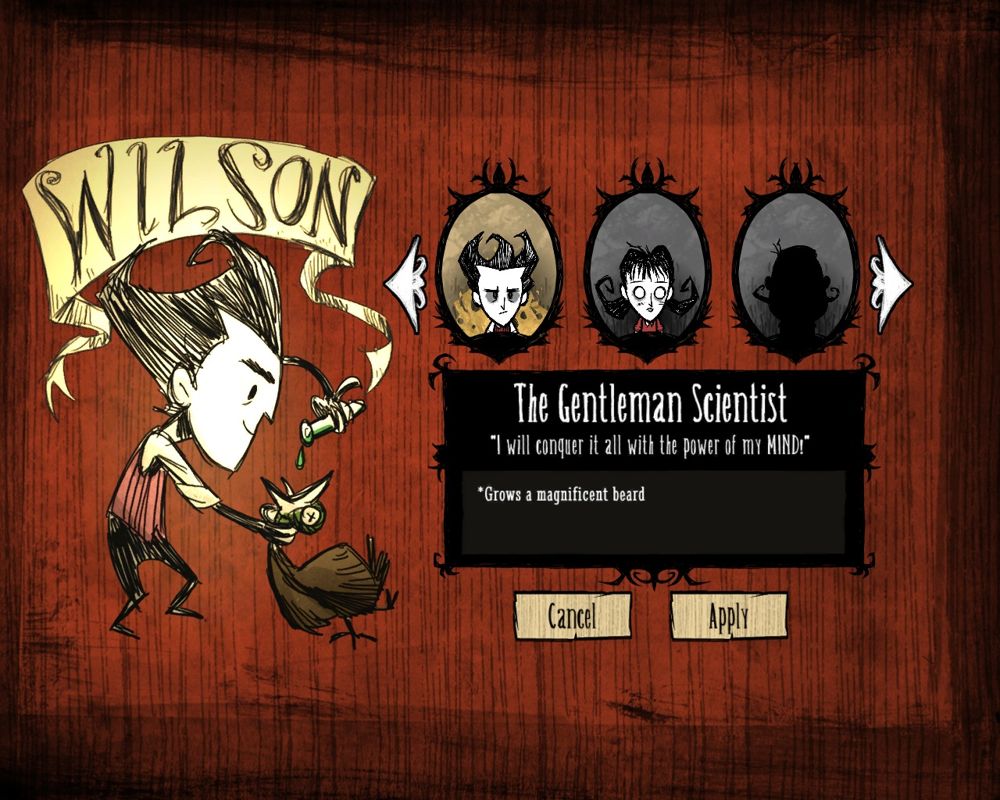
Don’t Starve starts with the kind of loneliness that makes a single found resource feel like a breakthrough. You begin as Wilson, a gentleman scientist stranded in a strange wilderness, and the early routine is immediately compelling: pick up what you can, explore far enough to find useful materials, and figure out what can be made before night arrives. The game turns basic preparation into a real source of pressure because darkness is dangerous without fire. That first scramble to avoid being caught unprepared gives every day a sharp little arc.
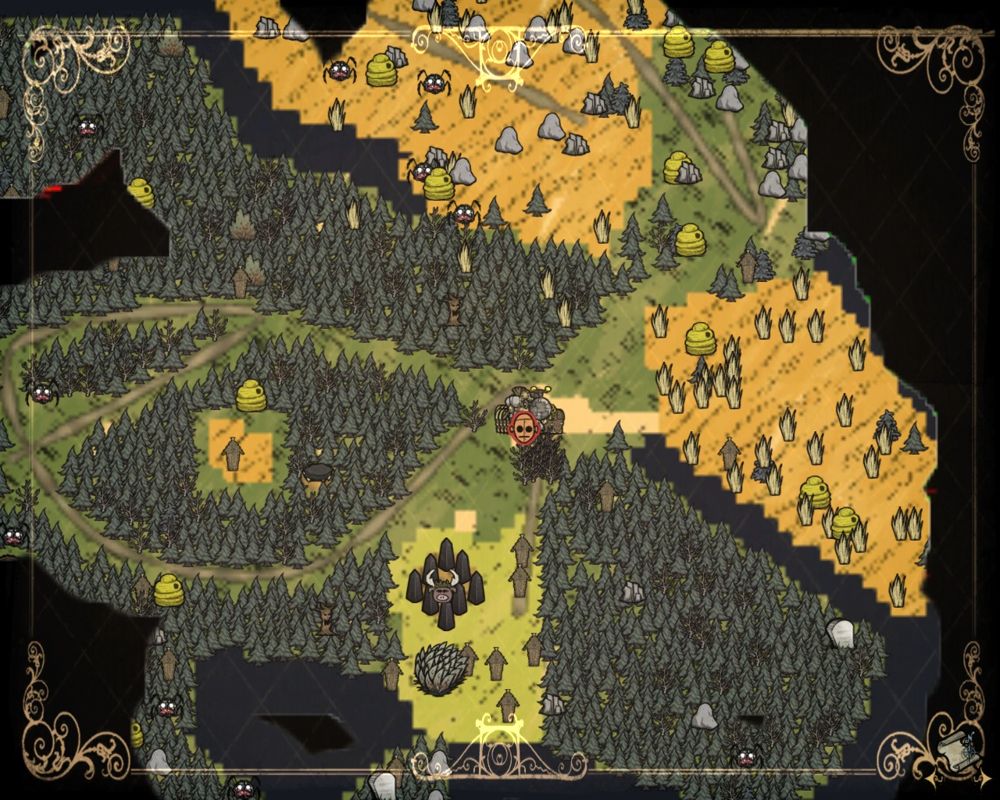
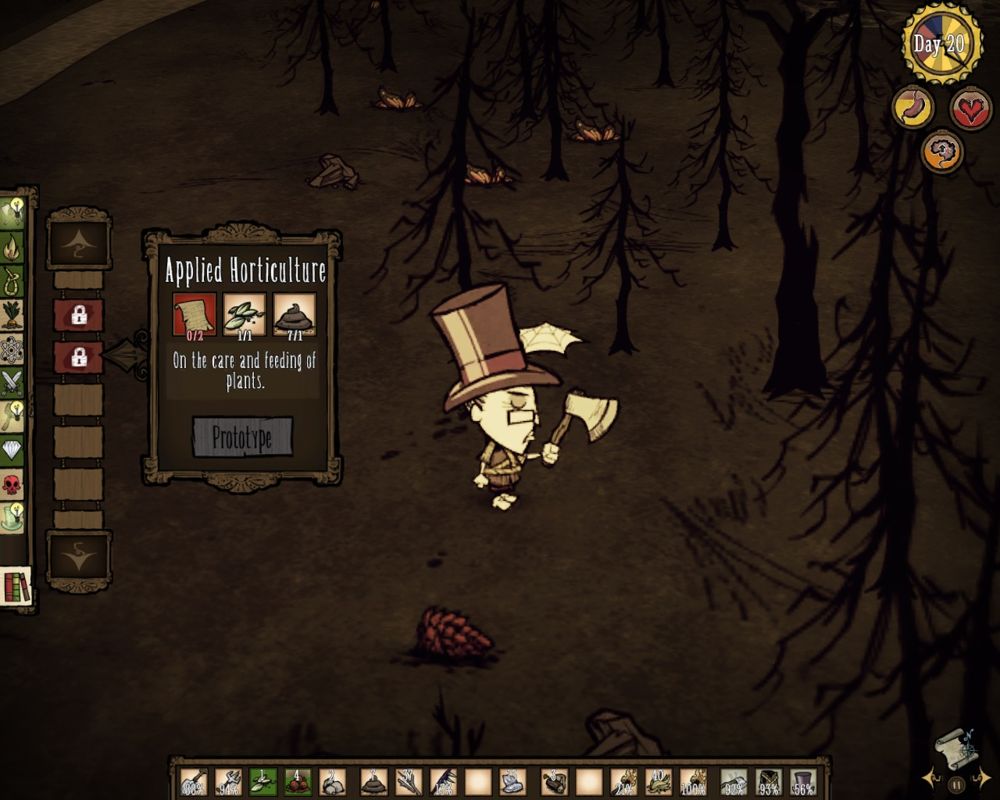
What starts to click is the chain from exploration to crafting to survival. New recipes open as you collect the right combinations of items, gradually letting you make tools, structures, weapons, armor, and more. Food is not a single chore either; foraging, trapping, hunting, and farming offer different ways to keep starvation away. The randomly generated worlds keep that learning process from feeling rote, while adjustable world-generation settings let you shape the kind of wilderness you want to face.
The harsh part is that Don’t Starve expects you to learn through failure. Health can disappear to hunger or combat, monsters roam the land, and low sanity brings shadowy threats into physical danger. A bad decision can turn a stable run into a quick collapse, and that can be frustrating when you are still trying to understand the rules. Yet the game makes death matter without making it entirely empty: surviving longer earns experience, which can unlock more characters, while Adventure Mode offers another route to character unlocks through Maxwell’s door.
Give it a chance if you enjoy survival games that make knowledge your most valuable resource. Don’t Starve is less interested in easing you in than in making you earn confidence one hard-won day at a time. The official Don’t Starve page is a useful place to start if you want a closer look at Klei’s strange wilderness.
Graphics
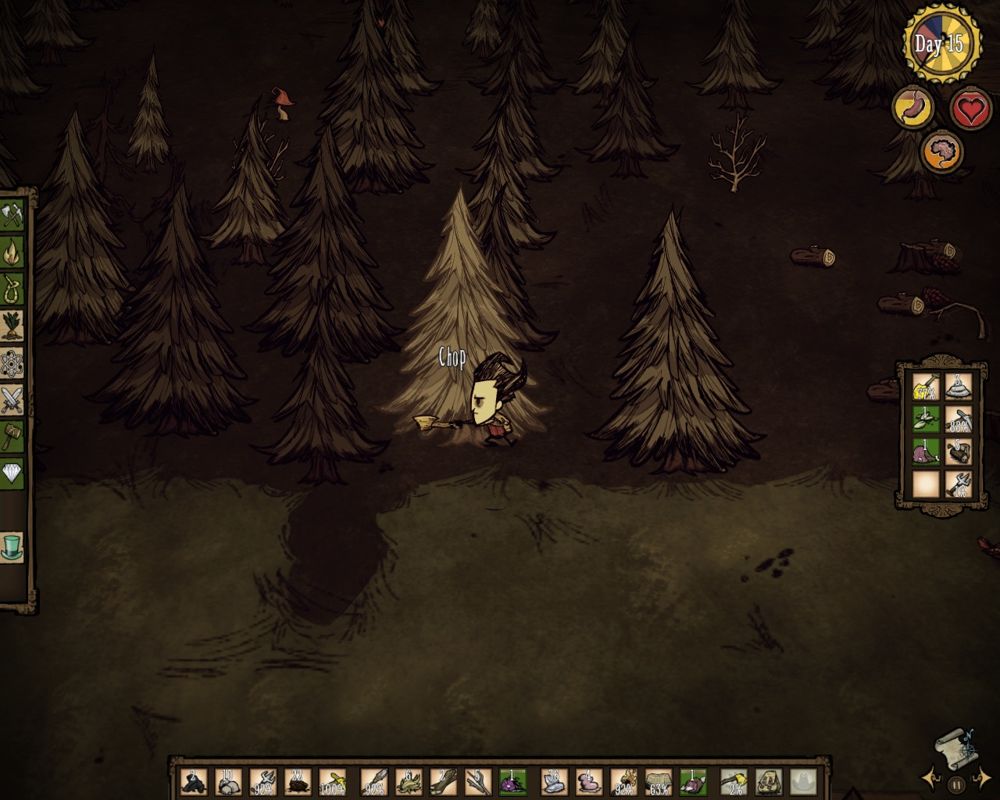
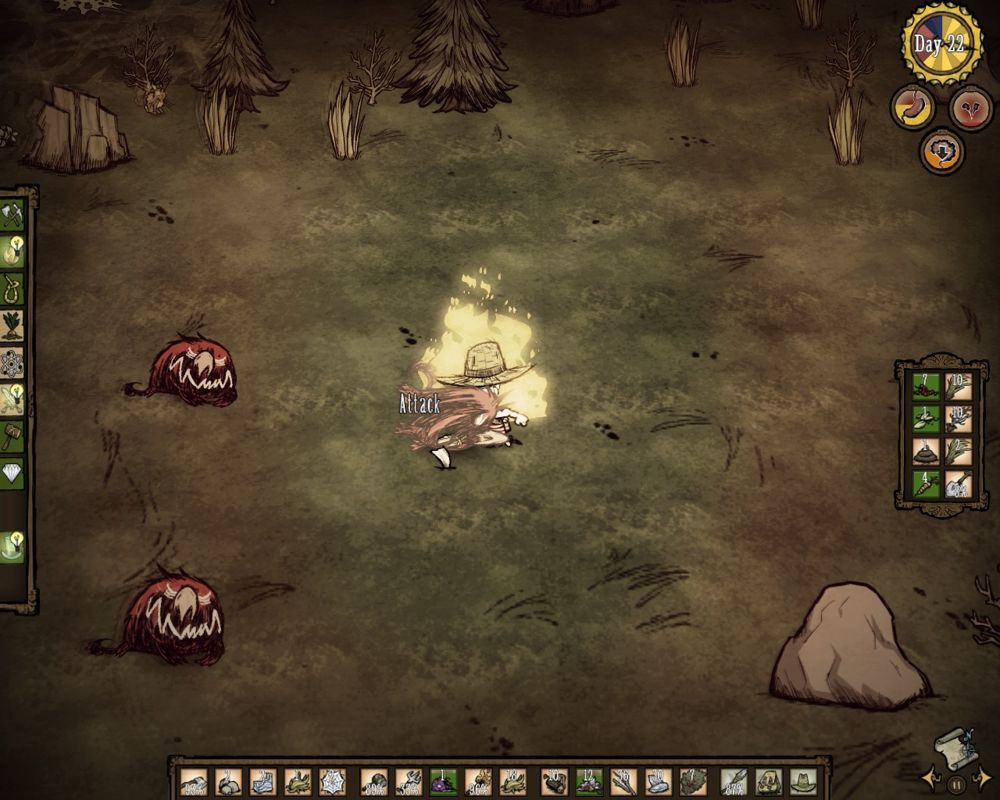
The game uses a 2D, diagonal-down view that keeps your character and the surrounding wilderness in clear view as you gather supplies and move between landmarks. Wilson and the fantasy world have a deliberately strange, hand-drawn look that suits the uneasy tone, especially when the wilderness shifts from daytime scavenging to dangerous night.
Story
There is a clean hook behind all the survival pressure: Wilson is trapped in a mysterious wilderness and needs to learn how to live there long enough to escape. That premise works because it gives practical meaning to the gathering and crafting. You are not building up resources for their own sake; you are trying to last in a place that plainly does not want you around.
The story stays closely tied to discovery. Mysterious landmarks scattered across each generated world encourage you to push beyond the safest nearby resources, and Maxwell’s door points toward Adventure Mode and a more directed challenge. It is a good fit for a game built around venturing into the unknown, because exploration carries both the promise of progress and the risk of losing everything.
Sanity adds a particularly fitting fantasy wrinkle. Let it fall too low and monsters born from the shadows of the mind can become real attackers, turning a survival problem into something more unnerving. Don’t Starve’s story is strongest when it lets the world’s weirdness leak into the everyday work of staying alive.
Overall Experience
Don’t Starve earns its reputation through pressure, not comfort. Each run asks you to balance food, safety, sanity, combat readiness, exploration, and the approach of night. When those concerns start overlapping, the game can feel merciless. When you successfully manage them, even one more day feels like an accomplishment.
The permanent-death structure is a real dividing line. If you need a game that protects a long session from disaster, its setbacks may wear you down. If you can accept that each failed survivor teaches you something useful for the next attempt, the repeated runs become the point rather than a punishment.
At its best, Don’t Starve makes you respect small victories: finding enough food, crafting the right tool, surviving a monster encounter, or simply keeping a fire going through another dangerous night. It is a tough, distinctive survival game for anyone willing to trade comfort for tension and a satisfying sense of hard-earned mastery.


Reviews
There are no reviews yet.