 Retro Replay Retro Gaming History, Reviews & Emulation
Game Overview
Gameplay
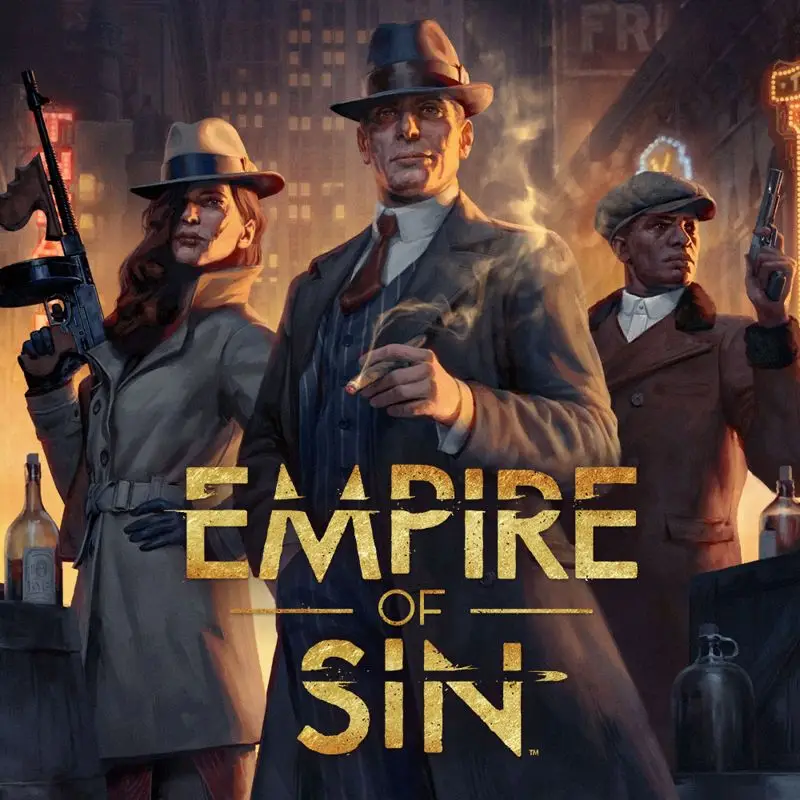
The first few hours have a strong pull because Empire of Sin lets you think like a crime boss rather than just a battlefield commander. You pick from fourteen historically inspired and fictional bosses, including names such as Al Capone, Stephanie St. Clair, and Goldie Garneau, then begin carving out a place in 1920s Chicago. The promise is not merely to win fights. You are trying to build an operation that can hold turf, make money, and survive the attention of competing gangs.
Its best idea is the way the strategy layers sit beside one another. Speakeasies, casinos, supply chains, territory, reputation, and gang members all belong to the same larger push for control. That gives your decisions a useful sense of consequence: expanding a criminal business is part of the same ambition as protecting it. You are not managing an abstract city just for a higher number. You are trying to become the outfit that everyone else has to reckon with.
Combat supplies the sharper, more immediate side of that climb. When disputes turn violent, you assemble your gang for turn-based battles over turf and influence. This is where the game will most clearly divide its audience. The fights make sense as punctuation for the empire-building, but the larger management game remains the real reason to stick around. Go in wanting both a gang-level tactics game and a city-level strategy game, not one at the expense of the other.
Role-playing is another welcome ingredient. The game frames your rise through hustling, charm, and intimidation as well as brutality, which fits a mob-boss fantasy better than a strategy game built solely around expansion. Choosing a boss and deciding how to conduct business gives the campaign a more personal angle than simply commanding anonymous units. Still, the appeal depends on how much you enjoy making your own criminal narrative from systems and territorial competition.
Story
Empire of Sin is built around a familiar but effective setting: Chicago during Prohibition, where liquor, money, and influence create opportunities for ruthless gangsters. Rather than centering its pitch on one fixed crime saga, it gives you a choice of bosses and asks you to author the climb to power. That makes the setting feel like a playground for rivalries and ambition, even if you are looking more for an open-ended underworld story than a single tightly authored one.
Overall Experience
There is a genuinely attractive game in the collision of management strategy, role-playing, and turn-based combat. Few settings fit that mix as naturally as Prohibition-era organized crime. Running businesses, defending a growing empire, and deciding whether to charm or threaten your way forward all point toward the same fantasy, so the game has a clearer personality than a generic city-conquest strategy.
At the same time, Empire of Sin is easier to recommend to a patient strategy fan than to someone hunting for a clean, concentrated experience. Its scope is its strength, but it also means your attention is constantly divided between operating the enterprise and handling gang conflict. That can be satisfying when you want a campaign with several moving parts. It can become frustrating when you wish the game would commit more fully to one of its ideas.
Give it a chance if the thought of playing a Chicago mob boss matters as much to you as tactical efficiency. The combination of a chosen boss, a recruited gang, criminal businesses, and contested turf gives it a worthwhile hook, even if the experience does not always sound as focused as its premise. It lands as a decent, ambitious strategy game with a setting strong enough to carry you through its rougher balance of ideas.


Reviews
There are no reviews yet.