 Retro Replay Retro Gaming History, Reviews & Emulation


Retro Replay Review
Gameplay
The first hour is all about possibility. You are running a small studio, choosing what sort of game to make, matching it to a platform, and trying to turn a modest budget into sales. That loop is immediately understandable, but it has enough moving parts to make each project feel like a calculated bet rather than a button press.
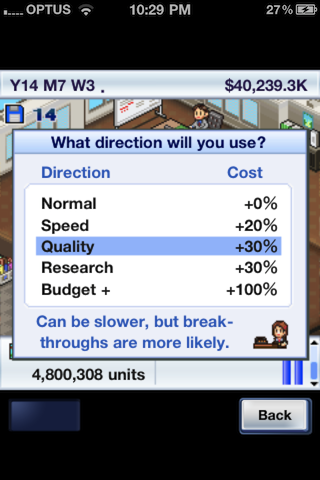
What starts to click is the connection between creative choices and cold business reality. Staff contribute graphics, sound, and the core story or style, while you steer costs and overall direction. Reviews arrive, sales figures update, and suddenly you are not merely making another game: you are deciding whether a hit deserves a sequel, whether a media event is worth the expense, or whether an advertising push can rescue a slower period.
The tension comes from the books. Hiring bigger names and expanding to a larger office can help you grow, but neither decision is free, and a poorly performing release can leave you short of cash. Independent jobs such as producing FMVs or music scores give you a practical fallback when original projects are not paying the bills. If you enjoy watching a small operation turn into a serious company through a run of smart, sometimes risky decisions, this is very easy to sink into.
Graphics
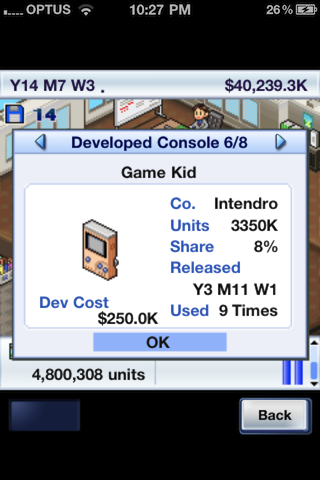
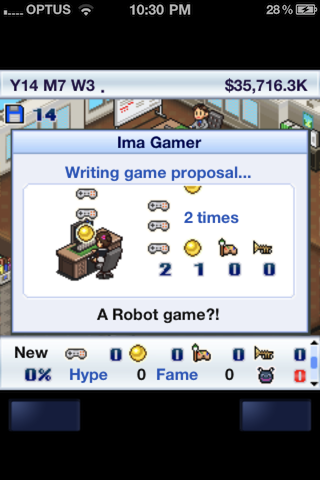
Game Dev Story uses old-school 2D pixel art, with small, pixelated staff characters and a look that recalls SNES and older PC games. The touch-screen menu approach keeps the management side direct and accessible, while MIDI music completes the deliberately retro package.
Story
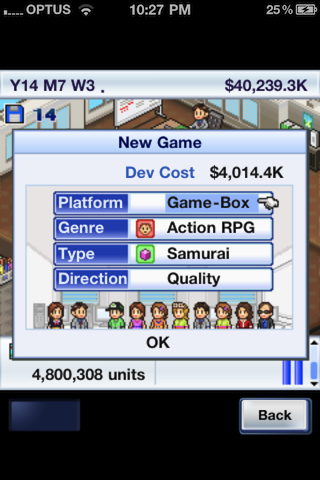
This is not a character-driven tale with a fixed plot to follow. Your studio’s climb from up-and-coming outfit to industry leader is the story, shaped by the projects you choose and the successes or setbacks they create.
That makes the strongest moments personal in a management-game way. Landing a well-reviewed title, seeing sales build, and earning the means to develop a follow-up creates a satisfying sense of momentum. Conversely, a slump forces a change in plans and can turn contract work into the chapter where your company steadies itself.
Do not come in expecting dramatic narrative twists. Come in if you like making your own career arc out of budgets, releases, reviews, and the slow accumulation of reputation.
Overall Experience
Game Dev Story understands the fantasy behind running a game studio: you get to make the calls, but you also live with them. It keeps returning you to the pleasurable question of what your company should make next, and it gives those choices enough financial weight that success never feels entirely automatic.
Its small-scale, retro framing is a strength. The focus stays on the rhythm of planning, producing, selling, and reinvesting, rather than burying you under an intimidating pile of corporate detail. When a project connects, the payoff is immediate; when it does not, there is usually another decision waiting to pull you back in.
Give it a chance if you want an approachable business sim built around the game industry and enjoy steering a studio through both ambition and compromise. The path to the top can be stressful when sales dip and money tightens, but that pressure is exactly why a thriving studio feels satisfying to build.


Reviews
There are no reviews yet.