 Retro Replay Retro Gaming History, Reviews & Emulation

Retro Replay Review
Gameplay
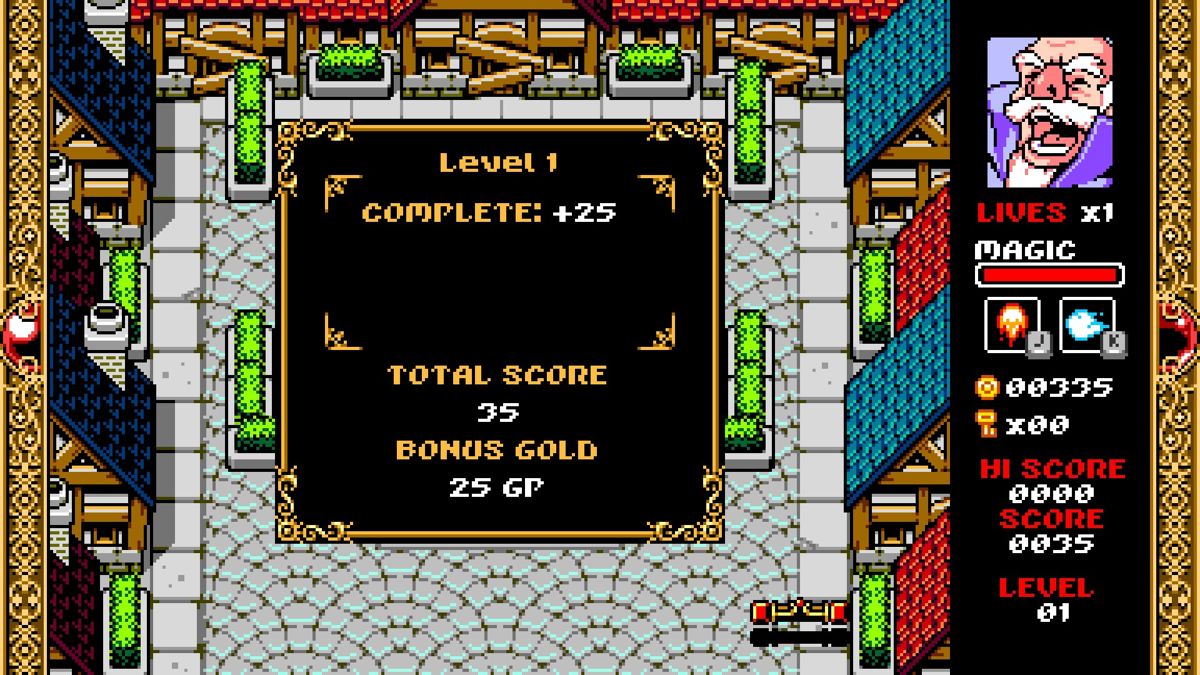
Wizorb understands why brick breakers are hard to put down. The basic loop is immediate: keep the orb alive with your magic wand, carve through a layout, catch the falling rewards, and line up the next rebound before the ball gets away from you. That familiar rhythm is sturdy on its own, but the game keeps poking at it with monsters, buttons, bonus routes, and shops. A board can shift from routine cleanup to a small scramble when a roaming enemy sends the ball somewhere you did not intend.
The magic is the smartest wrinkle. Fireballs let you remove troublesome bricks directly, while the reversal spell and ball teleport offer ways to rescue a bad angle or force progress when conventional rebounds are taking too long. Because magic is limited, these are not replacements for paddle skill; they are pressure valves you learn to save for the right moment. The magnet item, which lets the ball stick to the wand, is similarly valuable because it restores control when a level has turned chaotic.
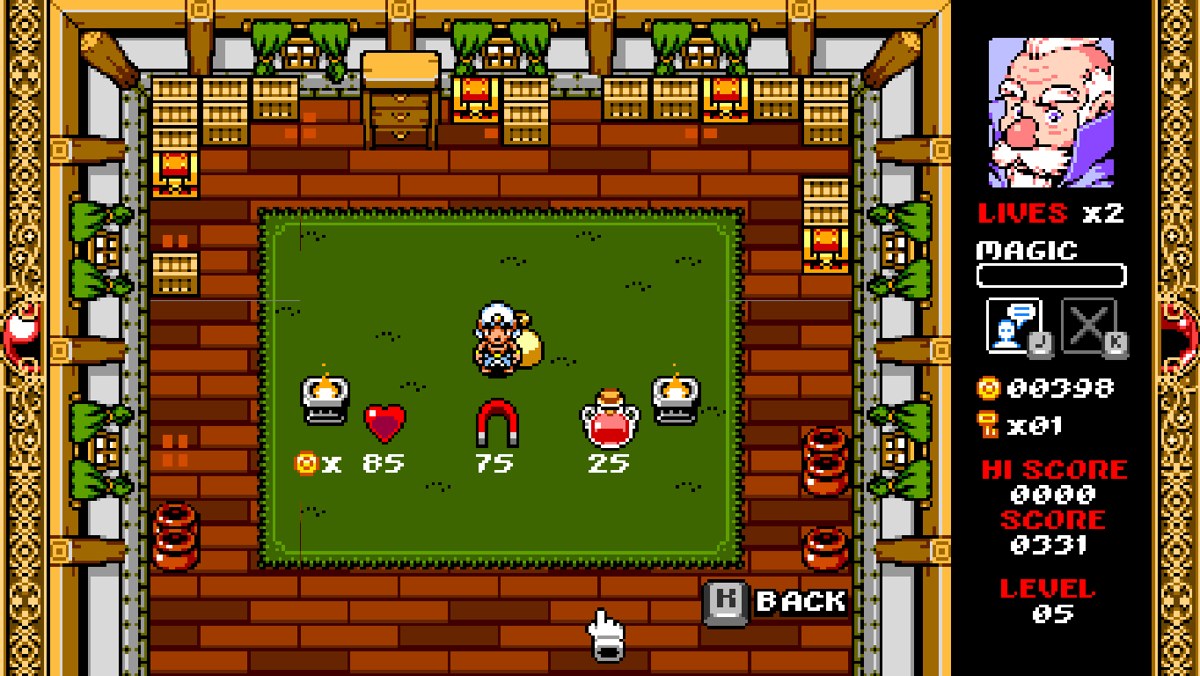
There is real tension in the economy. Bricks can drop coins, magic, and extra lives, and shops tempt you with replenishment or useful tools. Yet burning through all your continues is costly, so careless spending can come back to bite you. The increasing ball speed is where frustration can set in: as the orb accelerates, recovery windows shrink, and monster-caused deflections become especially aggravating. Still, restarting with a chosen launch direction means a lost ball does not feel entirely random. If you enjoy mastering rebound angles but want more decisions than a pure score attack offers, this is a strong fit.
Graphics
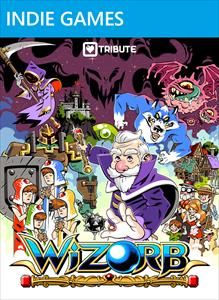
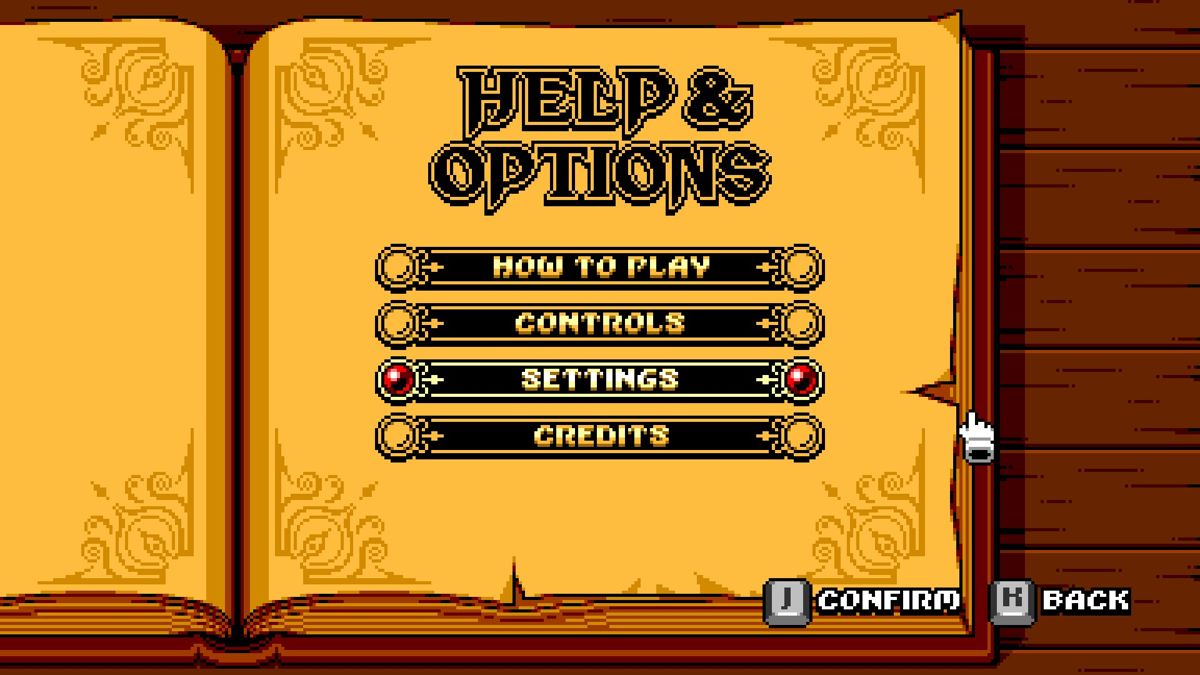
The low-resolution art leans hard into an NES-era look. Brick-filled playfields, the wizard Cyrus, wandering monsters, and the fantasy locations are all presented in compact 2D pixel art. It is a deliberately old-school picture rather than a lavish one, and that suits a game where you need to track the orb, paddle, and falling pickups at a glance.
Story
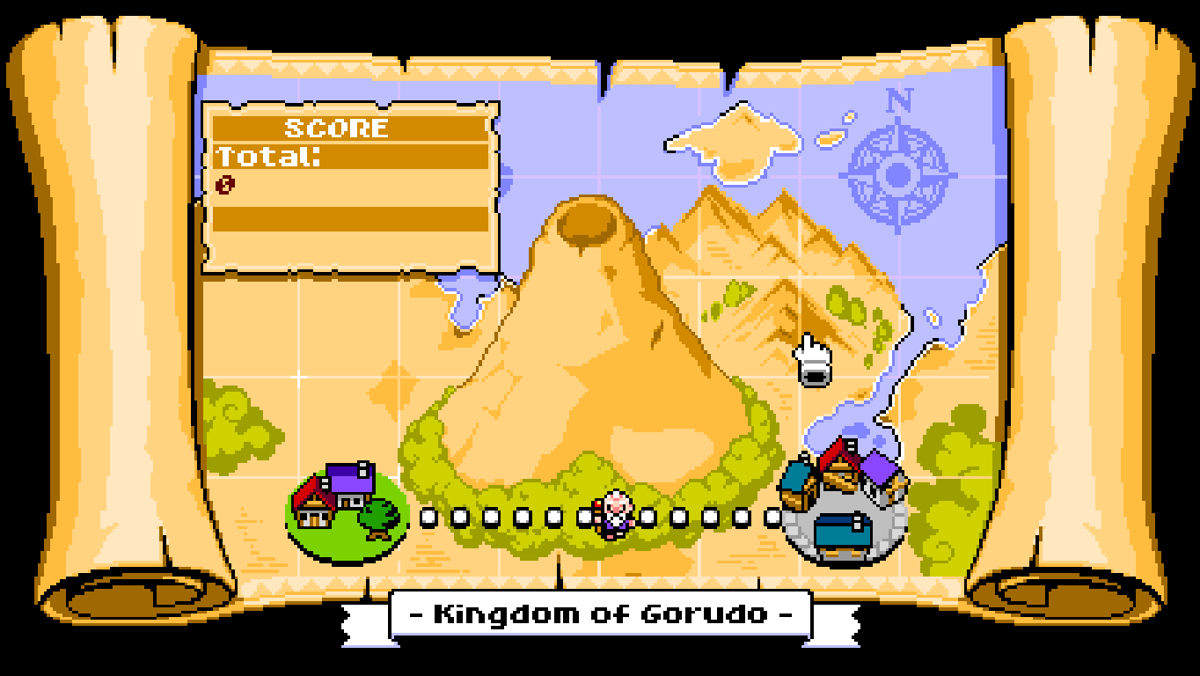
The Kingdom of Gorudo is under threat from an evil presence, and Cyrus sets out armed with the magic called Wizorb. It is a simple fantasy frame, but it gives the brick-breaking campaign a destination beyond merely clearing another screen. Moving through places such as Clover Town, Gorudo Castle, and Cauldron Peak makes the five-world structure feel like a journey.
Clover Town does more than name a location: it works as a hub where Cyrus can meet characters and donate money in return for rewards. That small layer of interaction gives your collected coins a purpose outside survival purchases and helps the RPG influence feel woven into the progression rather than pasted over the action.
Do not come expecting a story-heavy adventure. The plot is mainly a reason to push onward through the campaign, and Wizorb is wise to keep its focus on the paddle-and-orb action. The fantasy context earns its place because it feeds directly into spells, towns, rewards, and the sense that each cleared world moves Cyrus closer to resolving Gorudo’s danger.
Overall Experience
Wizorb is a clever, focused remix of a classic formula. Its first hour has the easy comfort of Breakout or Arkanoid, then the spells, enemies, purchases, and hidden stages start making individual boards feel more distinct. It never loses the central pleasure of threading an orb through the last few bricks; it just gives you more ways to respond when the usual angle chasing is not enough.
The rougher side is inseparable from its arcade nature. Fast ball movement and surprise bounces can turn a promising run into a lost life, while finite continues ensure repeated errors matter. That can be bracing rather than welcoming, especially if you prefer brick breakers that let you coast. Patience pays off, though, since launch control, magic management, and shop choices give you practical ways to improve rather than leaving success entirely to luck.
With about 60 levels across five worlds and extra secrets to find, Wizorb has enough room for its ideas without abandoning the quick-hit character that makes the genre work. It is easy to recommend to anyone who misses 8-bit arcade action and wants a brick breaker with a little more personality and decision-making. The RPG touches do not transform it into a deep role-playing game, but they make a good paddle game more memorable.


Reviews
There are no reviews yet.