 Retro Replay Retro Gaming History, Reviews & Emulation
Retro Replay Review
Gameplay
The first hour asks you to accept that Abarenbō Princess is not interested in letting you micromanage every sword swing. You control Shion, Rouge’s childhood friend and protector, but combat runs through orders issued to the party: direct someone to attack a particular foe, conserve energy, or take charge. It is a deliberate change from the standard turn-based RPG routine, and it can feel awkward if you arrive expecting full command of each character’s move list.
What starts to click is the connection between your choices outside battle and your options inside it. Motivation replaces ordinary experience and leveling. A highly motivated character performs better and can access more skills, while a discouraged one may not have the command you want when a fight turns ugly. Since one story response can lift one companion while lowering another, you cannot simply chase the answer that pleases Rouge or Shion most. You have to maintain the group.
The enemy-intent display gives that indirect combat some welcome texture. Seeing possible enemy moves lets you make orders with a clearer purpose instead of merely hoping your party interprets a vague instruction well. The frustration comes when motivation shuts off useful options, especially because your response choices can create competing priorities across the team. Still, immediate battle retries take some sting out of failure, and the training mode is an excellent place to test attacks and party setups before committing to a difficult encounter.
The eight-chapter structure suits the design. Completed chapters can be replayed, with times and scores recorded, so revisiting a section is not just a desperation move after a bad result; it is part of finding cleaner choices and stronger party balance. This is a short-form, systems-minded RPG approach rather than an endless leveling grind.
Graphics
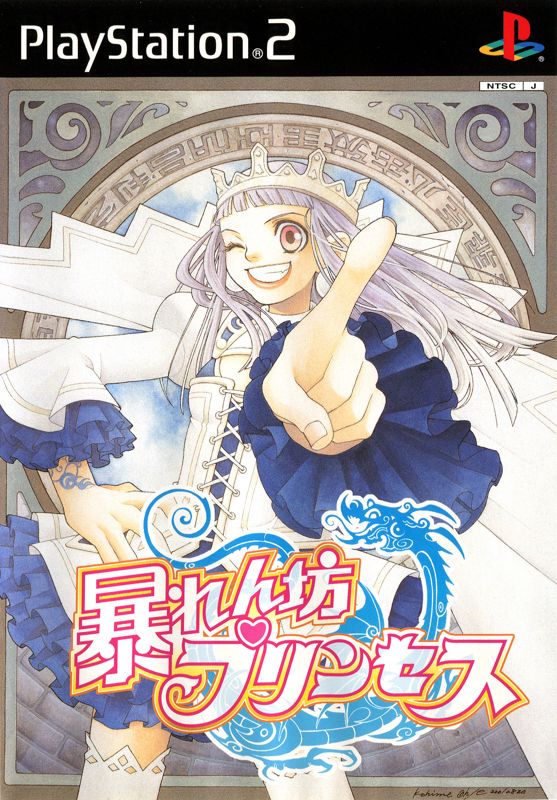
Abarenbō Princess is an anime/manga fantasy RPG seen from a third-person perspective. The central image is clear and character-led: Rouge is a headstrong young princess, Shion is her swordsman protector, and the journey moves through a kingdom strained by illness and a curse.
Story
Rouge Victoire has a solid RPG lead’s problem: she is the Silverbell Kingdom’s heir, her father is failing, her mother has been turned to stone, and a great power inside her is difficult to control. It is familiar fantasy material, but the story has a useful source of momentum in Rouge’s need to prove that her confidence and sense of justice amount to more than reckless bravado.
Shion gives the setup a personal anchor. He is not simply another party member; he is Rouge’s childhood friend and sworn guardian, while you technically inhabit his role for much of the game. That makes the game’s post-battle comments from Shion more than flavor, since they can affect motivation and therefore the party’s real effectiveness.
The strongest narrative idea is that conversations have consequences beyond a simple branch or a moral tally. Your replies reshape how the characters feel and fight. That makes social balancing part of the drama: a choice that sounds right for one relationship can leave another companion less ready for the next battle. The story’s stakes and its RPG progression are unusually intertwined.
Overall Experience
Abarenbō Princess is an acquired taste, but a compelling one. Its central gamble is asking you to relinquish direct combat control in exchange for a party whose emotional state matters mechanically. When you understand how motivation, commands, and enemy forecasts connect, battles become less about choosing the strongest button and more about managing a group under pressure.
That same design can wear on you if you want absolute tactical precision. A character’s motivation can limit the orders available, and keeping everyone satisfied means there may be no universally correct response during story scenes. The game asks for patience, experimentation, and a willingness to replay chapters rather than rewarding a straightforward march through an RPG campaign.
Give it a chance if you want a Japanese-style RPG that tries to make dialogue choices matter every time combat begins. The retry option and training mode make its unusual battle structure easier to learn, while chapter replay adds a satisfying reason to revisit decisions. Rouge’s quest is worth taking on for the motivation system alone: it is a genuinely different answer to the question of how an RPG party should grow.


Reviews
There are no reviews yet.