 Retro Replay Retro Gaming History, Reviews & Emulation

Retro Replay Review
Gameplay
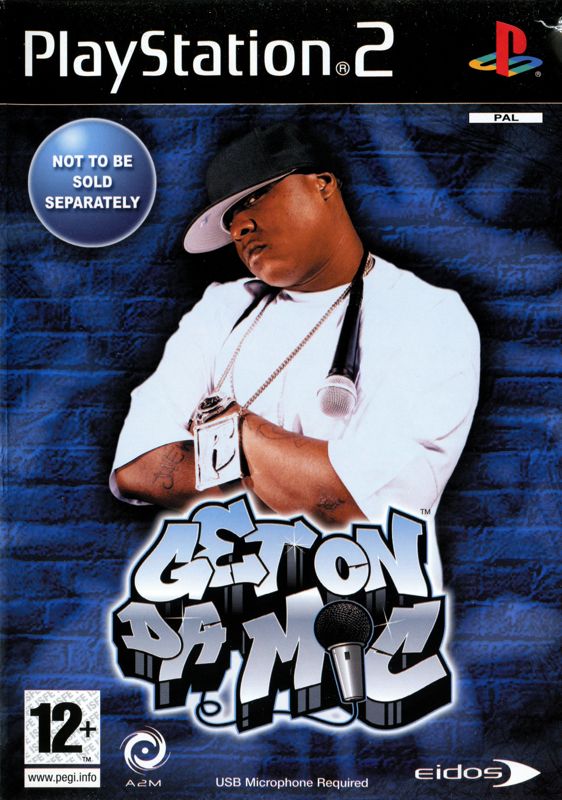
The best thing about Get on da Mic is how quickly it lets you stop worrying about singing well. Pitch does not matter here; timing does. Follow the scrolling lyrics, stay with the beat, and you can earn points whether you are rapping, singing, talking, or making a well-timed noise. For anyone intimidated by conventional karaoke scoring, that is a real invitation to grab the microphone rather than sit on the couch.
Rap is also a sensible fit for the format. The bar and word spacing give you a practical guide to a verse’s flow, while the moving highlight tells you where to land. On lower difficulty, that makes the game easy to pick up in minutes. Raise the difficulty and the density of the lyrics asks for more concentration, particularly on tracks whose verses move faster than your breath and memory can comfortably manage. It is less about vocal talent than rhythm, recall, and keeping your nerve when you lose your place.
The song selection has legitimate party pull. You get everything from “Rapper’s Delight” and “Push It” to “California Love,” “Get Ur Freak On,” “Jesus Walks,” and “X Gon’ Give It To Ya.” That range gives a session some useful swings between familiar old-school crowd-pleasers and tougher, more contemporary-for-2004 cuts. The major compromise is that none of them use the original vocal performances. If a favorite song lives in your head because of a particular voice and delivery, the replacement recordings can feel like karaoke backing tracks trying hard to fill very large shoes.
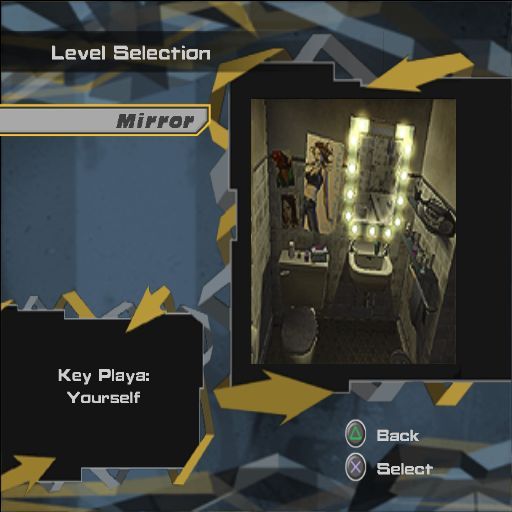
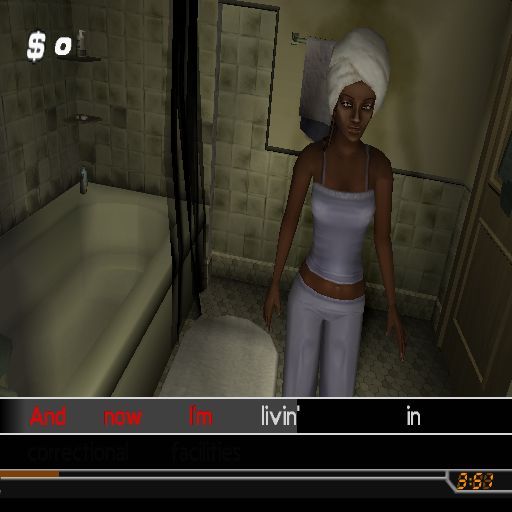
Career mode adds just enough structure to keep solo play moving: perform well, earn money, and work upward through eleven venues beginning in a bathroom. You can spend your earnings on character items or on a mansion and its decorations, which is light motivation rather than a deep progression system. The Rock the Mic reward is similarly simple but satisfying: fill the meter through good play and the venue gets a burst of spectacle, with snow or money falling from above.
Freestyle is where the game becomes either its most memorable mode or its most awkward, depending on who is in the room. Rapping over beats without the regular vocal track is a good excuse to mess around, and multiplayer freestyle hands another person the controller to judge the performance. Practice mode removes the score pressure, while exhibition lets you jump straight to any available song. That flexibility helps the disc work as a social toy instead of demanding a long career commitment.
Graphics
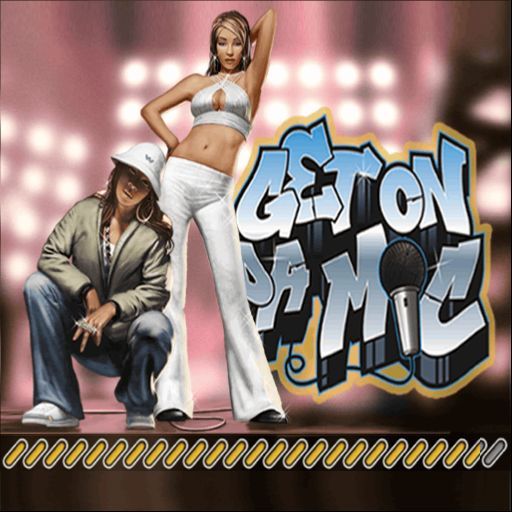
The career climb gives you a clear series of venues, starting with the bathroom and moving toward better stages. Characters have their own poses and animations, and you can alter your performer with purchased items; the Rock the Mic moments add falling snow or cash to the location. EyeToy support can also replace the game graphics with a video image, which is exactly the kind of chaotic feature that can make a group session funnier.
Story
There is no dramatic narrative to carry Get on da Mic. Its story is the familiar rise-to-the-top career framing: begin in an embarrassing bathroom gig, perform your way through a run of venues, and eventually reach more prestigious places to rap.
That bare setup fits the game. You are not here for plot twists; you are here to see whether you can survive a verse and bank enough money for another cosmetic purchase. The mansion and decoration purchases turn success into a small personal trophy room, even if they do not create much emotional investment on their own.
The strongest sense of progression comes from your own improvement. Early on, following the on-screen flow guide can feel mechanical. A few tracks later, when you recognize a phrase before the highlight reaches it and hold the rhythm through a difficult run, the climb through venues starts to feel earned. It is thin framing, but it does not overstay its welcome.
Overall Experience
Get on da Mic is more charming than polished. Its central scoring idea makes rap karaoke accessible, and that is not a small achievement: you can join in without being judged for a shaky voice. If your group knows these songs and is willing to be silly, the game can turn timing accuracy into a surprisingly competitive living-room event.
Its limitations are hard to ignore. Re-recorded vocals are a substantial downgrade for a music game built on recognizable hip-hop tracks, and timing-only scoring can make performance feel less expressive than the songs themselves. You may also find that the novelty fades once you have worked through the playlist, especially when playing alone.
Still, there is enough here to recommend it to the right crowd: rap fans who want an undemanding party game, karaoke newcomers who hate pitch scoring, and anyone with friends ready to attempt freestyle without taking it seriously. For broader background on the release, see Get on da Mic’s game history. Everyone else will probably get more mileage from the playlist memories than from the career itself.


Reviews
There are no reviews yet.