 Retro Replay Retro Replay gaming reviews, news, emulation, geek stuff and more!
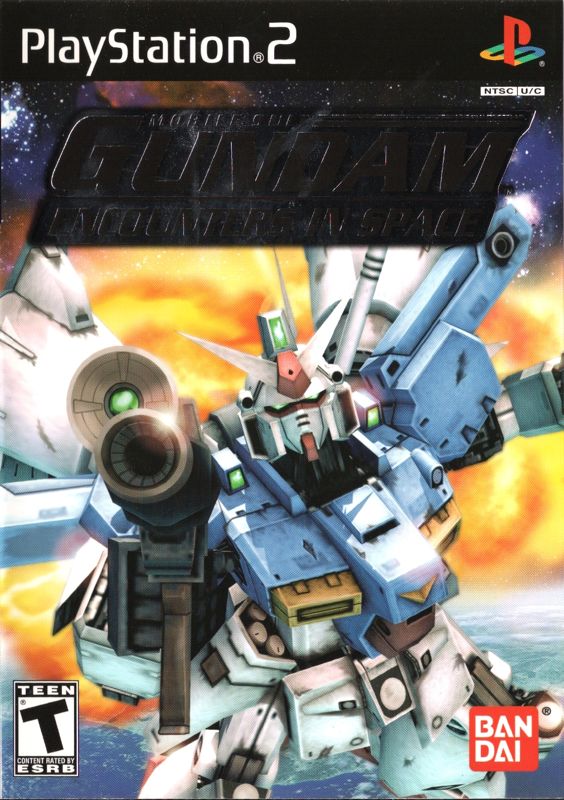
Retro Replay Review
Gameplay
The first thing you need to adjust to is that Encounters in Space wants you to fly, not merely strafe around a flat arena. You have forward, backward, and side-to-side movement along with pitch and yaw, so a target can be above, below, or disappearing behind you. Boosting creates bursts of speed, while barrel rolling breaks enemy target locks. That is a strong foundation for a Gundam action game because it asks you to manage position and momentum instead of leaning on aim alone.
Combat has a satisfying push and pull. Every unit carries melee and ranged options, but shots are not bottomless: ammunition runs out, and weapons need to reload or cool down. That limitation makes closing in with a melee weapon feel like a tactical answer rather than a novelty, especially after you have spent your ranged salvo. The game gives its large mobile-suit roster practical differences through stats, equipment, and special attacks, even if campaign missions usually decide which machine you bring.
The mission structure alternates between auto-scrolling runs, where you dodge obstacles and destroy visible targets, and arena sections built around hunting nearby enemies. The scrolling stretches can give the game a more directed, old-school action rhythm; the arenas are where the free 3-D movement gets room to breathe. That split will either keep the pacing lively or feel restrictive depending on whether you came for guided combat scenarios or uninterrupted space duels.
Versus is where the toy box opens. You can fight the computer or another person in one-on-one battles, building teams of one to three pilots and mobile suits under a 300-point budget. Costs force choices instead of letting you simply stack the biggest machines, and high scores in the other modes unlock more pilots and suits. If the thought of engineering a Char-versus-Amuro dream match sounds irresistible, this mode gives the rest of the package a long tail.
Graphics
The action is built around 3-D space combat, with auto-scrolling sequences breaking up the arena battles. The important visual advantage is clarity of movement: targets, obstacles, and the direction of incoming pressure matter because you are maneuvering across several axes rather than along a single flat plane.
Story
There is more here than a single retelling of the One Year War. White Base mode follows Amuro Ray through that war’s closing months, making it the natural starting point if you want the recognizable Gundam route. It is a focused way into the game, and the character context gives the assigned machines and missions more weight for fans.
Thoroughbred is the more interesting counterpoint because it centers Ford Romfellow in an original story created for the game. That campaign is not just filler around the famous cast; it gives the package its own branch of Gundam material, later adapted into manga. If you already know the major One Year War beats, this is likely the mode that feels freshest.
Ace Pilot mode broadens the perspective further, drawing characters from the One Year War, 0083: Stardust Memory, Mobile Suit Variations, and Side Story: The Blue Destiny. Mission mode takes a different route, letting you create a Federation or Zeon pilot and train skills and abilities across eight missions. The result is a fan-service-heavy structure, but one with enough angles that you are not locked into one protagonist’s view of the war.
Overall Experience
Encounters in Space earns its recommendation through movement and scope. Its combat understands that mobile suits in space should feel like machines wrestling with distance, direction, speed, targeting, and weapon limits. When you are boosting after a target, shedding a lock with a barrel roll, then deciding whether to spend the last of your ranged fire or move in close, it captures a tense, physical version of Gundam combat.
The trade-off is control over your favorite machine. Outside Versus, you will often use the suit assigned to the mission, so this is not a campaign built around carrying one carefully chosen mobile suit from start to finish. The auto-scrolling missions can also be a dividing line: they add variety, but they are less freeform than the arena engagements.
Still, the amount of Gundam material is hard to dismiss. Four modes cover Amuro’s campaign, an original story, a custom-pilot progression route, and a cross-series character showcase, while more than 70 mobile suits feed the broader obsession. Give it a chance if you want a PlayStation 2 Gundam game that values 3-D maneuvering and rewards knowledge of the franchise. Give it a pass only if assigned campaign loadouts and occasional on-rails action sound like barriers rather than variety.

Reviews
There are no reviews yet.