 Retro Replay Retro Gaming History, Reviews & Emulation
Retro Replay Review
Gameplay
The first hour establishes Granthese as an action-RPG that wants you to keep both leads in circulation. Lost handles the immediate satisfaction of swordplay up close, while Millet can work from range with her pistols. Switching freely means combat is not just a choice of favorite character; it is a practical way to react to enemy spacing and keep your attacks moving.
Its smartest wrinkle is the combo chain system. Bringing both characters into a chain earns bonus experience, so the game nudges you toward active swapping instead of letting one protagonist carry the entire adventure. Lost and Millet share levels and attributes, which removes the usual anxiety of accidentally undertraining somebody. Their separate equipment sets still give you decisions to make, and level-up points apply to both, making each investment broad and immediately valuable.
Crafting is where the game asks for a little more curiosity. Combining special items into potions and equipment can pay off, recipes can be learned from other characters, and successful results are recorded for later use. The Summon system adds another layer by altering special attacks; assigning different creatures to each hero, with some effects changing by wielder, gives you real reason to test combinations rather than settle too quickly.
The rougher edge is progression outside combat. Towns are handled through menus, and moving the story forward can require talking to NPCs more than once to uncover the next destination. That is old-school adventure-game friction, and it will grate if you want constant forward momentum. If you can accept a little checking back and conversation hunting, the combat systems give the detours enough purpose.
Graphics
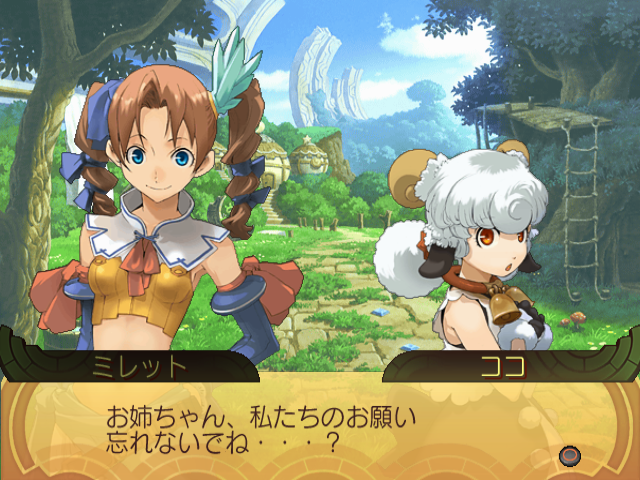
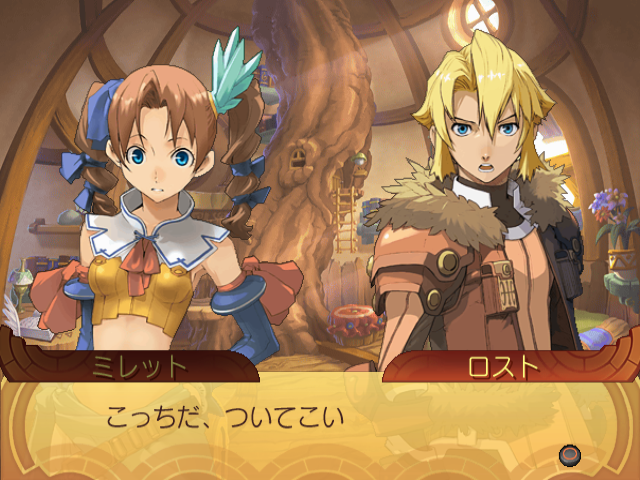
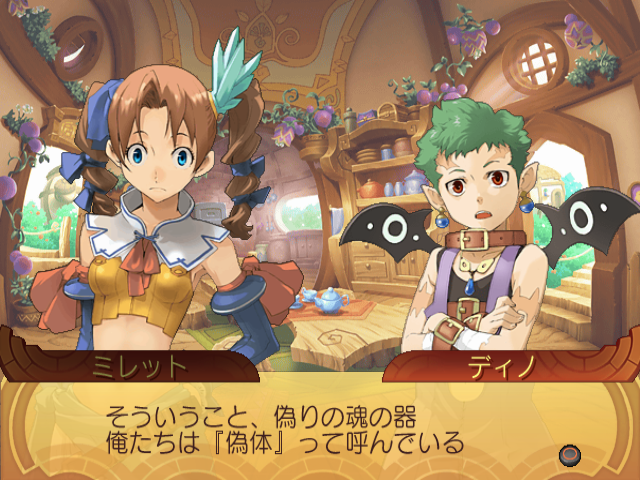
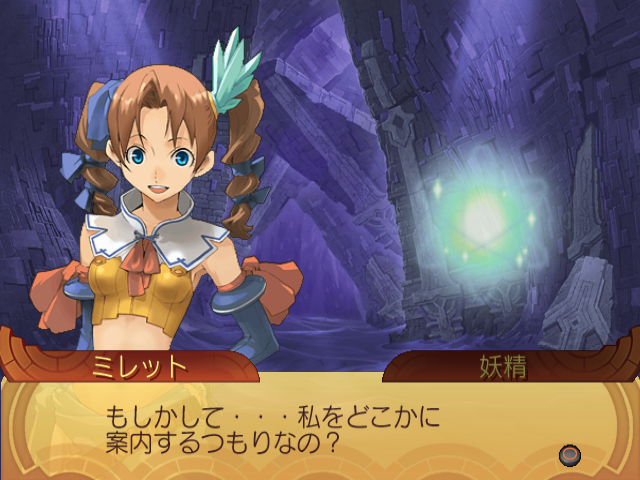
Exploration uses a 3D, behind-the-character viewpoint, while towns shift to menu-based stops for conversations and shopping. Story scenes lean on visual-novel-style character stills paired with voiced dialogue, with occasional animated cutscenes breaking up the chapter structure.

Story
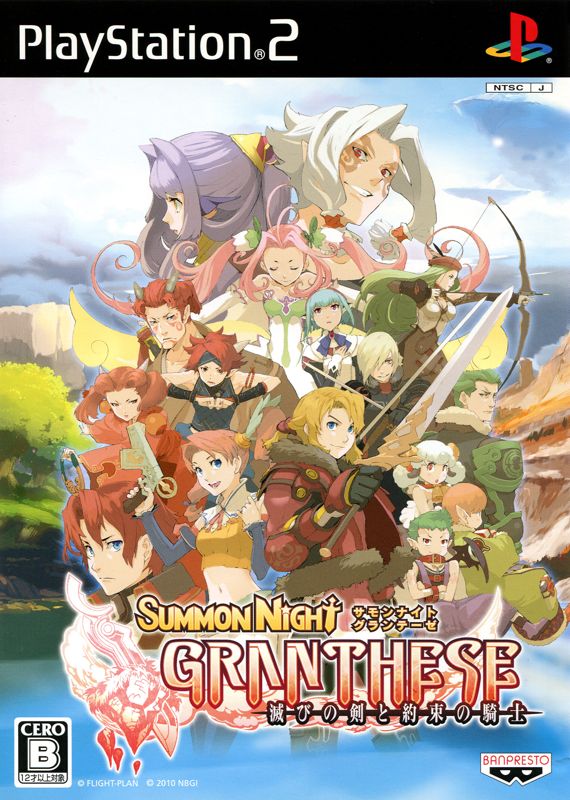
Granthese starts from a fractured world that was once a single continent, then narrows its focus to two outsiders pulled into Kusukusu by three children. Lost Ninebell arrives as an amnesiac swordsman; Millet Tearbell is a pistol-wielding sage and the daughter of a high priest. Both are bound by a summoning contract, so helping their young benefactors and finding a way home are inseparable goals.
That setup gives the central duo a dependable reason to travel together even though they come from different lands. The story is divided into chapters, and the voiced still-image scenes make the dialogue the main delivery system for its exposition. It is a format that suits gamers who enjoy stopping for character exchanges between stretches of exploration and fighting.
Your chosen main protagonist changes the story slightly, which is a welcome reason to care about whether Lost or Millet leads the party. Do not expect that choice to erase the other hero—their partnership remains the point—but it adds a bit of perspective to a tale built around two people summoned into the same obligation.
Overall Experience
Summon Night Granthese is easy to recommend to you if you want a compact-feeling action-RPG structure with more systems under the hood than its two-character premise first suggests. Swapping between melee and ranged combat feels purposeful, shared progression keeps the party tidy, and combo bonuses reward learning to use the pair as a unit.
The trade-off is pacing. Repeated NPC conversations for directions and menu-driven towns can make the adventure feel fussy between battles. Crafting and Summon assignments also ask you to engage instead of simply following the critical path. That makes it a better fit for someone who enjoys poking at RPG subsystems than for someone chasing an uninterrupted action game.
For series context, its closest point of comparison is Summon Night Ex-thèse: Yoake no Tsubasa, another action-oriented entry with two controllable protagonists. Granthese earns its own place through the satisfying push to switch often, experiment with special-attack properties, and make both heroes count in every fight.


Reviews
There are no reviews yet.