 Retro Replay Retro Gaming History, Reviews & Emulation


Retro Replay Review
Gameplay
The first few matches are likely to be defined by the Hyper Reality Visor. It lets you pull immediate battlefield intelligence and spot friendlies and enemies through walls in distinct colours, making it much easier to judge whether the next corner is safe or whether an opposing team is about to collapse on an objective. That is a strong hook because it changes the rhythm of a basic first-person firefight without asking you to learn an entirely alien shooter.
Crucially, the visor is not a free win button. Digi grenades foul its view with glitches, while EMP grenades send opposing visors into a reboot sequence. That creates a simple but useful contest of information: scan to gain the upper hand, disrupt the other side when they are relying on their scan, and do not assume a wall is enough to protect you. Health and ammunition stations also encourage you to think about where you reset between fights instead of treating every engagement as disposable.
There is plenty of familiar multiplayer ground here. Deathmatch and team deathmatch offer direct shooting contests, while Retrieval turns capture-the-flag into a fight over a data canister. Detonate uses a bomb-planting structure, Domination is about holding points, and the last-man and last-team-standing modes give a match more consequence once you are out. With seven modes spread over 12 maps and matches supporting up to 16 people, the package has enough variety to avoid relying on one ruleset.
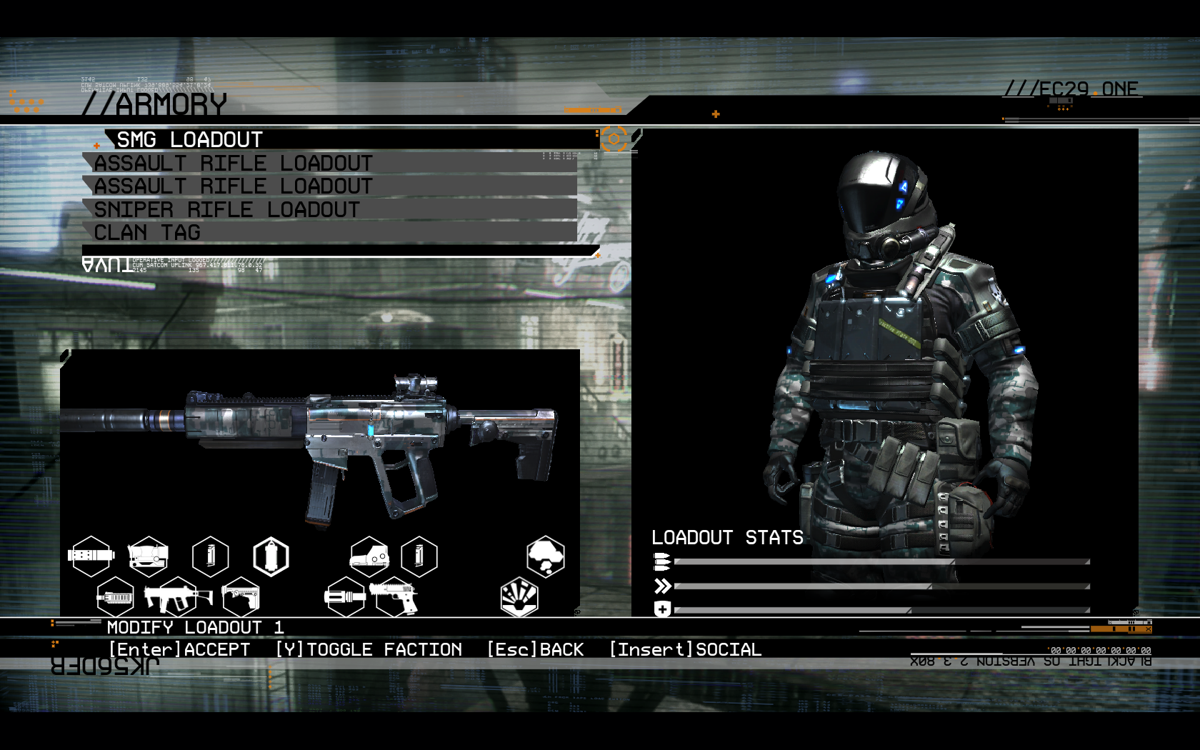
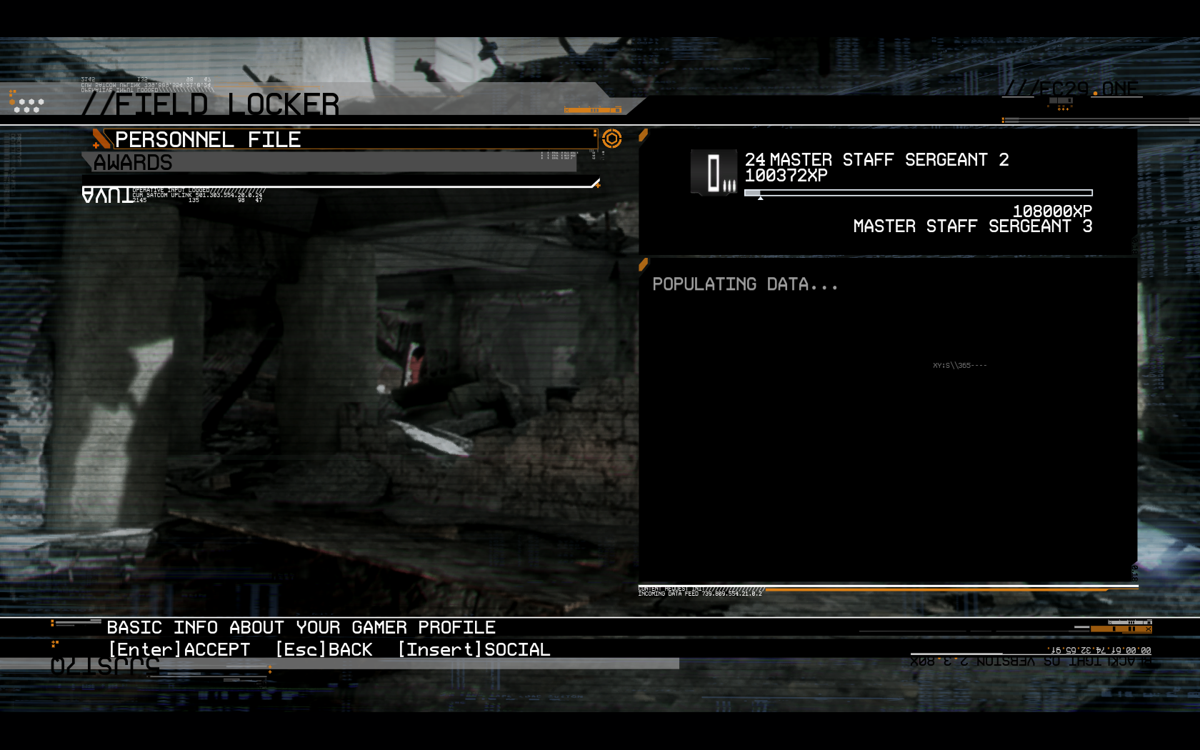
The longer-term pull comes from the 70-level ranking ladder and the Armory. Advancing earns skill and experience points alongside weapon customization parts such as magazines, muzzles, tags, and stocks; you can save distinct weapon configurations, then tailor grenades, equipment, armour, and camouflage around them. If you enjoy gradually refining a loadout, that progression gives repeat games a purpose. If you only want instant, evenly provisioned competition, the accumulating gear focus may feel more like homework than a reward.
Graphics
Blacklight: Tango Down frames its battles in a futuristic military style, with Blacklight and The Order fighting over high-tech equipment. The most distinctive image is the visor view itself: enemies and allies are marked in separate colours through walls, while Digi grenades scramble that picture with glitches and EMP attacks force a reboot. Those effects make the information battle easy to understand at a glance.
Story
The premise is functional rather than gripping. Blacklight, a covert operations unit, investigates the disappearance of Colonel Klein and his team, and the trail leads to The Order, a rebel force made up of former US special forces and local militia with advanced military technology.
That conflict gives the two sides a reason to exist, but the story mainly serves as a frame for the shooting. The four Black Ops missions are tied to the investigation and can be tackled alone or cooperatively with up to four people, which at least gives the fiction a place beyond menu text.
Do not come in expecting the campaign material to carry the experience on its own. The more useful question is whether you like the idea of Blacklight’s technology-driven conflict as seasoning around cooperative missions and competitive matches. It is enough to establish stakes, but the multiplayer systems are clearly where the game wants your attention.
Overall Experience
Blacklight: Tango Down is most interesting when its scanning technology changes how you approach a fight. The visor, its counters, and the need to manage grenades and resupply stations give the shooter a more tactical flavor than its conventional mode list initially suggests. When both teams understand that tug-of-war, a match has more going on than simply chasing the next elimination.
Its limits are just as plain. Much of the structure is recognizable from other military shooters: rank up, unlock parts, tune a loadout, and rotate through deathmatch, objectives, and elimination variants. The four story-linked operations add a cooperative option, but they do not turn this into a narrative-first game. You are here for repeatable online action and the satisfaction of making a better build over time.
Give it a chance if you enjoy a customizable FPS and want a smart twist on battlefield awareness. The best fit is someone happy to alternate between objective modes and straightforward killing modes, experiment in the Armory, and use the visor thoughtfully rather than constantly. At 6.4, it lands as a solid, occasionally clever multiplayer shooter whose central idea is stronger than its surrounding story frame.



Reviews
There are no reviews yet.