 Retro Replay Retro Replay gaming reviews, news, emulation, geek stuff and more!
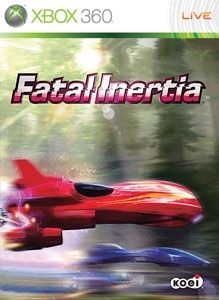
Retro Replay Review
Gameplay
Fatal Inertia starts at its strongest when the track is still unfamiliar and every pickup feels dangerous. You are not merely trying to find the fastest route through a hovercar course; you are trying to preserve that route while another racer weighs you down with magnets, ties you to terrain with a towline, or knocks your craft off balance with rockets. That tension gives even a straightforward race a nice edge. The weapons are non-lethal, but the ships can still take enough damage to be destroyed, so reckless aggression has consequences.
What makes the combat more interesting than a basic weapon-pickup brawl is that several tools have a second use. Firing rockets or force blasts can help launch your own ship, while backward firing gives you a way to defend your rear rather than always aiming ahead. Magnets are particularly mean: they linger, load up your craft, and force you to barrel roll them away before they overload. Once that starts clicking, the racing becomes less about spraying every pickup and more about timing a response when the pack closes in.
The courses are linear, but they are broad enough to turn route choice and recovery into part of the contest. Natural obstacles, elevation changes, boost pads, and checkpoint barriers keep you alert. Missing a barrier is where the game can become aggravating, because the reset costs valuable time and turns one mistake into a serious setback. Fatal Inertia asks for precision while surrounding you with things designed to disrupt that precision. Some racers will enjoy that hostile push-and-pull; others will find it exhausting.
There is more than one flavor of event, which helps the 16 series avoid feeling like a single long championship. Combat Race leans into weapons, Knock Out removes the slowest competitors, Velocity strips the pickups down to speed boosts, and Magnet Mayhem focuses on distortion effects. The four ship classes—Phoenix, Aurora, Mercury, and Titan—also give you meaningful stat trade-offs across speed, acceleration, handling, braking, mass, and strength. Technical parts let you tune further, while paint and emblems provide cosmetic personalization. Eight-player multiplayer is a natural fit for the game’s spiteful, momentum-swinging races.
On PlayStation 3, the Proving Grounds Facility adds eight training tracks, which is especially welcome for a game that benefits from practice, and Master difficulty gives committed racers a tougher target. The adjustments to weapons, physics, and difficulty make that version the more appealing route if you want to dig into Fatal Inertia rather than just sample its chaos.
Graphics
The races run through large outdoor locations including Devil’s Summit, Lost Canyon, Paradise Isle, Glacier Bay, Deepwoods Pass, and Dragon Peaks. You will be threading futuristic ships through lush growth, rock formations, height changes, and icy conditions; Glacier Bay’s blizzard is a memorable course-specific touch. The customizable craft parts, paints, and emblems add some welcome personality to the machines in the field.
Story
The setup is knowingly disposable: in a 22nd-century Earth, wealthy corporations fund racers and their ships because conventional sports no longer entertain the public. It is a useful excuse for aggressive, televised-feeling competition, not a reason to come looking for character drama.
That thin framing actually suits the game’s best moments. Corporate-backed hovercraft dueling through dangerous landscapes needs little explanation when you are already trying to shake magnets off your hull and reach the next checkpoint. The premise stays out of the way and lets the rivalries emerge from the races themselves.
If you need a campaign with a developed plot or memorable personalities, Fatal Inertia will feel bare. Its story is functional scene-setting: corporations, racers, spectacle, and a world where dangerous competition has become the entertainment.
Overall Experience
Fatal Inertia is a rough-edged but genuinely distinctive combat racer. Its best quality is the way its weapons complicate driving instead of simply stopping it. The force field, barrel rolls, alternate fire options, and self-propelling blasts mean you usually have a response available, even when the race has turned nasty. Winning after surviving that mess can feel far more satisfying than cruising through a clean arcade race.
The catch is that the same volatility can make losses feel severe. Wide tracks offer room to maneuver, but obstacles, attacks, damage, and unforgiving missed checkpoints can pile up quickly. You need to enjoy learning a course, accepting a few ugly resets, and treating interference as part of the racing line rather than an interruption to it.
Give it a chance if you want hovercraft racing with more tactical friction than pure speed runs. The league structure, varied events, extensive course count, ship tuning, and multiplayer give it real longevity, while the combat systems offer enough unusual tricks to reward persistence. At 6.7, it lands as a flawed recommendation rather than an essential one—but for a gamer hungry for a chaotic racer where clever retaliation matters as much as a fast lap, the payoff is there.


Reviews
There are no reviews yet.