 Retro Replay Retro Gaming History, Reviews & Emulation
Retro Replay Review
Gameplay
The first few fights are a reminder that early Mortal Kombat asks you to meet it on its own terms. These are direct, side-view arcade fighters built around spacing, quick reactions, and learning a character’s moves rather than mashing your way through every round. The original Mortal Kombat is the roughest entry to return to, but it still has that immediate one-on-one tension: one clean opening can swing a match.
Mortal Kombat II is where this collection starts to feel essential. Its expanded roster and faster rhythm make the first game feel like a sketch for what followed, while retaining the same easy-to-understand goal of controlling the space between two combatants. Then Ultimate Mortal Kombat 3 pushes the pace harder again. If you like frantic matches and enjoy gradually building muscle memory for a favorite fighter, it remains the easiest game here to sink time into.
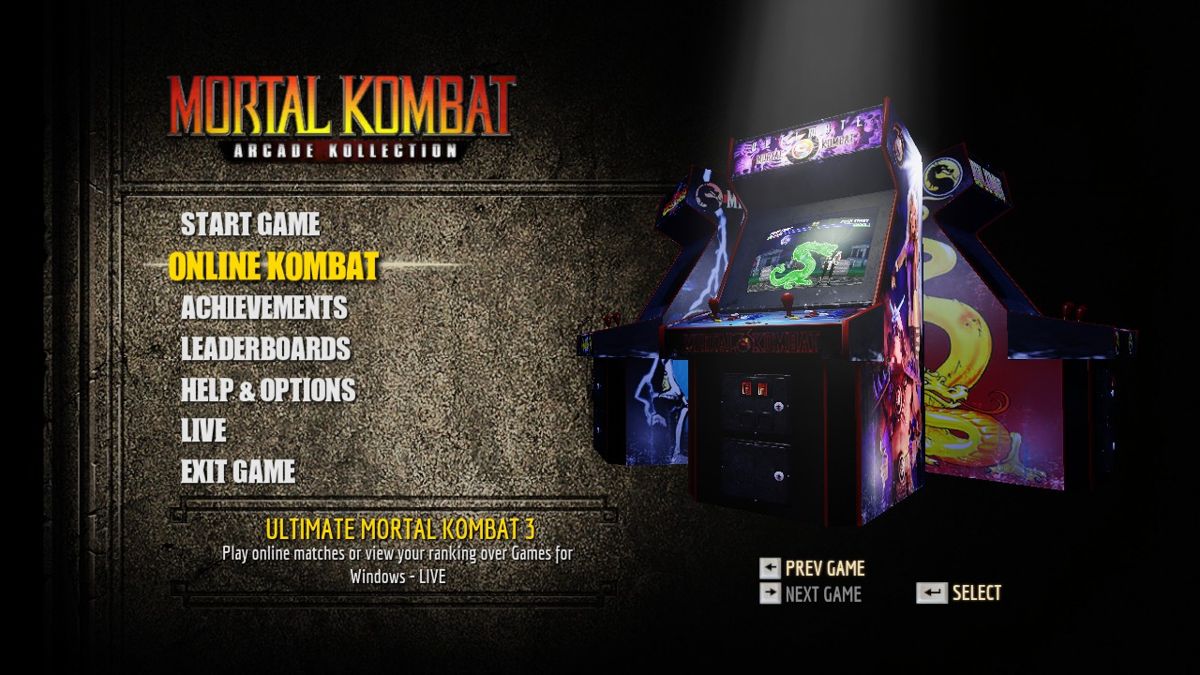
Faithful arcade emulation is both the point and the warning. You get the old games’ demanding feel, quirks, and secrets, not a softened version built around modern conveniences. The sensible handling of the start button is especially welcome: it no longer doubles as pause, so secrets that require it can be performed properly. Local play is the best fit for quick grudge matches, while online play and local and online leaderboards give practiced fighters a reason to keep sharpening their execution.
There is real value in having all three games together, but the uneven progression is impossible to ignore. Mortal Kombat II and Ultimate Mortal Kombat 3 are the main event; the first game is more of a historical stop that you may admire more than you regularly play. Treat this as an arcade time capsule with competitive extras, and its sharp edges become part of the deal rather than a surprise.
Graphics
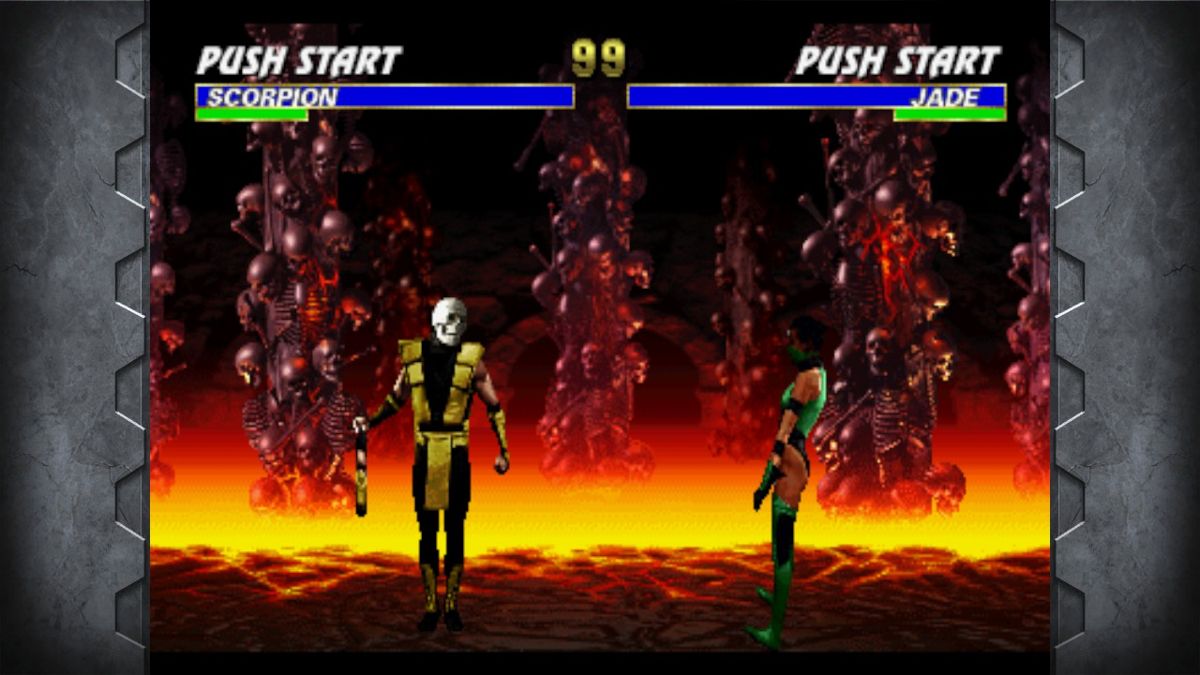
The collection preserves the classic side-view arcade look: digitized human fighters facing off in compact arenas, with the original games’ distinct character art and animation intact. Seeing the three entries side by side makes their evolution clear, from the plainer original to the busier, more populated later games.
Screen and display options let you adjust how those old arcade images sit on a modern screen. The result still looks firmly of its era, but that is appropriate for a compilation committed to the original versions rather than a remake.
Story
Story is not why you load up Arcade Kollection. Each game frames its fights through Mortal Kombat’s tournament setup, but the real storytelling happens in the character matchups, the escalating series mythology, and the sense that each sequel is broadening the conflict.
That light touch works for the format. You choose a fighter, enter a string of battles, and let the arcade structure carry you forward. There is no need to wrestle with a lengthy campaign before reaching the fighting, which makes the collection easy to revisit in short bursts.
The three-game lineup also offers a compact look at a series finding its voice. The original establishes the basic rivalry-driven tournament framework; Mortal Kombat II expands the formula; Ultimate Mortal Kombat 3 arrives with a more crowded, heightened version of the same world. For further release history, see the Mortal Kombat Arcade Kollection history.
Overall Experience
Mortal Kombat: Arcade Kollection is more satisfying as a preservation-minded fighting package than as a generous modern compilation. Its best quality is its lack of compromise: the games retain their arcade character, including the precision, the pressure, and the occasional frustration that comes with older fighters.
You should give it a chance if Mortal Kombat II or Ultimate Mortal Kombat 3 still means something to you, or if you want to understand why these games became arcade fixtures. Online play and leaderboards add a welcome competitive layer, but the biggest payoff is simply having immediate access to three important versions of the series’ early formula.
At 6.8, it lands as a solid but narrowly focused collection. It is easy to recommend to nostalgic fans and dedicated fighting-game historians, while newcomers may find the age of the combat more demanding than inviting. If you want a later compilation with a different lineup, Mortal Kombat: Kollection is a related option worth comparing.


Reviews
There are no reviews yet.