 Retro Replay Retro Gaming History, Reviews & Emulation
Retro Replay Review
Gameplay
Trine 2 feels good almost immediately because it gives you three very different ways to touch the same obstacle. A high ledge might call for Amadeus to make a box or plank, Zoya to grapple across it, or Pontius to absorb danger and clear a route through enemies. Swapping among them is the core pleasure: you are rarely just jumping from platform to platform, but poking at the scenery until a workable plan emerges.
The wizard is the most satisfying character once you stop treating his creations as a single intended answer. Building temporary platforms and manipulating objects makes him the engine behind the game’s playful physics puzzles, even if his fragility can make combat uncomfortable. Zoya supplies agility and long-range attacks, while Pontius is the blunt solution when monsters crowd the screen. Their roles are clean enough that you quickly know whom to call on, yet varied enough that the game does not become a routine character-switching exercise.
Skill points come from vials hidden through the levels, and the shared skill tree gives exploration a useful reward without burying you in equipment management. Upgrades such as stronger arrow options or new magical ways to toss enemies broaden your toolbox at a sensible pace. Treasure chests instead contain poetry that fills in bits of the tale, which is a gentler incentive to explore than a chase for stat upgrades.
The game’s willingness to allow multiple approaches is its biggest strength, especially in co-op. Three people controlling the heroes at once can turn careful puzzle solving into cheerful disorder, as everyone tries an idea simultaneously. Online co-op is a meaningful addition, and the offline option is equally suited to a couch session. Checkpoints soften failure by reviving fallen characters at the next one, so frustration rarely lingers for long. Game+ and Unlimited Character Mode also give committed groups a reason to revisit levels with upgraded heroes or stranger party combinations.
Graphics
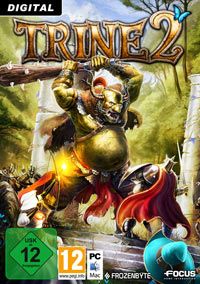
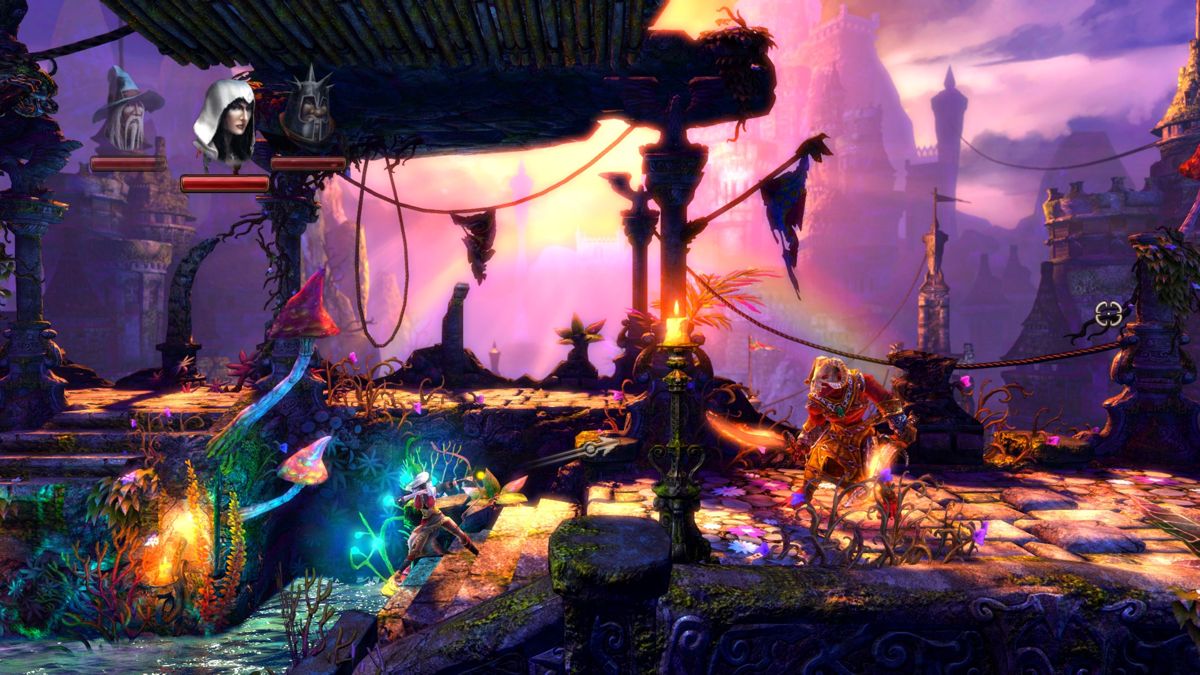
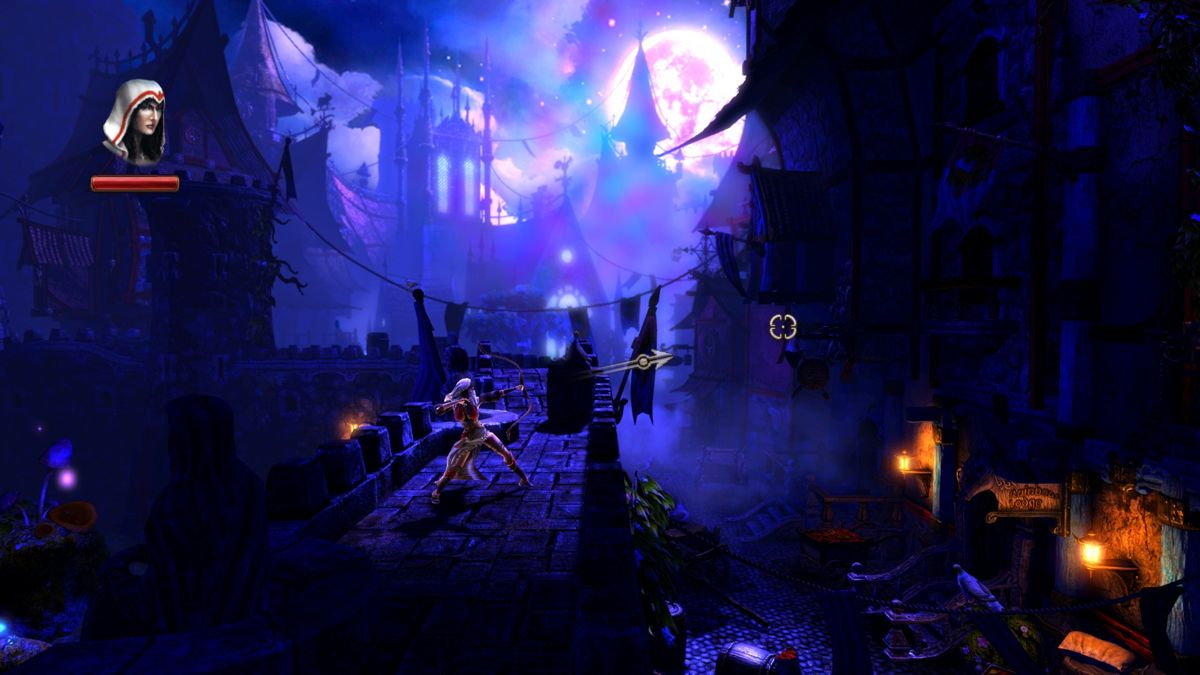
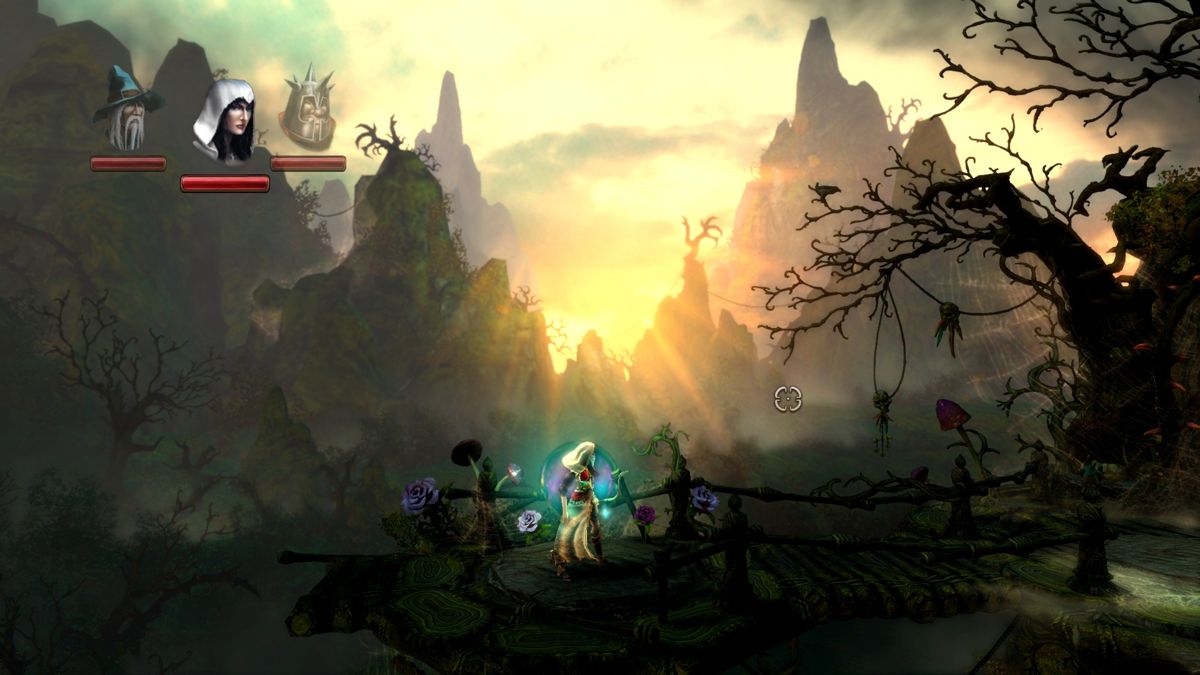
The side-view 2D levels frame the action clearly, which matters when you are placing planks, grappling over gaps, or tracking enemies around physics objects. The three heroes are easy to distinguish at a glance: Amadeus reads as the magical builder, Zoya as the agile ranged fighter, and Pontius as the armored front-line bruiser.
Story
The story begins by reuniting Amadeus, Zoya, and Pontius after the Trine is rediscovered, then sends them into an unknown world watched by the mysterious Witch. It is an effective excuse to get the familiar trio moving again, though the plot never displaces the puzzles as the reason to keep playing.
Goblin King trouble, his minions, and the tale of two princess sisters add more fantasy-story material as the journey continues. The Witch’s identity and motives are eventually explained, giving the adventure a destination rather than leaving it as a string of disconnected stages. Still, this is a light fantasy yarn rather than a character-heavy drama.
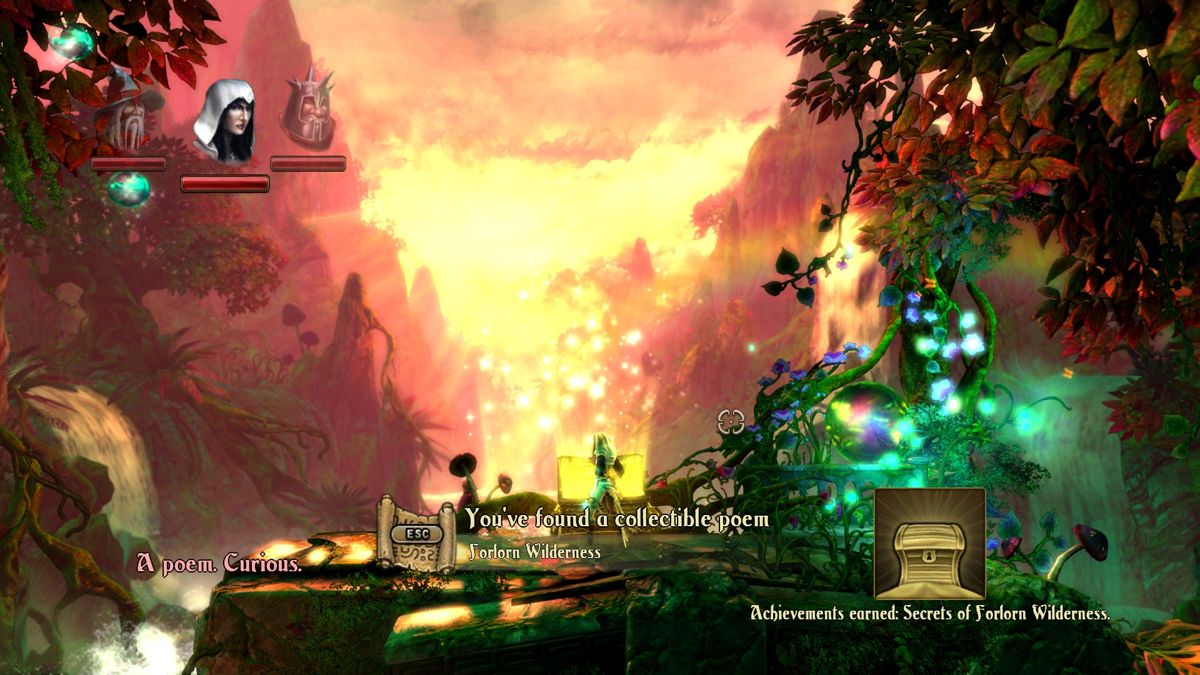
The poetry found in chests is a nice touch for anyone who wants more context while exploring. It keeps the story material optional and avoids slowing down the main platforming flow. You can chase every chest for those small narrative fragments, or simply press on when the next puzzle has your attention.
Overall Experience
Trine 2 succeeds because it understands that a puzzle-platformer is more fun when you can be a little messy. You may solve a gap elegantly with Zoya’s grapple, construct an elaborate bridge with Amadeus, or simply let Pontius force his way through the threat nearby. That flexibility makes experimentation feel rewarded rather than punished.
Its combat is less compelling than its environmental problem solving, and the story is pleasant rather than gripping. But neither weakness does much damage to the larger adventure, because each new stretch of level design gives the three-character setup another chance to click. The game is at its best when a plan almost works, collapses into a pile of moved objects, and a second idea gets everyone across anyway.
Give it a chance if you want a fantasy platformer with room to improvise, particularly if you have friends for co-op. Solo play still works well because switching heroes is quick and purposeful; co-op simply magnifies the humor and possibility space. With a 7.9 score, Trine 2 is a strong sequel built around tactile puzzles, approachable teamwork, and enough replay options to make a second journey worthwhile.


Reviews
There are no reviews yet.