 Retro Replay Retro Replay gaming reviews, news, emulation, geek stuff and more!


Retro Replay Review
Gameplay
Uncharted 3 starts by putting you in trouble and trusting that you will want to see how Drake wriggles out of it. That confidence pays off. The first stretch quickly establishes the familiar rhythm of the series: climb toward an impossible-looking route, trade gunfire from cover, then push onward into another dangerous corner of the world. It is a brisk, hands-on adventure rather than a game that makes you wait around for its best ideas.
The big change is melee combat. Drake can kick, evade incoming hits, and chain those actions into more forceful moves, while nearby objects can become part of a finishing blow. It makes brawls feel less like a brief interruption before you find another gun. Quick-time prompts can appear when you need to escape or avoid an attack, which adds urgency, though it can also be the point where a player who dislikes QTEs starts to feel nudged along rather than fully in control.
Gunfights still use the series’ two-weapon setup, letting you swap equipment with fallen enemies, and there is more reason to use cover or quietly avoid a larger confrontation. Stealth is not a replacement for the action; it is a welcome way to control the opening moments of a fight before everything becomes loud. If you prefer to play aggressively, you can still do that. If repeated shootouts wear you down, taking the quieter route when possible makes the campaign flow better.
Climbing and acrobatic traversal remain the connective tissue between combat arenas, while the larger puzzles slow the tempo at useful moments. You manipulate objects in the environment and consult Drake’s notebook for clues, with automatic hints appearing gradually if you linger too long. That is a smart compromise: puzzle-minded players can work through the clues themselves, while anyone stuck on a solution is less likely to lose the adventure’s momentum. Optional artifacts give thorough explorers another reason to inspect the path less traveled.

Graphics
The action moves through sharply different locations: dark English streets, a hidden French castle, a Syrian monastery, and the vast Rub’ al Khali desert. That travelogue variety matters because each stop gives Drake a distinct place to climb through, fight across, and search for clues, rather than making the 22-chapter campaign feel trapped in one kind of ruin.
The camera stays close behind Drake during play, then blends cinematics into the action more seamlessly than before. It helps the adventure maintain its forward rush, especially when a scene shifts from conversation back into climbing, fighting, or escape.

Story
Drake’s Deception understands that Nathan Drake works best when the treasure hunt is inseparable from the people dragged into it. Sully is again at his side, and the story looks back to Drake’s youth to show how the two first crossed paths while pursuing the same ring. That flashback material gives the partnership more weight than a simple “trusted sidekick” label could manage.
In the present, the chase builds toward Iram, the legendary lost city, sending Drake across Europe and the Middle East. The premise is classic adventure fiction—ancient mystery, elusive treasure, escalating danger—but it has a strong sense of movement. Each new location feels like another lead in a long pursuit rather than a random stop selected just to change the scenery.
This is a story built for momentum, banter, and escalating predicaments, not quiet reflection. The reward is seeing Drake and Sully’s history woven into a larger search, with the lost city functioning as a convincing destination for all that climbing, shooting, and clue-solving. Come for a character-driven pulp adventure, and the campaign has much more to offer than a string of action scenes.
Overall Experience
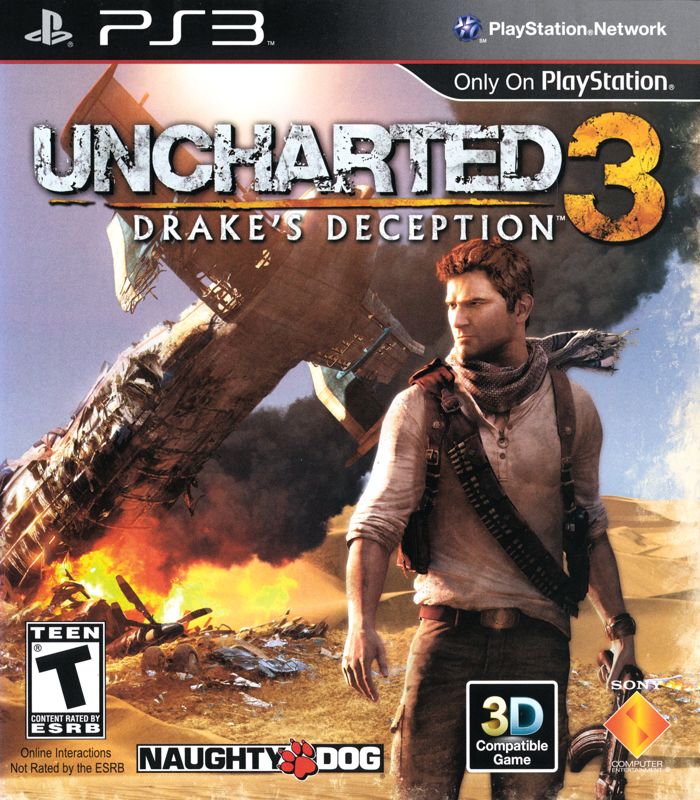
Uncharted 3: Drake’s Deception is a polished continuation that refines an already sturdy formula instead of rebuilding it. Its mix of third-person shooting, athletic traversal, environmental puzzles, collectible artifacts, and close-quarters fighting keeps the campaign from settling into one routine for long. The seamless handoff between cinematics and gameplay is especially important: it makes the whole journey feel like one sustained chase.
The rougher edges depend on your tolerance for its most guided moments. Quick-time events during brawls and the automatic puzzle hints can feel intrusive if you want every success to come strictly from your own inputs and deductions. Yet both systems serve the same goal of keeping the pace up, and the game is usually at its best when you accept that it wants to carry you from one precarious set piece to the next.
With 22 campaign chapters, there is plenty of room for the journey from Drake’s early encounter with Sully to the hunt for Iram to gather steam. This is a strong fit if you want a cinematic single-player adventure whose fun comes from constant variety and familiar heroes under pressure. It is not trying to turn Drake into a different kind of protagonist; it is giving him a bigger, more physical, more personal expedition, and that payoff is worth the ride.


Reviews
There are no reviews yet.