 Retro Replay Retro Gaming History, Reviews & Emulation
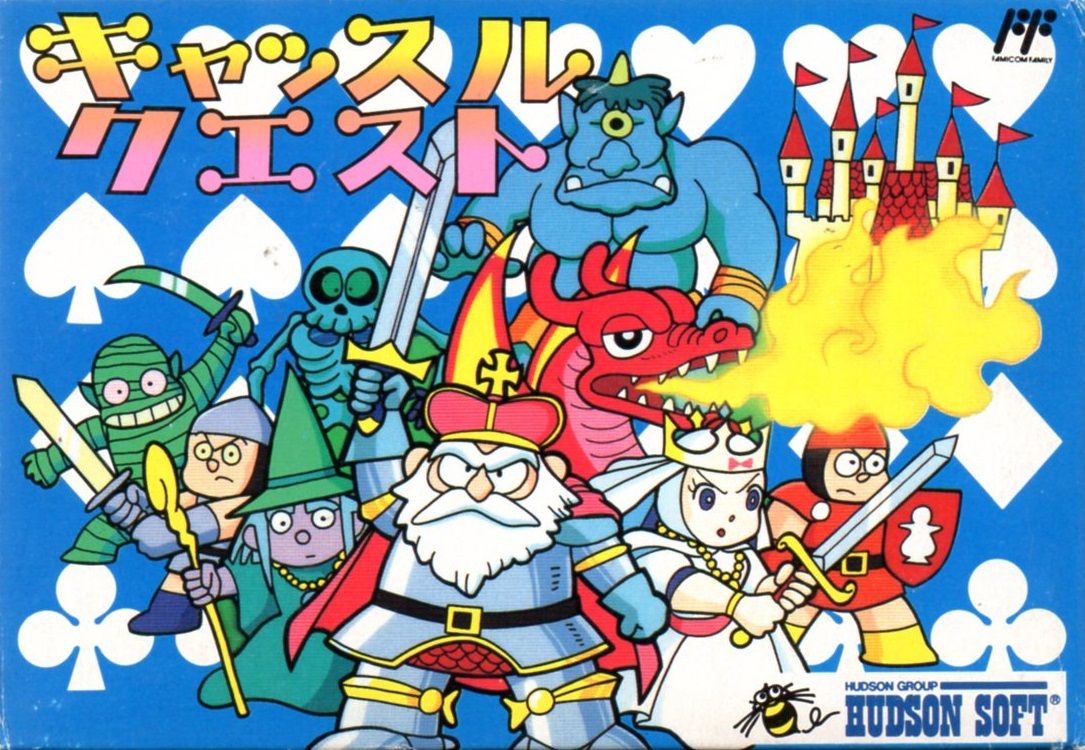
Retro Replay Review
Gameplay
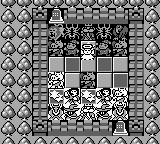
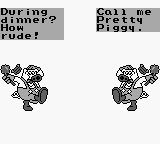
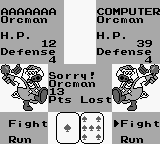
The first few turns of Castle Quest feel familiar: you are guiding a small army across a chessboard-sized map and looking for a route to the opposing king. Then two pieces land on the same square, the action jumps to a separate battle screen, and the game reveals its stranger half. Encounters are settled through a playing-card roulette, so positioning matters, but it does not guarantee the result.
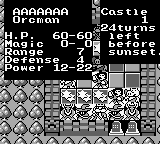
That tension can be genuinely fun when you start accounting for what each unit brings to a fight. Orcman, karate man, warrior, and the rest are not interchangeable bodies; they have different health and different chances of drawing particular cards. A unit more likely to pull the instantly lethal joker changes how boldly you can challenge an enemy. You are still trying to build favorable confrontations, just with the knowledge that chance always has a seat at the board.
Spells add a welcome second layer to movement. When certain pieces enter an empty square, a spell window opens, allowing attack, defense, healing, or revival effects around nearby squares. This makes empty space matter rather than serving only as a path to the enemy king. You can set up pressure around a cluster, patch up damaged allies, or bring fallen units back into the fight.
The catch is unavoidable: Castle Quest asks you to accept volatility. Losing a key clash to a bad draw can feel less like being outplayed than being dealt a cruel hand. If you need tactics games to reward precise planning with dependable outcomes, that roulette will wear thin. If you can enjoy adapting after the board suddenly turns against you, its mix of chess-like movement and card combat has real personality.
Graphics
The game is built around a small top-down chessboard map, with the army pieces moving square by square toward the opposing king. Battles shift to their own screen for the card roulette, a useful change of view that makes each encounter feel separate from the larger board struggle.
Story
Castle Quest keeps its dramatic focus on a direct fantasy objective: topple the opponent’s king. You are not being asked to untangle a complicated premise before play begins; the conflict is immediately legible from the board.
Its personality comes from the army itself rather than from a detailed narrative arc. The mix of warriors, orcmen, karate men, magic, and a king makes the conflict feel like a playful fantasy toybox rather than a solemn campaign.
That light framing suits the game’s quick reversals. When a card draw transforms an apparently safe clash into a disaster, the important story is the one you make on the board: the wounded piece you revive, the spell you use to break a formation, or the improbable unit that survives long enough to threaten the king. For game-specific release and history details, see the Castle Quest overview.
Overall Experience
Castle Quest is most enjoyable when you stop treating it as strict chess and meet it on its own terms. It is a turn-based board strategy game where planning earns you better odds, not certainty. That distinction is crucial: your smartest move can still be overturned by a card, and the game never lets you forget it.
For the right mood, that uncertainty gives every collision a little jolt. The board game structure is easy to grasp, while unit-specific card pools, health, and spells gradually give you more to consider than simply advancing the nearest attacker. There is a satisfying escalation once you realize that placement can prepare both a fight and a spell effect.
The payoff is an unusual tactical curio rather than a pure test of strategic control. Give it a chance if you like compact fantasy board games and can laugh at a brutal lucky draw, especially if card-game chaos sounds like a feature rather than a flaw. Skip it if random battle resolution makes you feel that your decisions have been cheapened; Castle Quest puts that risk at the center of nearly every important confrontation.



Reviews
There are no reviews yet.