 Retro Replay Retro Gaming History, Reviews & Emulation


Retro Replay Review
Gameplay
The smartest thing Yakuza 4 does is refuse to let Kamurocho belong to Kiryu alone. You begin to see the district through four different lives, and that change is more than a narrative novelty. Akiyama, Saejima, Tanimura, and Kiryu all fight in broadly familiar third-person brawls, yet each has a clear enough specialty that swapping heroes refreshes the rhythm. Akiyama’s taunts suit his cocky style, Saejima turns his immense strength into a practical weapon, and Tanimura’s counters make defense feel more active.
None of these move sets sounds built to satisfy someone chasing an elaborate fighting-game lab session. They are simplified variations on the same basic foundation. That is a limitation, but it also makes the four-character structure easy to settle into: you do not have to relearn the entire game every time the perspective changes. The personal flourishes matter most in scuffles, where they give each lead a distinct attitude without interrupting the straightforward joy of getting through a fight.
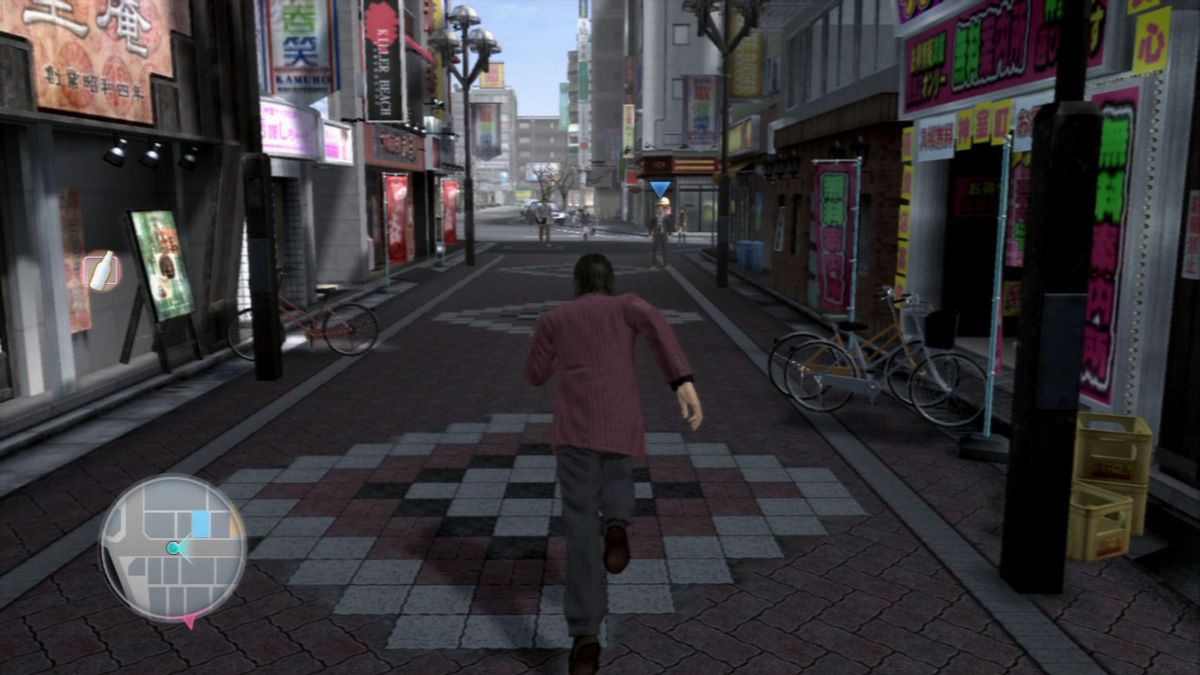
Kamurocho remains the kind of place where a trip toward the next plot point can turn into an evening of distractions. Side stories and mini-games are scattered through the streets and businesses, and Yakuza 4 broadens the familiar district with rooftops, an underground mall and parking garage, and sewers. That extra vertical and subterranean space makes returning to the city feel worthwhile. If your favorite part of Yakuza is drifting off the critical path to see what trouble is around the corner, this is a generous version of that loop.
The practical advice is simple: do not rush it as a crime-thriller campaign alone. Let yourself wander, because the contrast between hard-edged plot business and the city’s optional diversions is central to why Yakuza works. The game can feel structurally familiar from one protagonist to the next, but its willingness to keep opening new corners of Kamurocho gives that familiarity a useful spark.
Graphics
Yakuza 4 keeps the camera close to its third-person street-level action, then lets Kamurocho stretch upward onto rooftops and downward into an underground mall, parking garage, and sewers. Those added locations give the city more physical variety than a single strip of storefronts, even as the game returns often to the same recognizable Tokyo district.

Story
The plot begins with a strong hook: 18 men shot dead in a ramen shop in 1985, a truth buried for 25 years, and four men pulled toward the answer in 2010. That is exactly the right kind of oversized crime-fiction setup for Yakuza. It promises old grudges, institutional rot, and revelations with personal stakes rather than a small, self-contained street dispute.
Its four leads are a real strength. A chivalrous moneylender, a man on death row, a crooked cop, and the Dragon of Dojima are immediately different vantage points on the same city and its criminal world. The structure gives the central conspiracy more reach: each storyline can reveal a different pressure point before the larger plot draws them together.
You should go in ready for a deliberately knotted tale. A conspiracy spanning decades and four protagonists asks you to keep track of a lot, and that density can test your patience if you only want a clean, direct revenge story. Still, the setup has enough scale and personality to make the eventual convergence feel like the point rather than a gimmick. The story earns its melodrama by committing to it.
Overall Experience
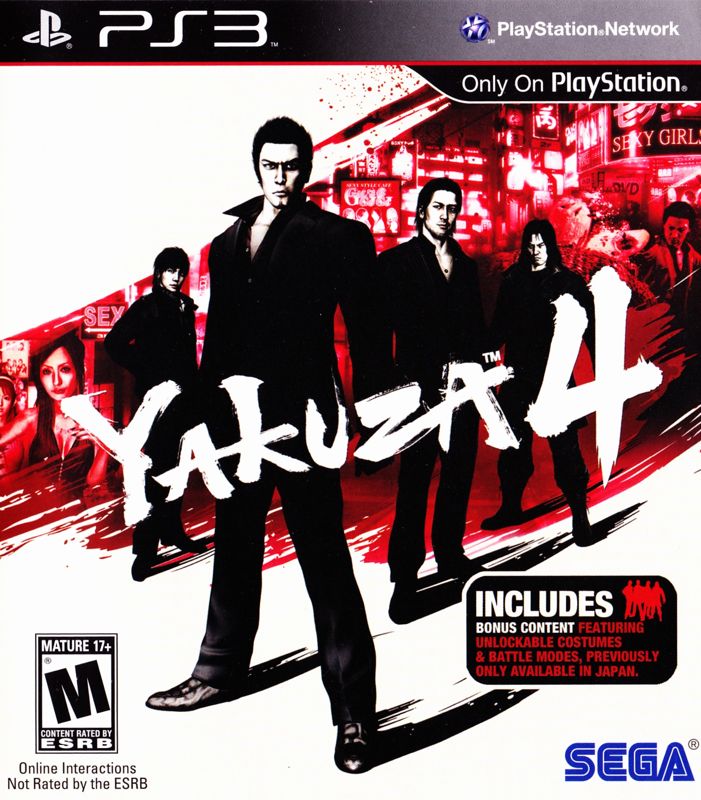
Yakuza 4 is a confident sequel that knows the value of a familiar city but does not settle for merely revisiting it. Four protagonists, expanded routes through Kamurocho, street fights, side stories, and mini-games make it feel packed without losing the series’ core personality. The first hour’s pull comes from meeting a new lead in a city you may think you know; what clicks later is how much those changed perspectives reshape the whole trip.
The trade-off is that the combat variations are approachable rather than radically different, and the sprawling crime plot demands patience. Yet that is easier to forgive when the game keeps giving you another character, neighborhood, or diversion to investigate. It is less a reinvention than a large, energized remix of the formula.
Give it a chance if you want a Japanese crime drama that happily shares space with wandering, brawling, and oddball city activities. Veteran Yakuza fans will appreciate seeing Kamurocho opened up in fresh directions, while newcomers get a clear sample of the series’ mix of sincere criminal stakes and busy urban detours. The payoff is worth it for anyone who enjoys getting lost in a place as much as solving the case at its center.


Reviews
There are no reviews yet.