 Retro Replay Retro Gaming History, Reviews & Emulation
Retro Replay Review
Gameplay
Bound feels different the instant you start moving. Princess does not simply jog from ledge to ledge. Her travel is shaped by ballet and modern dance, so running, rolling, climbing, and jumping carry a deliberate, expressive quality. That gives even routine platforming a sense of character. You are still judging gaps and lining up wall jumps, but the movement makes the trip feel less mechanical than it would in a standard 3D platformer.
The basic challenge is approachable. You will cross moving platforms, squeeze through narrow passages, climb ladders, glide down ropes, push objects, and activate color switches. Falling is possible, but the quick respawn means mistakes rarely become a tedious march back through a level. That is a good fit for the game’s mood, though it also means you should not expect a severe test of your platforming skills. Bound wants you to keep moving through its spaces rather than master a punishing obstacle course.
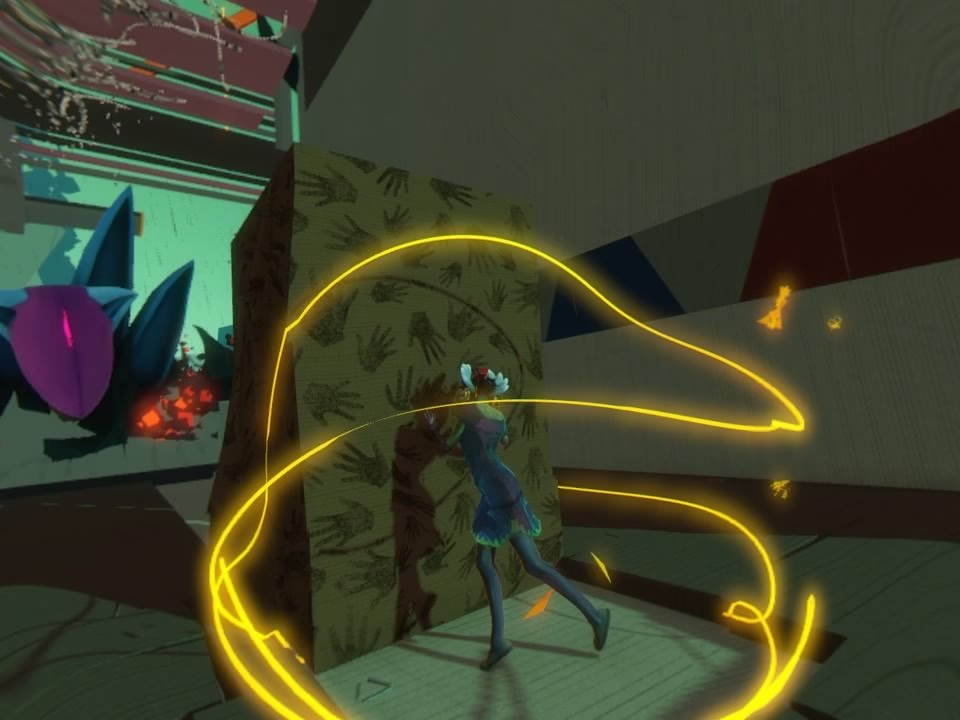
Its levels become more interesting when they lean into shifting structures and skewed perspective. Later areas can be selected in different orders through the woman’s journal, and hidden islands, shortcuts, and memory shards reward a little curiosity. Swarms and hazards add occasional tension, with defensive dance routines producing protective ribbons around Princess. These encounters are more about maintaining the game’s flow than building a deep combat system. If you come for demanding action, they may feel slight; if you come to inhabit the movement and explore, they fit.
Graphics
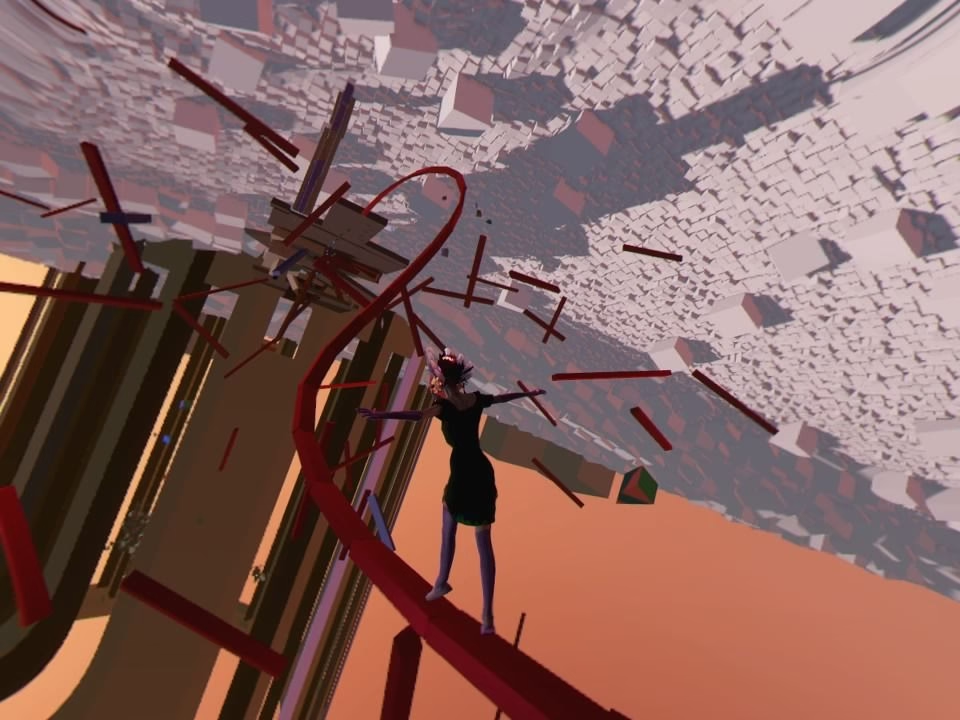
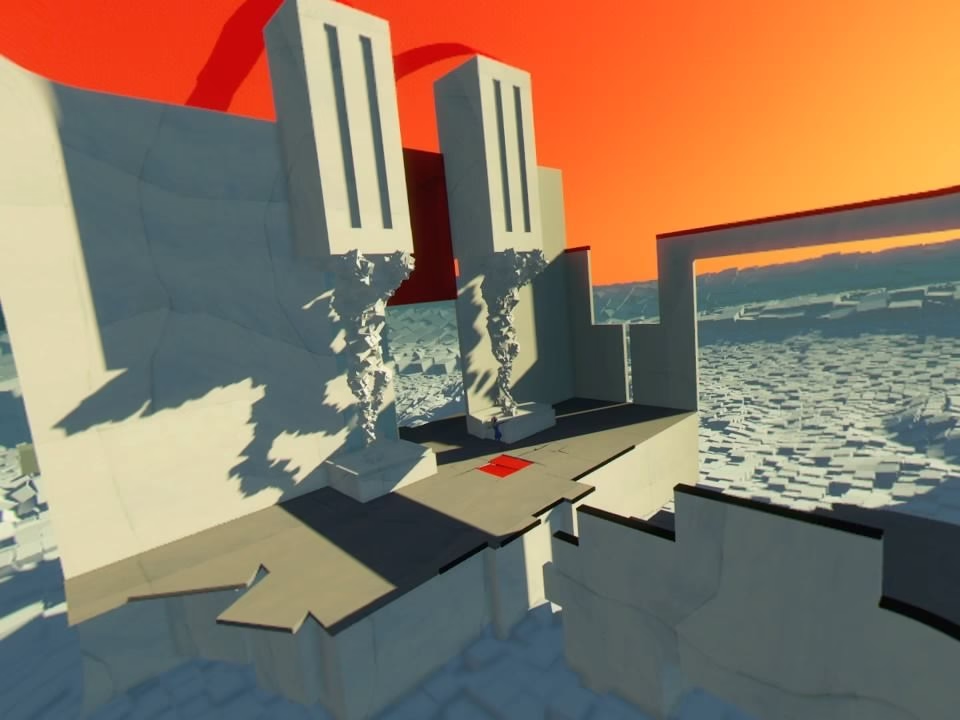
Bound’s worlds are strikingly abstract without becoming shapeless. One area stretches pale, blocky architecture across a vast field under a hot orange sky, while another surrounds Princess with tilted surfaces, broken white structures, and curling red rails. The camera sometimes pulls far back, turning a platforming route into a tiny path through an enormous, surreal construction.
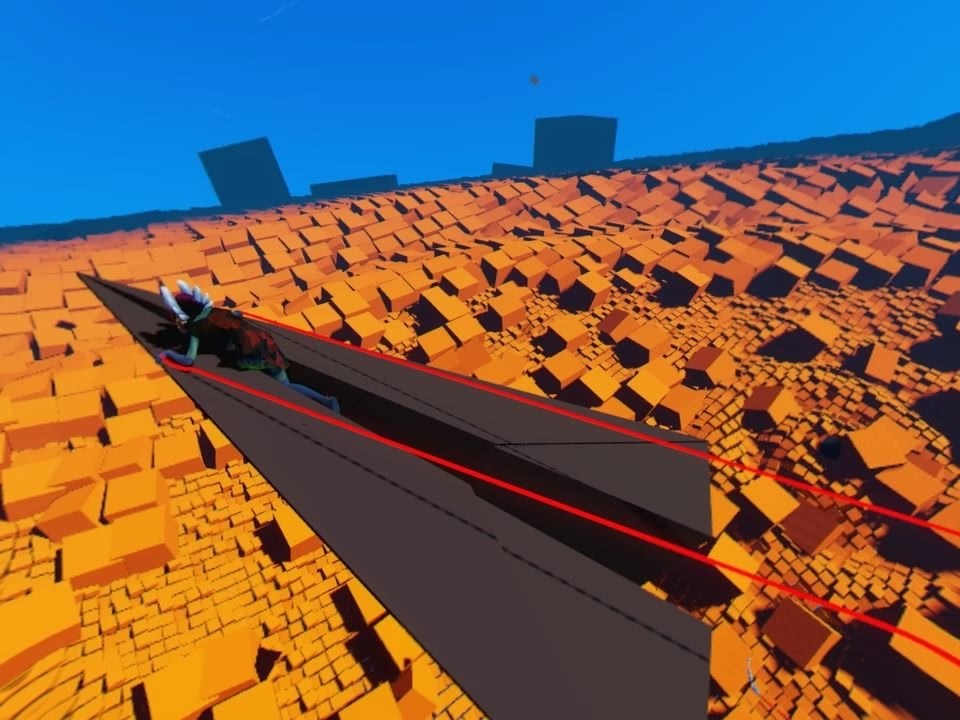
Princess stands out clearly against these harsh geometric spaces, with a slender humanoid form and cool blue tones amid coral, yellow, teal, and black surroundings. The paper-plane sequence is especially memorable: a dark folded plane cuts over a dense orange expanse of cubelike forms, making the world look both playful and disorienting.
Story
The fantasy journey is framed by a pregnant woman arriving at a house near the beach and reflecting on her childhood. From there, Bound moves into the world in her mind, where Princess is sent by her mother to confront a monster threatening the kingdom. That setup sounds conventional on paper, but the game is less interested in straightforward fairy-tale plotting than in the uneasy connections between the imagined world and the woman’s memories.
Those links emerge gradually through sequences that shift between the two worlds. The journal structure reinforces the idea that each level is tied to a fear, and it gives the journey a personal weight that the platforming alone could not carry. The story asks you to sit with its imagery and make connections instead of handing over every answer at once.
That restraint will either be affecting or frustrating depending on what you want from it. If you prefer clear motivations and a plot that explains itself early, Bound can feel remote. If you are willing to meet it halfway, the contrast between the Princess’s abstract quest and the woman’s reflections gives the game a melancholy purpose that lingers after the last platform.
Overall Experience
Bound is strongest when you stop treating it like a checklist of jumps and start letting its strange rhythm take over. The approachable difficulty, immediate respawns, and relatively linear paths make it easy to finish, while the optional secrets give more attentive runs a little extra texture. It is a game about passing through spaces and feelings, not conquering a demanding set of systems.
That focus comes with limits. The puzzles are light, the combat-like swarm sequences are not a major draw, and the platforming rarely pushes hard enough to satisfy someone looking for exacting 3D challenges. At times, the game’s graceful style carries more weight than the obstacles themselves.
Still, Bound earns its place as an unusual platformer with a human core. Give it a chance if you value expressive movement, surreal architecture, and a story that trusts you to read between the lines. You may not find endless mechanical depth, but the journey’s visual imagination and emotional framing make it more memorable than its modest challenge suggests.


Reviews
There are no reviews yet.