 Retro Replay Retro Gaming History, Reviews & Emulation


Retro Replay Review
Gameplay
Ghost of Tsushima feels strongest when you crest a hill, spot a Mongol-held area below, and decide how much trouble you want to invite. You can walk in with Jin’s katana and accept the consequences, or use stealth to get closer before the situation turns loud. The bow, kunai, and smoke bombs are not replacements for the sword. They give you useful ways to soften up a dangerous encounter or escape one that has gotten out of hand.
That balance keeps the action from settling into a single routine. The samurai side of Jin asks you to confront danger directly, while the Ghost side makes a quieter route feel legitimate rather than secondary. Sneaking past unaware soldiers has its own satisfaction, especially when an enemy camp is already chaotic from fighting around it. The best moments come from shifting tactics based on the space in front of you instead of forcing every problem into a duel.
The open world also avoids making navigation feel like a chore. Guiding wind points toward locations, objectives, and hidden collectibles without constantly pulling your attention into a conventional marker chase. It is a small idea with a big effect: you spend more time looking at Tsushima and less time treating it like a checklist. Even the flute contributes to the calmer rhythm between conflicts.

Graphics
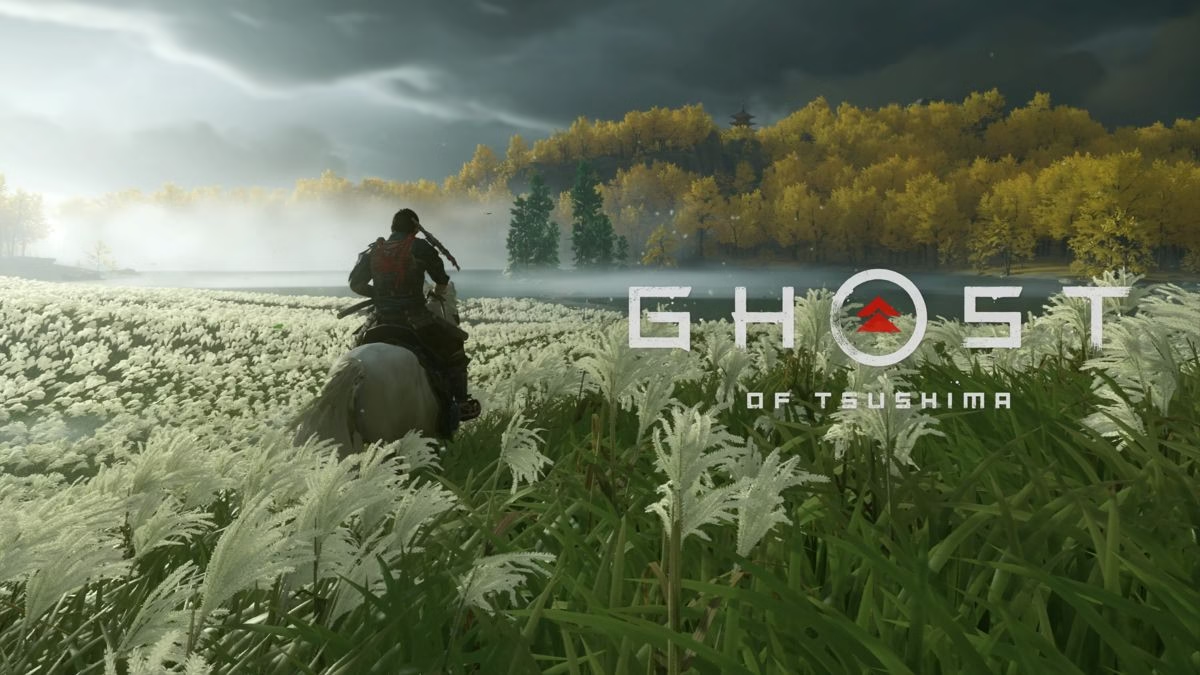
Tsushima is strikingly colorful for a story about invasion and loss. White grass surrounds Jin on horseback beneath a darkening sky, while the initial battlefield scene turns the distance blue-gray with smoke, firelight, and red banners. The island has a painterly richness without losing the grim evidence of war.
Combat spaces have their own memorable look. One sword fight plays out among deep red grass and pale blue flowers under dark trees, giving the clash an almost theatrical frame. Mongol camps look harsher and busier, with burning structures, scattered fires, and soldiers amid the smoke. Jin’s armor and straw hat silhouette remain easy to pick out against those bold landscapes.

Story
Jin Sakai begins as a samurai trying to defend Tsushima during the Mongol invasion, but the story’s central pull is watching what that job asks him to become. He changes toward the Ghost over one fixed narrative path. That focus is a strength because the game can treat the change as a real personal conflict instead of reducing it to a morality meter or a set of alternate outcomes.
The invasion gives the journey a steady sense of pressure. The opening image of outnumbered samurai facing the Mongol force makes the scale of the problem clear, and the island’s occupied camps keep that conflict close even when you are wandering. Jin is not simply passing through pretty countryside. He is moving through a homeland under attack.
Because the story is fixed, it is best enjoyed as Jin’s story rather than a blank-slate role-playing exercise. If you want every choice to rewrite the hero, this is not built for that. If you want a committed character arc about a warrior bending his inherited code to fight an overwhelming enemy, Ghost of Tsushima has the clarity and momentum to carry you through.

Overall Experience
Ghost of Tsushima earns its reputation by making a familiar open-world structure feel unusually cohesive. Exploration, stealth, swordplay, and the war story all point back to the same question: how does Jin protect Tsushima when the old way of fighting is not enough? Few parts feel detached from that core.
It can be especially rewarding if you like alternating between deliberate infiltration and open confrontation. You are not locked into a purely stealthy adventure, nor are you asked to ignore the advantages of surprise. The freedom to use Jin’s tools before relying on his katana gives encounters a welcome flexibility without losing the fantasy of being a capable samurai.
Give it a chance if you want a focused single-player journey through a beautiful, war-torn island and do not need a branching morality system to feel invested. The original PS4 version delivers a complete, confident adventure on its own terms: dramatic landscapes, tense Mongol territory, and a protagonist whose transformation gives all that wandering a meaningful destination.



Reviews
There are no reviews yet.