 Retro Replay Retro Gaming History, Reviews & Emulation
Retro Replay Review
Gameplay
The first hour of Nioh makes a blunt argument: panic gets you killed. A sword swing, block, dodge, and sprint all draw from Ki, so you cannot simply attack until something falls over. That familiar pressure will immediately make sense if you enjoyed the cautious enemy study and shrine-return tension of Dark Souls, but Team Ninja pushes you to be more active with your resources. A well-timed Ki Pulse restores spent Ki after an attack string, turning a retreat into a chance to stay on offense.
The three stances are the reason combat grows richer instead of merely harsher. High stance favors power and reach, middle offers a steadier balance, and low stance emphasizes speed and defense. You will feel the difference when a weapon that seemed awkward suddenly fits the problem in front of you. Swords, spears, axes, and kusarigama create meaningful starting points, but learning when to change stance is what transforms fights from desperate scrambles into controlled duels.
Yokai-corrupted zones raise the stakes by interfering with Ki recovery, and purifying them with Ki Pulse makes timing matter even more. Guardian spirits add bonuses and a Living Weapon power, while shrines heal and level William with Amrita. Shrines also revive ordinary defeated enemies, so progress comes with a constant tradeoff between banking a safe recovery and pushing forward. The official PlayStation combat guide is a useful companion if the interaction between stances, Ki Pulse, shrines, guardians, and Kodama has not clicked yet.
The biggest drag is the equipment churn. Weapons and armor roll randomized properties, and the blacksmith can refine gear, but frequent comparison screens interrupt the clean focus of a good fight. Some gamers will enjoy chasing incremental upgrades; others will want to spend less time evaluating numbers and more time mastering a troublesome opponent. Still, the combat is sturdy enough to carry that clutter. Each hard-won improvement feels earned because it comes from better decisions, not just a larger stat total.
Graphics
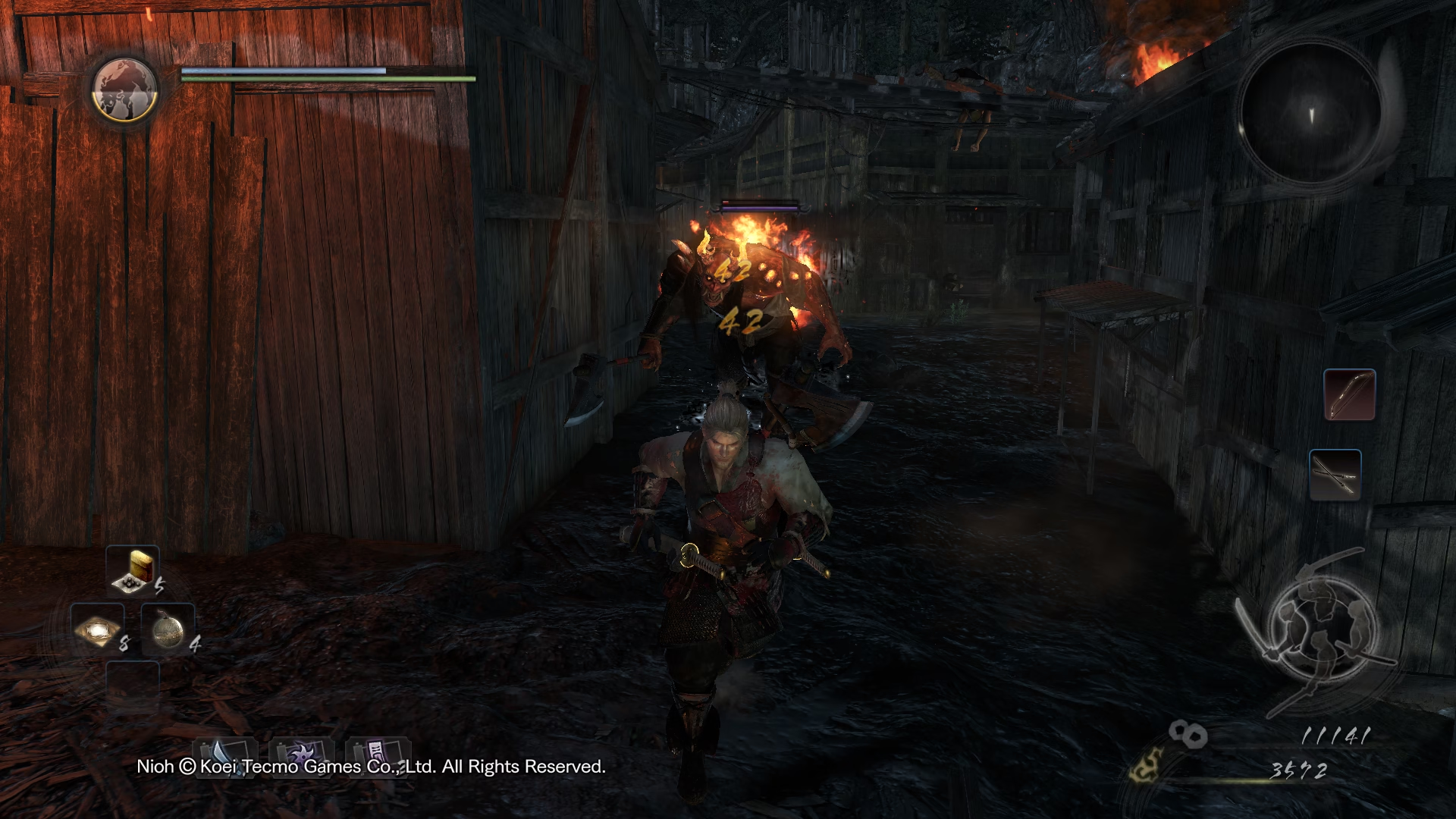
On PS4, a blood-stained blond William running through a narrow muddy lane makes for a grim, immediate image. Blackened timber buildings, charred beams, and a small lean-to close in around him while fire lights the planks and roof overhead. A horned red-brown yokai wielding dual axes looms behind him, its orange flames cutting a memorable silhouette against the dark wood. The deep shadows make the cramped lane harder to read at a glance, but they give this pursuit real menace.
Story
William is a foreign warrior pursuing an alchemist who has stolen his guardian spirit, a direct personal motive that gets him into early-1600s Japan quickly. The game places that chase alongside warring samurai and yokai, blending historical conflict with supernatural danger rather than treating either as a separate backdrop.
That setup suits the mission structure. You are not wandering a vast open world looking for the next thread. Instead, each assignment keeps the focus on William’s advance through a hostile Japan where human conflict and monsters share the road.
The story gives the action a clear destination without distracting from what Nioh does best. William’s search and the recurring presence of guardian spirits connect the character progression to the larger conflict, while the samurai-and-yokai setting supplies a strong reason for every dangerous detour.
Overall Experience
Nioh is punishing, but it is rarely thoughtless. Mistakes have teeth, especially while you are still learning Ki management and trying to read which stance will work, so expect repeated failures. The payoff arrives when you recognize that a loss was caused by greed, bad spacing, or a missed pulse, then return with a practical answer.
This is not the game to pick if you want a relaxed hack-and-slash tour through feudal Japan. Its mission-based structure, respawning enemies, and loot sorting ask you to settle into a loop of practice, recovery, and reassessment. Give it time, though, and that repetition becomes useful feedback instead of empty busywork.
For gamers who want a difficult action RPG with more combat texture than a single attack-and-dodge routine, Nioh remains an easy recommendation. The loot can test your patience, but the stance system, Ki Pulse, and pressure of yokai encounters give every weapon choice and every swing a purpose. It is tough in the satisfying way: demanding enough to make mastery feel personal.


Reviews
There are no reviews yet.