Retro Replay Retro Gaming History, Reviews & Emulation

Interview by David Becker, Retro Replay.
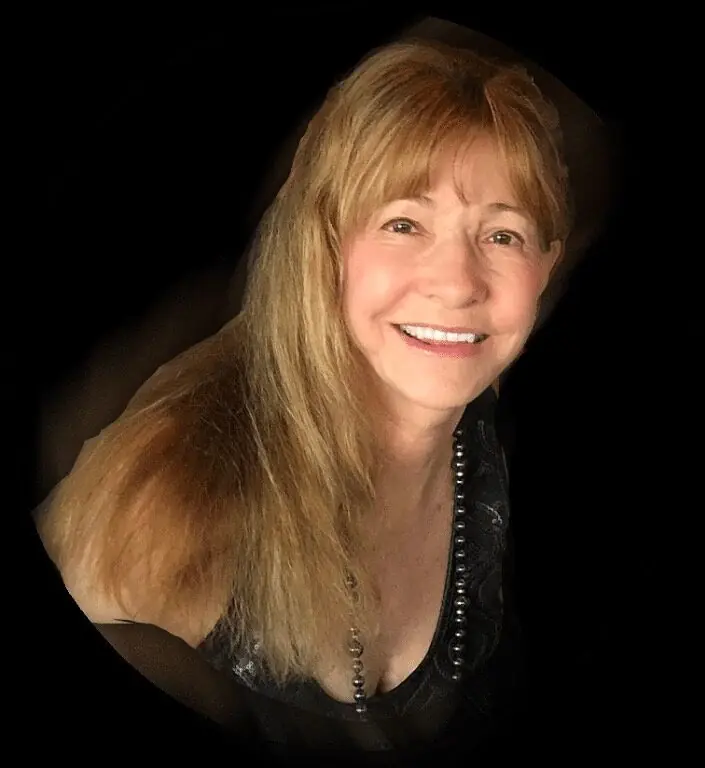
Roberta Williams couldn’t leave Colossal Cave alone. A puzzle would follow her to bed, and she couldn’t rest until she’d worked it out. She had loved stories since childhood, but here was one she could move through, question, and get hopelessly stuck inside. After finishing it, she bought large sheets of white poster paper and began working out a mystery of her own.
That became Mystery House, the Apple II adventure she and her husband, Ken Williams, took into Southern California computer stores in 1980. Roberta would sit at a display machine and play while a handful of curious customers gathered behind her. Soon, the family phone was ringing with orders and requests for hints, and the two of them were copying floppy disks after putting their children to bed. The Strong’s archive of their Sierra papers traces the company that grew from that partnership.
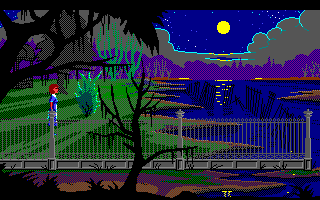
For players, the next part of her career might bring back a very particular screen: Graham walking through Daventry, Rosella setting off on her own adventure, Laura Bow investigating a murder, or Adrienne exploring the house in Phantasmagoria. Roberta created the King’s Quest series and kept finding different stories she wanted players to step into. Her own career history spans those early Apple II drawings, Sierra’s larger productions, and her return to games with Colossal Cave.
David sat down with Roberta over Zoom for a conversation that comfortably outgrew the question list. She talked about the work at the kitchen table, a board meeting she arrived determined to derail, the last stretch of money behind King’s Quest, and the reasons Phantasmagoria mattered so much to her. She had also just returned from the Northwest Passage, so there was rather more ice in this conversation than you’d normally expect from a Sierra interview.
Ken and Roberta received our list of questions ahead of time. Roberta joined David for this interview, and many of those subjects came up naturally inside her longer stories before he needed to ask them individually. David’s questions and comments follow his recorded wording, with light punctuation and editing for readability. Questions drawn from the written list are labeled as advance questions. Headings mark continuations of Roberta’s stories where no separate question was asked. Roberta’s answers have been truncated for clarity, otherwise the word count would be near 30k (It was a near 3 hour zoom). The conversation is arranged by topic.
A different kind of adventure
Retro Replay: So I guess before I drive you all the way back to the Stone Age, what’s life like for you now? What have you been up to?
Roberta Williams: Technically we’re retired, right? But we’ve been technically retired since 1997 or ’98. So technically we’ve kind of been retired since then, and that was a long time ago.
We’ve gotten into boating. A lot of people know that about us. We live in the Seattle area, and it’s a big boating area. We decided that we wanted to do the same. We’ve had boats, little boats on a lake and things like that, but never anything major. We got into it, and eventually, by the early 2000s, we were doing some international boating.
I always use the word boat instead of yacht. It’s just friendlier. Plus, Ken and I manage and drive our own boats, so it’s just us two out there in the ocean and Mediterranean, or down in Mexico, or up into British Columbia. All over the place.
We did that for years. Ken says we have like 100,000 miles under our hull. So it’s a lot. And Ken has been blogging for years about our trips. We kind of went from being computer game people to being boating people. We kind of thought of that as our second 15 minutes of fame.
The game that would not leave her alone
Retro Replay (advance question): Before Sierra existed, what first drew each of you toward computers, and when did you begin to realize there might actually be a business in home computer software?
Roberta Williams: Ken is a very famous programmer. I think he has a programmer brain. His brain is like a computer. He just naturally does it. Back in college, he studied computer science and programming, and early on, by the age of 19 or 20, he was ready to go out in the world. This was right before personal computers came into being. He immediately got programming jobs, and he was kind of going up the ladder.
Meanwhile, we got married young, 18 and 19 years old, and we had our first child a year after that. I actually had a couple of jobs operating IBM 360s. One was a junior college, and one was the County of Los Angeles. Which is not as fancy as that sounds! It’s actually not much harder than operating your washing machine. It was like, press this button, take off the tape, hang it on a hook over here, get a new one, put it there, and press the button. It was really like that.
Then I had a little job for a while as a trainee COBOL programmer, which I absolutely hated. After that, I had my second son.
Where the story starts is after I had my second son. He was just a baby, and I’m at home with a five-year-old and a baby, both boys, trying to figure out what I want to do with my life. Ken is going way up in the tech world and programming, so he’s making fairly good money. I don’t really have to work, but I’m wanting to do something.
Ken got me this game called Adventure. It was Apple Adventure, and this was in 1979, the end of 1979. We had just got our first Apple II, and it was over $2,000. That was a lot of money for us at the time. Ken was trying to figure out what to do with it. He kept saying, “I know this is going to be a big deal. People are going to start having personal computers, and I want to be in there.”
We had an Apple II, so we got the Apple version of this little text game. Ken said, “Why don’t you play this game? It looks like something you might enjoy.” He knew I was trying to figure out my own life and what I wanted to do. I loved being a mom, don’t get me wrong. I absolutely loved it, but I needed more outlet as well.
I started playing it and just absolutely fell in love with it. Became obsessed with it. I mean, literally obsessed. I had never in my life before actually been obsessed with anything in particular, but I was with it. I would go to sleep at night, and I couldn’t rest. I had to solve these puzzles.
I got through it, and then I said to myself, “I think I can do this.” I got what it was. It was, to me, an interactive story. I always loved stories. When I was a kid, I wanted to either write children’s books or maybe write scripts for movies. But I didn’t think I could ever do that.
Playing Colossal Cave just inspired me so much that I said, “I’m going to try to see if I can write a game like this, an interactive story.”
Retro Replay: What did your creative workspace look like? Were you surrounded by handwritten notes and maps and diagrams? How did you physically organize everything back then?
Roberta Williams: I went to a stationery store and got these big pieces of poster paper, poster board, white. I had no idea how to do this. How do I come up with a game that’s out of my head? I’d only played this one game, Colossal Cave.
I knew it was going to be some kind of story, because I felt when I played the text version that I was playing a story. But I was the protagonist. I could decide where I wanted to go in it, and I could talk to the game very simply, but it would respond to me.
I knew that when I would type in two-word commands and it would respond to me, that it was designed. It wasn’t just some brain off in the middle of space talking to me. So I knew it was an interactive story of some sort with puzzles and obstacles and inventory objects.
I said, “Okay, I need to come up with a story that could be very interactive and a game. It’s both.” I thought of the game Clue, which I always liked. I always thought that was a fun game. With a whodunit, there are lots of things that could happen. I said, “What if this is just like a game of Clue, but it’s now in a computer?” But it also was like a story, and I thought of Agatha Christie, or Sherlock Holmes, that kind of thing.
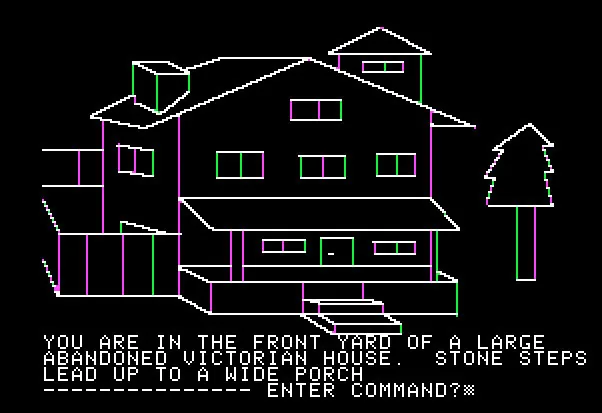
I kind of put together in my mind the two ideas. You’re in this old Victorian house, and there’s rumors there’s treasure in it. The first person to find the treasure gets to keep it. So it’s really simple, right? That’s no big, complicated story.
You’re looking for it, and other people are too. You come into it, and there’s another six or seven people waiting to do the same thing. There’s a note on the floor: finders keepers. I just went with that real loose idea. You’re in this house, so I can define these rooms. There were some trapdoors and moving walls and things like that.
You meet these people in the entryway, and when you make your first move, they’re gone. You don’t know where they are. They’ve scattered through the house, and you’ll meet them as you go through it. Usually dead.
You have to figure out that one of these people is killing everybody, and you could also be killed by the person. You go by the evidence that’s left behind, kind of like the game of Clue, and find the treasure without getting killed yourself. That was called Mystery House.
I designed it on this big piece of paper, like a flowchart. Here’s the living room, here’s the kitchen, here’s the basement and the attic. You just had to piece it together. I could do some COBOL programming, but nothing to do with this, and I asked Ken if he could program it. He said yes. I figured it’d be another text game.
Retro Replay (advance question): Mystery House is now considered one of the earliest graphical adventure games. When you were making it, did either of you have any sense that combining graphics with a text adventure was something genuinely new? What do you remember about selling those first copies of Mystery House? Was there a particular moment when you realized people were genuinely interested in what you were creating?
Roberta Williams: He said, “You know, I think we could put pictures to it.” And I said, “Really? Wow!”
Ken figured it out, and I had to get a graphics tablet. I did the art, and it looks like a first grader did the art, honestly. If you’ve ever seen my version of Mystery House, then you know what it looks like. But it wasn’t just that I was a bad artist, and I don’t ever claim to be an artist. How I had to do it with the graphics tablet was very Stone Age for today’s world, for sure. It wasn’t easy to do.
Once we got it all programmed, we drove it around to computer stores. We lived in Simi Valley, California, at the time. That was where you would get games at that point, computer stores. We’d go, “Hey, we’ve got this game, if you want to see it.” They’d say, “Sure.” They would always have a display Apple II sitting there.
We put it in, and up came my picture of the outside of the Victorian house. I would sit there and start playing it, and people who came in the store started gathering around behind me. It wasn’t like a mob. It was probably six, seven, ten people. “What are you doing? What is that?”
We’d say, “Well, it’s our game.”
“We’ve never seen anything like that. We’ve never seen pictures on our computer.”
We felt very jazzed. That was happening everywhere we went, and Ken and I told each other, “We’ve got something here. We do.”
There was a magazine at the time called MICRO magazine. We put in a little quarter-page black-and-white ad for our game with a little postage-stamp-sized picture of the outside of our Victorian house. We got calls after calls to our personal phone, and I began shipping floppy disks to people.
Every night, Ken and I would spend a couple hours after putting the kids to bed on our personal Apple II, copying floppy disk after floppy disk and shipping them out. Then taking many, many copies to our local computer stores. We had a hit. That’s how it started. Long story!
When the family home became the office
Retro Replay: How did you guys divide your responsibilities in those early years?
Roberta Williams: It was pretty easy. Ken is the business guy. I don’t like to pay bills and accounting and bookkeeping and all that stuff. That’s not me. I’m creative. He’s business-y and a programmer, so he kind of started managing the business aspect of this.
The first six months, we managed it out of our home. I was managing answering the phone. I guess you would call me the worker bee. We had people calling us from all over, getting stuck in Mystery House. “How do I get up into the attic? How do I keep going? I keep getting killed by somebody, and I don’t know who.” Those questions that you get with adventure games.
Our phone started ringing at all hours of the day and night. We were in California, and starting at probably three or four in the morning, we’d start getting phone calls from the East Coast, and then from England and everywhere you can imagine.
Orders were just coming in the mail. This is pre-internet. This is like 1980, so this is extremely old school. People were cutting out the ad in MICRO magazine and sending it to us by mail, literally an envelope. Here’s another order. Or by telephone, or writing us letters saying, “We want to buy a copy of Mystery House,” and sending us checks.
I have two little boys now, and I’m going, “Oh my God!” We had FedEx and UPS coming every day. We did that for several months, and we earned a lot of money really quick with Mystery House. Ken and I one day looked at each other and said, “This is great, but we can’t keep on like this. We have to figure out what we’re going to do.”
Retro Replay (advance question): Sierra’s move to Oakhurst gave the company a very different environment from the traditional technology centers. Why was that location important to you, and did it affect the culture of the company?
Roberta Williams: My parents had moved up to a place called Oakhurst, California, up in the mountains in Central California, not far from Yosemite National Park. Between the city of Fresno and Yosemite, there’s the foothills. Up in those foothills is a wonderful little town called Oakhurst. It’s beautiful and safe.
We were living in Southern California, getting on the freeways, the traffic jams and all of that. We had talked about, “Wouldn’t it be great if one day we could have a cabin in the woods, raise our kids?”
We were not hippies personally, but it still had that kind of freedom attitude. The two of us could design computer games together and be partners. We could move to Oakhurst to be near my parents and just raise our kids there in this pristine, wonderful environment in the woods. Wouldn’t that be just a great life?
So we sold our home in Simi Valley and bought a cabin in the woods up there in the Oakhurst area. The first thing we did when we moved in, Ken said, “You need to design another game like that, now.” I went, “Ooh, okay!”
I designed The Wizard and the Princess. That was our second game. We still had it only on Apple II, but we added color to it. It sold like crazy. At that point, we said we need to start hiring people. It was beyond just the two of us now, and Ken had already found some other people that we were also publishing.
I said, “I need you out of the house!” We had people coming and putting the games on the floppy disks in our home. We had a couple of Apple IIs set up, and they’re just doing floppy disk after floppy disk. We had the master, copying, copying, copying. They began to put them in boxes and ship them out in our house. They were basically coming to work in our house, and we had about three people at this point.
I was trying to design The Wizard and the Princess. I did the art on that. It was a little bit better than Mystery House, but it still wasn’t that great. I finally said, “Ken, we’ve got to move these people out.” So we opened our first office, and it just went from there. Up and up and up.
The board meeting she decided to blow up
Retro Replay: I had no idea that you guys were that close to hard times. I just, I didn’t know that.
Roberta Williams: That was the cartridge era of video games, and all of a sudden, all of us in the computer game industry were told, mostly by our venture capitalists and investors, we have to transfer over to that. No more Apple II, no more floppy disks, no more those kind of games. Cartridge games.
We went over to that. I was against it, but Ken listened to the venture capitalists. We had to become professional. We had to become a real business in every way, so we had to set up a board for the business. The venture capitalists wanted to be part of the board. Ken and I each could be part of the board, and we had an attorney from the area. He wasn’t like a big-time New York attorney. He was like an Oakhurst attorney, but he was an attorney. It was three of us and then three of the venture capitalists.
Ken accepted the money. He wanted to build the company, and he thought he would get this money in and we would lose some of our ownership by doing it. He thought it was a good play. I didn’t think so, but he was the business guy, not me. As soon as we did that, it didn’t take long, maybe six to eight months later, they offered us more of it. Sell them a little bit more of our stock. We still had a majority, but it was taking it down.
Our board wanted us to transfer our business from floppy disks and Apple games, the way we had been doing. I had done several games pretty quickly at the beginning. They wanted us to quit doing that and instead do these arcade-type games on cartridge, and they said, “We’ll give you more money to do that.”
Our ownership was getting close to 50 percent now. Still above it, but not much. I was extremely uncomfortable with all this, but I wasn’t running the business. I just felt in my heart it wasn’t right.
It turned out it was extremely expensive to buy these cartridges. They were selling okay at first, but then the whole cartridge industry crashed, big time. It took under a lot of computer game companies at the time who all did what we did. We all followed that, and we shouldn’t have. It just crashed and burned.
We couldn’t maintain it. Our venture capitalists on the board said, “You’re going bankrupt. You can’t pay your bills. We’re not giving you any more money. What we’re going to do is we’re going to partner you with a company of our choice, and you have to do it if you want to stay alive.”
It seemed as if we had no choice. We had put everything into this. It crashed and burned. Not just us, the whole industry.
I was beginning work on King’s Quest, on the PCjr. Move forward in time a little bit more, 1982, ’83. That’s when this happened. Our board knew it. They thought that could be big because we were working with IBM now. They didn’t want to just let us go bankrupt.
They found this other venture-capital-started education company called Spinnaker, who were doing educational games for kids in schools, maybe at home. They were more like marketing and PR guys. They weren’t game designers and programmers. They were very corporate, so they fit in well with the venture capital group.
Ken said, “Roberta’s working on this game with IBM. Just give us some more money. We think we can bring it back. We learned our lesson. We go back to computer games like we used to do. We’ll pay our cartridge bills off.”
They said, “Nope. We’ve decided we’re putting you with Spinnaker, and they’ll run the business. You will work for them.”
Ken and I went round and round on that, and I said, “I am not working for them. I am not going to do that. And not only that, I’m not going to finish this game, King’s Quest. We need to bring back our company ourselves. We can do it. It’s going to be hard, but we have to do it.”
At the board meeting
Roberta Williams: We had to go to San Francisco to the board meeting where this was going to happen. It was going to be finalized. We were going to be put with Spinnaker. They were going to be running the business, and we’d be a little development house working for them.
Ken and I drove to San Francisco from Oakhurst, another three-hour drive, and we had our little Oakhurst attorney in the car. All the way, I kept saying, “I don’t want to do this. I’m not going to do this. This is the wrong answer. We shouldn’t do this.”
Ken was saying stuff like, “Well, if it doesn’t work out, we can go back to Southern California, and I’ll get a job as a programmer, and it’ll be fine.”
I’d say, “Yeah, but what about me? I love doing what I was doing. I think I’m pretty good at it. I don’t want to work for these guys. I’m not going to work for these guys.”
Every now and then, I could hear our attorney chuckle a little bit. We were in the front seat talking about all this, driving to San Francisco.
The next morning was going to be the big board meeting. This was going to happen. Unbeknownst to Ken or anybody else, I had plans.
Normally I’m jeans, just a country girl. But I had my fancy, corporate-looking board-meeting clothes. Very professional. Well, I brought along a pair of jeans, kind of nice jeans, a very bohemian, almost hippie-looking nice-ish top, and some boots. All this on purpose. That’s what I was going to wear to the board meeting. Ken had no idea, but I had determined, “I’m going to blow it up. I’m going to do it.”
The meeting was at nine o’clock, and Ken was up and out the door by eight. He wanted to be early, and he had his coat and tie. I was still in bed. I’m not an early person anyway.
He’s like, “Why are you still in bed? The meeting is at nine. It’s one hour.”
I said, “I’ll be there. Don’t worry. I will be there.”
He goes out the door. I lay in bed another half hour, 45 minutes. I wasn’t sleeping, but I lay there. Finally, I got up. It was probably around nine, something like that. I started getting ready, and I took my time. I got into my country-ish outfit and sauntered to wherever the board meeting was.
It was one of those big, corporate, professional meetings in a nice hotel, with a big window that looked out over the bay. Big table, and they’re all sitting there looking very corporate. Over on the side, the coffee set up, tea, cookies, donuts, scones. I walk in looking the way I did. I was about an hour late, and all heads turned my direction. Comical when I think of it out of my own eyes. They didn’t know what or how to respond.
One of the venture capitalists started explaining where the coffee was, the cups and everything. I go, “I know how to get coffee. Thank you very much.”
Nobody said a word. They all sat in complete and utter silence, watching me. I started putting the coffee in. “Oh, here’s the sugar. Oh, I need some cream. Okay.” I got the spoon and started stirring it, on purpose, loud.
I walked over with my coffee and said, “Where should I sit?”
“Anywhere you want, Roberta. Just pick a place.”
“Okay, I’ll sit right here.”
I said, “So what are we talking about here?”
The lady venture capitalist said, “Well, Roberta, we’re all here in order to put Sierra On-Line and Spinnaker together as a bigger company.” She said it with this kind of voice, like, isn’t that a good idea?
I looked at her and said, “No, we’re not.” Literally. “No, we’re not.”
“What?”
“No, we’re not going to do that.”
“Well, of course we are. That’s why we’re here. That’s why they’re here.”
I said, “Good for them. I’m not going to allow it.”
They needed my signature too. Not only that, they wanted King’s Quest. We had an agreement with IBM. I said, “I’m not going to finish it. I’m not going to do anything, but I am not going to let you do this.”
They tried to put up their graphs. Look at the money, and this is how it’s going to work, and let’s let them show you their plans. I said, “I don’t want to see their plans. I’ve seen their games. Their games are terrible.”
They didn’t know what to say. Then I stood up and said, “I’m leaving.” I looked at Ken and said, “Are you coming with me?”
He stood up and said, “Yes.” Our attorney stood up, and we three walked out the door. The rest of them just watched us.
When we got out there to the elevator, all three of us burst out laughing, hysterically, because it was so intense. It almost could have been an SNL gag. We did come back, but it was not easy. We did, and we were better than ever. That’s a true story.
Retro Replay: I would have been really nervous if I were in your shoes, to tell you the truth.
Roberta Williams: It’s funny, I was not nervous. I was enjoying every minute of it. I’ve always been a very timid girl and young woman, so it was really out of character for me.
I had found my calling. I didn’t know what I was meant to be or do. I knew I was creative. I knew that I had certain abilities, storytelling especially, but I didn’t know what to do about it. There was just this sense that there was more, and I’d finally found it. I didn’t want to give it up, and these people were going to take it away from me.
Not Ken. I wasn’t blaming Ken or picking on him or putting him down in any way. You could say it was selfish of me to have done that, but as it turned out, I think it was the right answer. I felt like I loved my company, and this was unfair to me. I was just not going to allow it.
I enjoyed it. I loved seeing the shock on their faces. It was something to see, I have to tell you.
King’s Quest and learning as they went

Retro Replay: Well, King’s Quest obviously changed the gaming world quite a bit. Where did the original concept for that come from?
Roberta Williams: The Wizard and the Princess. In a sense, it’s kind of like the same story, in a way, but not the same, and different puzzles to solve. King’s Quest had a little character that you could walk around and feel that he’s the guy. The Wizard and the Princess was first person, so it was just out of your own eyes. You were just you, but it was still going through fairy-tale land.
IBM actually published our game The Wizard and the Princess under their own brand, IBM, but they changed it to be called Adventure in Serenia. It was the exact same game.
They came to Ken and said they wanted Roberta to design a game for their new personal computer. They were calling it the IBM Jr. It was still in prototype at the time. They wanted me to design a game like Adventure in Serenia, which was The Wizard and the Princess. The same game.
I said, “Well, they want a game like that, then I’ll make this game, King’s Quest.” It’ll be like a trot through fairy tales. You’re a little knight, and you’ve got to bring back these stolen treasures of Daventry. A relatively simple plot. That’s how that happened.
Retro Replay: Do you think any of the puzzles were too difficult or unforgiving?
Roberta Williams: Probably. I heard a lot over the years about how some of the early adventure games were illogical in some areas, or not fair in other areas. You died in weird ways, sometimes funny, but sometimes it didn’t make sense. I’ve heard it all over the years.
My answer to that is always the same thing. By this point there were others doing it, but I certainly had never done it. I created the job for myself. I literally created that job for myself, and then others also began doing it. All of us, including me, had no idea what we were doing.
In many ways, we were just kind of playing. I used to say that I loved designing adventure games, and I loved the design process, because I didn’t know myself how they were going to turn out. It’s not like there was some big flowchart figured out in some professional computer-science, computer-programming kind of way.
Today, people go to college. They get degrees in computer game design, and mostly now it’s a specialization. “I do computer game animation. I do computer effects. I do AI programming. I do the music or the sound effects.” It’s a team effort.
I do know that in my time, we didn’t know what we were doing. We were doing it ourselves. We were teaching ourselves. We were making mistakes. With the next game we did, we didn’t do that anymore, or we changed it. With each game, it got a little better and a little better.
It was something we just made up out of our own minds and did the best we could, and we learned. That’s the nice thing about being the first people in a business that’s going to go bonkers. If you’re right there at the very beginning of it, you can do that. You can start working at it. You can make it yours, and you can make mistakes.
Infocom were really, really good at writing and creating their stories. They played the Colossal Cave text game and started Infocom from that, and went on to do other text games. Us, Ken and I, and the guys there from Infocom, and even LucasArts starting to come into the business, it was still a young industry. Many of us really still did not know where we were right and where we were wrong. We were just feeling our way.
Retro Replay: I think we’re in the mid to late ’80s now. So what was the culture like inside of Sierra during that time frame?
Roberta Williams: After we brought our company back from the dead, after this whole thing with the cartridges and the venture-capital people wanting to put us with Spinnaker, we came back. It was really hard.
I had to finish up King’s Quest. It was about half done when that whole thing happened. What Ken and I decided on our drive back from San Francisco was how we were going to save Sierra. It did entail having to let go a lot of people. Probably two-thirds of the company had to go. The good news is, as we grew back again, we hired many of them back again. But at that moment in time, we had to lay people off.
We didn’t have any money left. We still were selling the games that we had before, so we were getting checks in, but not completely what we needed.
All of us who were left had different hats, including me. I had the designer hat on King’s Quest, working with the team. We stopped all cartridge games. Period. Gone. We had a couple of other little Apple II games going on, and we kept those and King’s Quest. We were a much, much smaller, tighter company, and we really focused.
My second hat was purchasing and accounting. We had a financial guy that we had to let go too, so Ken took over that hat. He was doing all the accounts and paying bills, and he was also helping in programming. He had many hats.
In purchasing, I was calling all of our vendors and saying, “I know that we need to pay you for these floppy disks we just ordered. We’re working on bringing ourselves back. Can we pay you a little less, or can we wait and pay you in three months?” I was calling all the vendors and begging, working out taking our time in paying. Generally, they all agreed. I have a nice voice!
I did explain that I was working on this game that we thought was going to go big, working with IBM. Everybody was working overtime and weekends. All of our jobs were at risk. They wanted to keep doing what they were doing, so we were all like mad people, just working, working, trying to get this all done.
King’s Quest was done. It had a few bugs we had to fix, and we ran out of money. We literally ran out of money, and we couldn’t make payroll. We couldn’t pay the people who were still working anymore unless Ken and I paid it out of our own money.
We got a second mortgage on our home and took our credit cards up to the hilt. We had enough to make payroll for about two weeks, and then Ken and I would have been completely out. It was a big gamble.
King’s Quest shipped, and it was an immediate hit. Huge. It brought us back from the dead. How Sierra was after that, it was up and up and up. It was a very creative place to be, and people loved it there.
Outgrowing the mountain town
Outgrowing Oakhurst
Roberta Williams: We were thought of as up there with Electronic Arts and Brøderbund and Lucasfilm, as the biggies. We were up there. It started getting more and more competitive, and it came to the point where we couldn’t maintain it in Oakhurst anymore. It was just too big for a little town like that.
We had become a company town, or the town company. We had like 600 people from the town who worked for us, and that began to cause problems in the community. If we had to lay somebody off, or we made a decision they didn’t agree with, it reverberated into the community.
It began to hurt our older son. The kids were starting to pick on him because he was the little Sierra boy, the son, the little Richie Rich kind of attitude. He’s a very sensitive person, and it was really starting to affect him negatively.
Ken was starting to have to wear too many hats because we weren’t able to hire the right people to carry us forward as one of the bigger companies. We needed more professional upper management and programmers. It just couldn’t be done in that cute town. That’s when we decided to move to Seattle, and that was very controversial in the company.
It really was the right move for the company too. For the people working for us, not so much, but for the people out there who wanted more of our games, and for us to stay alive, it was the right move. It depended on how you wanted to look at it. It was definitely controversial.
Taking three months away
Roberta Williams: Ken was beginning to suffer to the point where he had to take a three-month sabbatical. I just had to get him away because it was too hard. He was managing the whole thing himself, all the hats. We’re talking about a pretty big company at this point, over 1,500 people employed by us around the world. We had brought in various development houses around the world under the Sierra brand, and Ken was constantly going and visiting them.
Checking on the games, making sure they’re good, everything’s fine, branding them, then coming back to Sierra and working on what we were doing there. It was beginning to affect him very negatively. He was going to doctors saying, “There’s something wrong with me. I don’t know what it is, but I think I might have something really serious.” What it really was, was this terrible, terrible stress.
I was doing King’s Quest VI at the time, and Jane Jensen was working with me on that game. We had figured out the game. She was a great writer, but she had to learn how to design an interactive game, thinking about that instead of a linear story. I worked with her on that because we wanted her to move on and do her own games. Whatever she wanted to do.
We had designed King’s Quest VI together, and I said to her, “You have to manage this for three months, because I’ve got to get Ken out of here.”
It sounds frivolous, but we went on a three-month sabbatical around the world with our then-12-year-old son. Our older son was just out of high school and doing his own thing.
For the first month, Ken was very nervous, calling every day, one of the guys left there to watch the company. “How is it going?” “It’s going. It’s going.” He’d say to me, “You should get ahold of Jane. Find out how King’s Quest is going.”
I said, “I am, every now and then, but I trust them. I’m sure I left a good design there, and they’ll do it.”
It took about a month for him to settle down. The last two months, he started really relaxing. That’s when I said, “We need to talk about when we go back. What are we going to do? We both know the problem is you’re wearing too many hats.”
Retro Replay: Now, Sierra was home to so many different series of games. How did you guys decide which ideas were worth gambling on and who did that? Who’s responsible?
Roberta Williams: Mostly Ken and I together, but also the people on our staff. We had all the departments, sales, marketing, finance, programming. Some of the programmers that Ken and I really believed in. Marketing would chip in what they thought. Sales would chip in what they thought they could sell, as we got bigger.
In the early days, it was just Ken and I. As we got bigger, it was kind of a conglomeration. We had these smaller development studios that were part of us. They had their own ideas, so they came up with things. That’s one reason why Ken was on planes all the time, flying around the world. “What have you got going? What ideas do you have?” It was a mixture.
Retro Replay: Now we know who you guys brought in, but were there any games that you regret passing on at all?
Roberta Williams: I think we almost got it, but I don’t remember what happened. I don’t remember if it was something we could have saved or salvaged. I’m not sure. I don’t quite remember. I think we could have, but I think it came down to a royalty negotiation, and I guess we didn’t up it enough. Something like that. Ken would be a better person to answer that question for you. I pretty much stuck by what I did, in the adventure category.
Phantasmagoria: “I want to see if we can scare people”
Retro Replay: Phantasmagoria. What made you make the U-turn to deviate into that genre?
Roberta Williams: You’d be surprised. It’s not as much of a U-turn as you might think. I’ve always kind of liked suspense. Not necessarily horror, like blood and guts, even though Phantasmagoria did delve into that. I didn’t mean for it to. It sort of went that way.
I like suspense, and I like being scared a little bit. When I was a kid, I liked campfire scary stories, to tell them and to hear them. The fog rolls in, and you don’t know what’s in that fog, that kind of thing. I’ve always been a fan of that, and Stephen King.
The thing that really got me going on wanting to do it is, I guess I was a little bit tired of being branded as the goody-good sort of King’s Quest, nursery-rhyme, family-for-kids, G-rated. I wanted to see if I had anything more in me than that.
Part of it was if I could tell more of a story rather than just being in a series of puzzles and obstacles, solving mazes, things like that. Just getting kind of tired of it. I was playing with it in my mind for about a year.
There was a game out called The 7th Guest, something like that, and there were some others dabbling in the idea of horror or scary at the time. I wasn’t the only one thinking along these lines. I played a couple of them, and I said, “I see why they’re doing it.”
Have you ever seen those adventure books where you start reading a story, and then it says, “Now you can choose to go to page 20 or 62 or 10 to see where you want the story to go”? I played one of those once, and I said, “I don’t think this is that fun, because I want to know what the real ending is. I don’t want it to be an ending because I chose this page over that page, and then this page over that page. What’s the real ending?” I didn’t like that.
When I played this early full-motion game, I said, “It’s just the same as those books.” You watch a video cutscene, and then you make a decision. Am I going to go this way or that way, or click the inventory object? Whatever decision you make, it goes to a different cutscene.
What they didn’t have, what they were missing, was the little character, your avatar. It was like watching a movie out of your own eyes. Cutscene after cutscene after cutscene. I kept thinking, how can I utilize some part of that idea, the cutscene with real actors, but still have a character, your avatar, and you’re walking them around in a set, like in our games?
Like Daventry, but it’s a house, like Mystery House. You’d be surprised how much the house in Phantasmagoria is very similar in structure and the layout of the rooms to Mystery House. You’d be very surprised. I added a little bit more, a lot more yard, and a little beachside town. But the house itself is very similar to Mystery House.
I said, “I want to see if we can scare people with this computer.” That became a challenge to me. I wanted to make sure they’re playing and they’re scared. I really, really wanted that to happen. That’s how Phantasmagoria came about.
Retro Replay: So Roberta, out of all the games that you’ve worked on, is there one game that you think best represents what you were trying to accomplish as a designer?
Roberta Williams: Phantasmagoria, and then King’s Quest. I don’t think there’s any doubt, it’s got to be Phantasmagoria.

For more on the filmed adventures around Sierra’s production, read Retro Replay’s complete history of FMV video games.
For the story behind the haunted house, the blue-screen shoot, and its seven-disc release, read The Complete History of Phantasmagoria, which includes Roberta’s recollections and the video excerpt above.
The decision she would change
Retro Replay: If there was one major decision you could handle differently, looking back, is there anything that you would have handled differently?
Roberta Williams: Yes. I don’t know that I had the ability at the time, but I was very against taking on venture capital. I didn’t trust them. I’m very conservative financially. I grew up with a father who was very tight with his money, which actually turned out to be a good thing for me, because I’m pretty tight with money too.
There’s a certain controlling aspect about my personality. I seem to be very quiet and timid. When I used to read about me after interviews and articles in magazines, they always described me as kind of the shy, timid, little elf-like creature, something like that. On the surface, I seem that way, but as you could probably tell, deep down inside there’s something much stronger there. I’m pretty sure of myself. I have a lot of confidence in myself, at least now.
Not so much when I was a teenager and when I first married Ken. That was my, “I don’t know who I am. I don’t know what I want to do. I’m creative. I love to tell stories, but how am I going to make money doing that?” I didn’t know that I had the talent to write a book or do any of that.
The first seven years of our marriage, I was very much, let him handle things, because he’s smart. He’s the techie guy. I’m creative, but I’m not necessarily techie. After all the things I’ve done, I’m still not all that techie, probably because I have him. I can always go, “Ken, can you come and do this? Can you fix this?”
When the venture capitalists came along offering all this money, I was very much against it, but I didn’t throw my weight around like I could have with Ken. I didn’t. And I wish I had.
The name on the box
Retro Replay: What do you think made Sierra different from everybody else, especially LucasArts?
Roberta Williams: We were more of a family business. Obviously, between Ken and I. You could point at George Lucas and say, “That’s his company,” but it’s not known as a husband-and-wife kind of thing. We have that Ken-and-Roberta thing, which has its own vibe, I guess, that little magical vibe.
Starting our company up in the woods the way we did in Oakhurst, it’s such a small, close-knit town. There was kind of a small-town, family-ish vibe with Sierra, and we always said “the Sierra family.” Marketing and branding and everything was kind of based on that.
The company was started by Ken and I working together as a team. The whole writing-games-from-the-kitchen-table aspect. Everybody loves to talk about it that way. Roberta sits down at her kitchen table. It’s kind of true. There’s a little bit of truth there. There was that homey, home-fun, family vibe that people seemed to really like and go for.
The other thing is, I was very responsible for designing my own game. As games got more and more intense, they got bigger teams. At first, it was just me and Ken, then me, Ken, and another programmer. Then me, Ken, another programmer, and one artist. Then Ken is running the company, so he’s not part of it. Me and two programmers and an artist. Then me and two programmers and three artists. It builds up over time, until by Phantasmagoria, there’s like 50 people, maybe more.
It grew, of course, and it wasn’t so much family anymore, but still, it was my game. We marketed it that way. I wrote it. I designed it. I was there from beginning to end. I oversaw everything and made sure everything was as it was supposed to be. I was the absolute best QA person in the company. Quality assurance, playing it over and over, making sure every bug is out and it’s clean.
When we started having other people working on games and game ideas, we thought that just saying there is a person who is responsible for this, kind of like the author of a book, works well. It’s a Stephen King book, or whoever’s book, and this is Roberta Williams’ game. They can start becoming fans of yours. Then you’re going to write the next one, and they want the next one.
It’s a marketing thing, but it works well too, because you get some really interesting creative games, and one person is responsible, the designer. It started with me. There’s Al Lowe, Jane Jensen, and whoever is working on the game. With Space Quest, it’s the Two Guys from Andromeda, Mark Crowe and Scott Murphy. They’re the designers. They’re the ones responsible, and their names are big in lights. That always worked out really well for us.
I think LucasArts did that to a certain extent, like with Ron Gilbert, but not always. People like to feel like they know and understand the people who are going to be designing that game. “I like that style. I like that character, and I want to see more of it.”
The games people kept
Retro Replay: So how do you feel decades later, seeing people still play and collect your games? Did you guys think 30 years ago that there would be a market for this?
Roberta Williams: It does a little bit surprise me, because of the technology. I’ll go and sometimes look at King’s Quest I, or some of the old games, just to maybe remind myself of them or look at them out of curiosity. I’ll go, “Oh God, I can’t believe people are really playing that!” But they do, and they still enjoy them. Maybe you can explain to me why, or what they see in them.
Retro Replay: Oh, I think, I think in a lot of ways that we’re, we’re brought back to our childhood. I think it’s like a, it’s like a time warp and holding, playing and reminiscing is all tied into a very unique feeling called nostalgia. And I think people, people like to hold on to it, you know, they don’t want to let it go. And it’s a, it’s a pretty big thing right now, and I don’t think it’s going anywhere anytime soon. But I mean, you guys were the pioneers of these games, and in the early to mid ’80s, I’m sure you weren’t thinking of that future. I’m sure you didn’t see this coming at all, but people cherish and love the stuff that you guys put out and they covet it and they talk about it all the time and it’s just a, it’s a wonderful thing, it really is. And it’s, so it’s just, did you guys see this, and did you guys see this coming?
Roberta Williams: When we sold Sierra, that was another area that I was not happy about. I didn’t want to sell it. I still loved doing what I did. I had plans for what I wanted to do. I wanted to do a 3D King’s Quest. I wanted to do another Phantasmagoria. I also maybe thought I would do another Laura Bow murder mystery, because I liked doing that.
We were a public company at the time. We were not a private company, and there are rules in being a public company. People own your stock. If some entity comes along, or corporation, or whoever it is, and wants to buy your company, and they offer you over the worth of your stock, if they offer a very large number, you have to sell it. You can’t say no. At first I was saying, “No!”
I was told in no uncertain terms by the attorney and Ken that we could get sued by stockholders if we didn’t. We had no choice, so we did. I just want people to know that, because I know it disappointed a lot of people when we did that. I was disappointed too. Ken was disappointed too, but we had no choice.
As it turned out afterward, the people who did that got it, but they didn’t know what to do with it. They had no idea what to do with it. They mishandled it in every way you can.
That’s what happened. That’s why it ended in such a sad way. That’s why Ken wrote the book, Not All Fairy Tales Have Happy Endings. That’s referring to Sierra as a fairy tale in and of itself. That’s the way I think of it. I’m very sad about it. He was actually very depressed about it.
Coming back to Colossal Cave
Retro Replay: What convinced you guys to bring that game back?
Roberta Williams: COVID.
We have a winter home. Seattle is our home, but we have a place in Palm Desert, California, where we go in the winter. We were down there during COVID, and we were sitting there having coffee in our little backyard. You couldn’t go anywhere, couldn’t do anything. There were no restaurants open in the area, nothing.
I had noticed for several weeks that Ken had been looking at YouTube videos about how to program in Unity or do 3D animation. At first I didn’t comment on it, because he often looked at stuff around various things. Then I kept seeing it.
Finally, we were sitting outside having our coffee, and I said, “I’ve been noticing lately that you’ve been looking at these YouTube videos. What are you doing?”
He goes, “I’m thinking of learning about how to do 3D animation with Unity.”
I said, “Really? Why?” It had been almost 30 years since we’d worked on or done a game of any sort. “Why would you want to do that?”
“I’m thinking maybe I might program a little game, because it’s COVID. We’re just sitting. We don’t have anything to do. We’re thinking of projects.”
I said, “What kind of game?”
“I’ve always liked the idea of doing a little game to teach people how to program.”
I said, non-excitedly, “Okay.” Then I said, “Do you think it would be fun?” He said, “Well, I think so!” Of course, he loves to program. That’s his life.
Later that day, I went back into his office and said, “I was thinking about you wanting to do another game. What about we bring back Colossal Cave, that old text game? Look at it this way. It’s already designed. It is a real game. It just happens to be in text, but it is a game.”
“If it wasn’t for Colossal Cave, we would never have done Sierra, ever. I would never have done this, ever. I was inspired by that game, and you were too.”
Ken says, “I don’t know who owns it.” I said, “I don’t know either. I just had that idea,” and walked out of the room.
Later, at dinner, he said he’d talked to Don Woods. Will Crowther started the game, and it was his game, and then Don Woods came in later and added more to it. I said, “You talked to Don Woods? How did you do that?” He says, “I have my ways.”
Don said, if you want to do something with it, go ahead. Long story short, we did.
Inside Colossal Cave: back to the place that started it
Retro Replay spotlight
A dragon has planted itself across the path in Secret Canyon, wings spread over a stone bridge. Elsewhere, a red troll waits beside another crossing, looking thoroughly uninterested in letting an adventurer pass for free. The official Colossal Cave screenshots give these old obstacles faces, teeth, and enough room to loom over the player. For Roberta, these were once places she had to picture from a few lines of text. Now she and Ken have helped build a version you can walk into.
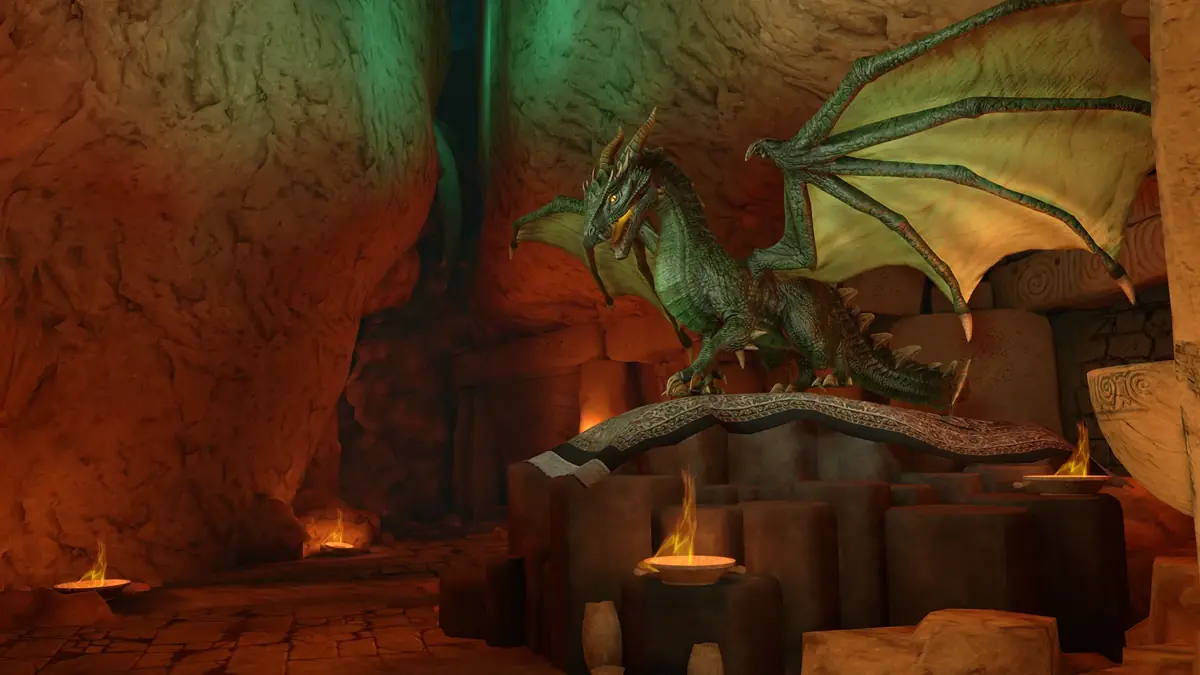
Released in 2023 by Cygnus Entertainment, their Colossal Cave puts the adventure in a first-person 3D world. You explore passages, examine odd discoveries, collect treasure, and work out what to carry and what to leave behind. Limited inventory makes a promising new object a small logistical problem of its own. The current PC version includes automatic mapping that records explored routes and dropped items, a welcome companion when your next bright idea requires something you left several chambers ago.

That is a particularly appealing invitation for Sierra fans who know the name but never sat down with the original. Roberta describes a game that once kept her awake thinking about its puzzles. Her return gives those puzzles caves to wander through, creatures to confront, and a narrator to keep you company. It also supports VR on PC, although you can play without a headset. There is room here for the player who wants to settle in with a mouse and a stubborn problem.

You can find the game and its demo on Steam, or visit the official Colossal Cave website for the other editions and more from the team. The site also offers the original text adventure to play, so you can meet the world that first grabbed Roberta before stepping into her return to it. After hearing her tell the story, starting with that old cave seems like a very good way to spend an evening.
Back to the conversation
Retro Replay (advance question): What was it like working together on a game again after so many years, especially with modern development tools compared with the technology you started with?
Roberta Williams: Our idea was to add graphics to it, especially 3D graphics, but keep it first person. That’s really perfect for going through a cave, because a cave already is kind of a claustrophobic feeling. Ken and I have done spelunking. To do a 3D first-person game, especially with VR too, would be really perfect for that kind of game.
The nice thing about the text of Colossal Cave, written by both of these guys, is that they did some really descriptive areas and places in that cave. We could bring their own descriptions of the chambers to life. We worked on it, and we got a big team. We got up to 40 people that we were paying for. We still have yet to profit from it, but it was a very interesting project to do.
It got us back into doing gaming again. We didn’t know if we’d be able to do it. Obviously, we’re older, but we still have all our marbles about us. The technology has obviously moved on since 25, 30 years ago. In some ways, it hasn’t.
It has with these big, billion-dollar games. They’re beautiful. But there are a lot of games out there that are still really great games, and some indie games only have two or three developers, and they blow up and do wonderful. The market takes care of them.
What has come to me is that the technology can be part of it, but the design and the creativity of even just a single person is really everything. How fun is the game? It’s really what it comes to. How fun is it? Are you enjoying playing it? If it’s a story-type game, how good is the story?
Retro Replay (advance question): Did returning to Colossal Cave make you think differently about the earliest days of Sierra and how much the industry has changed?
Roberta Williams: Getting back into Colossal Cave was really instructive for me. It was the very first computer game and adventure game that I’d ever played in my life. It obsessed me and inspired me so much that I really wanted to go back and play that game and study it and ask myself, what was it about this game that obsessed me so much and inspired me so much?
I certainly found out. I also found out that I’m not the only one who was inspired to go into the computer game design business by that game. Ron Gilbert. When Ken and I were working on Colossal Cave, we were on a panel together, he and I. He said when he was in eighth grade, he went to a computer camp for the summer, or at least a month, something like that.
One of the cabins had these computers set up so they could play games. One of the computers, maybe more than one, had this game called Adventure. He said, “I couldn’t stop playing that game at computer camp. I loved it so much, and I decided right then and there I wanted to be a computer game designer.”
He was sitting right next to me, and Jane Jensen was on this side of me on the panel. It was in Seattle. He looked at me and said, “Is that the game that you’re working on?” I was there to tout that game. I go, “Yeah, it is. I also was inspired by it, and that’s why we’re doing it.” It’s like full cycle, coming back.
Colossal Cave is very near and dear to my heart, more than Phantasmagoria and more than King’s Quest or any other thing I’ve ever done. It gave me my life, and it gave me my career, and it gave me who I am that I never knew.
Retro Replay: Are there any other projects in line post-retirement, or were you guys treating that as a one-shot?
Roberta Williams: Well, it might have pulled us back in, but that’s all I’m going to say. There’s no promises on anything yet. Right now, I would say it’s very iffy.
Through the Northwest Passage
Retro Replay: I took a peek at the nautical blog a few weeks ago and I got to go back and check out some of the updates, because I, that is interesting to me.
Roberta Williams: We just completed the Northwest Passage, from Nome, Alaska, all the way across and down to Halifax, Canada, on the other side. We just came back home.
The boat went from Seattle to Ketchikan with a crew, and Ken and I flew to Ketchikan and joined the boat. We were on the boat from Ketchikan up to Juneau, across the Gulf of Alaska, into Prince William Sound, and finally made our way over to Kodiak Island. There, Ken and I flew back home again.
The boat with the crew went on to the Aleutian Islands and Dutch Harbor and then up north to Nome, Alaska. We flew into Nome, and then we were on the boat from Nome to Halifax, all the way through the entire Northwest Passage. Very beautiful. Very adventurous. Very challenging.
This year, the Northwest Passage had more ice than it has had in many years, and we almost thought we couldn’t do it. We waited, and there was a break in the ice, and we could get through. We took it.
This boat we have is a steel hull. It’s not a tank, but it’s strong. It’s buff. It’s the kind of boat you could be on and feel safe in the ocean. We bought it, and it’s over 25 years old, and it needed a lot of fixing up. We spent a year fixing it up, getting it in shape, and it worked like a champ.
The North Star videos
Roberta Williams: If you go to YouTube, type in North Star, the name of the boat. We have a North Star channel on YouTube. We did a lot of drone work, so there are a lot of really beautiful videos.
We were very, very lucky to be in a certain inlet with this huge glacier. It was filled with ice. We went up very close to the glacier. It was so exciting. There was this most beautiful iceberg, and we stopped and looked at it. We were fairly close, and we sent a drone up over it. It wasn’t Ken and I handling the drone. It was somebody else, but we were watching it.
All of a sudden, a big part of it started falling. It almost looked like a building that was about ready to come down. It was loud. We could hear it, this huge cracking sound. As we watched, a good third of the whole thing came apart and fell into the water and splashed up huge. We got some of the wake of that, and we’re going, “Oh my God, look at that! I can’t believe we were here to see that.”
The drone not only got it on the side we saw, but not long after, on the other side, where we were not, it did it again and caught it on the other side. That’s the video Ken just put in today. You should start from the beginning and watch them.
Retro Replay: So, I guess finally, are there any other social media accounts, websites, books, current projects, anything that you would like to spread awareness to by chance?
Roberta Williams: Talk about Colossal Cave a little bit with people out there, because it’s a great game. I am very proud of it. It’s different. It’s not like King’s Quest or something that people are used to, but it’s a retro game. It’s a beautiful game.
If people really want to be retro, then you’ve got to check out Colossal Cave, even though it’s not the original. The same exact gameplay is there. I didn’t change anything about it from a gameplay standpoint.
Thank you, Roberta, for spending the afternoon with Retro Replay and sharing these stories, from the first Mystery House orders to the adventures you and Ken are having today. Take care, and safe travels on the next voyage.
More adventures from Roberta and Ken
Roberta’s storytelling also reaches beyond the screen. Farewell to Tara follows two Irish families through the Great Famine in the mid-19th century. Her research into her own ancestors, the Clintons and the Loughrans, became the basis for a fictionalized story of family, hardship, and emigration. Readers who want to follow her into a different setting can find print, ebook, and audiobook options through the book’s official site.
Ken tells his side of Sierra’s rise in Not All Fairy Tales Have Happy Endings. It makes a natural companion to the kitchen-table beginnings and expanding company Roberta remembers here. For old photographs, company material, and more of that history, the Sierra Gamers archive is another worthwhile stop. Roberta’s official website collects more about her work and career.
The voyage she describes at the end of our conversation has its own home at MV North Star, with the boat’s position, trip updates, and links to the North Star video channel. Ken’s Blog follows the journeys in greater detail. If you want to trade Daventry’s rivers for a rather colder stretch of water, there is plenty to explore there.
And if this interview has sent you looking for a fresh adventure to play, Colossal Cave is the project Roberta most wants you to see. Her final answer above is a better invitation than any sales pitch we could add.
Cover portrait: Portrait by Ken Williams, CC BY-SA 4.0; resized for Retro Replay under the same license. The cover portrait was cropped and composited; the portrait adaptation and original cover contributions are available under the same license. Game imagery retains its respective rights.