 Retro Replay Retro Gaming History, Reviews & Emulation
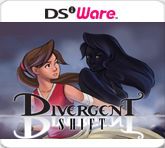
Retro Replay Review
Gameplay
Divergent Shift starts with the kind of puzzle-platforming idea that sounds manageable until your hands have to do it: you control two characters simultaneously, one on each screen. Kirra’s search for the pieces of a shattered mirror becomes a steady exercise in divided attention. At first, simply moving through a level while keeping both figures safe is the challenge. Soon, you begin to look for how a route on one screen can alter the route on the other.
The Reflection Mechanic is the sharper of the game’s two core ideas. Its paired characters stay synchronized, so an object or situation affecting one has consequences for the other. That shared fate forces you to plan a few moves ahead instead of reacting to one obstacle at a time. A jump, a hazard, or a useful object matters twice, and the satisfaction comes from recognizing how both halves of a puzzle fit together.
The Shadow Mechanic changes the rhythm by allowing the characters to desynchronize. That added freedom makes the puzzles less about preserving a perfect mirror image and more about managing two positions and two paths. Switching between these ideas prevents the main mode’s 25 levels from feeling like one extended tutorial, though the basic demand never disappears: you need to stay aware of both screens at once. If you are prone to focusing on one character and forgetting the other, expect some frustrating resets.
There is worthwhile follow-up material once you finish the main route. Hidden journal notes reward careful exploration with more information about the world, while bonus levels offer extra puzzles through the Level Select menu. Time Trial mode is a good fit if you enjoy turning a careful solution into a cleaner, faster run. It will not convert someone who dislikes multitasking puzzles, but it gives the central concept more staying power than a single completion would suggest.
Graphics
The side-view format keeps both character paths in view across the Nintendo DSi’s two screens, which is vital when your attention is split between them. The most distinctive image is the world itself divided into paired halves: Kirra and her counterpart occupy separate screens, and the layout makes their synchronization or separation easy to understand while you play.
Story
Kirra’s mission begins with retrieving a mirror, then immediately turns into a repair job when that mirror breaks and divides both her and the surrounding world in two. It is a clean setup for a puzzle game because the fiction and the challenge point in the same direction: every level asks you to reconnect things that no longer behave as one.
The story is not the main reason to play, and it does not need to be. The broken-world premise gives the Reflection and Shadow ideas a useful sense of purpose, rather than making them feel like disconnected puzzle rules. You are not just alternating between two screens because the game says so; the split is the problem Kirra is trying to solve.
If you want more context, seek out the journal notes tucked into levels. They are the game’s optional route to learning more about its world, so you can keep moving if you only want the puzzles or slow down and collect them if the setting has caught your interest.
Overall Experience
Divergent Shift is a focused handheld puzzle-platformer built around one genuinely strong thought: controlling two linked characters should make every familiar platforming decision more complicated. The first hour earns your attention by making simultaneous movement feel novel, then the Reflection and Shadow rules give that novelty room to develop into proper problem-solving.
Its biggest strength is also its barrier. You must be comfortable monitoring two screens and accepting that an error on one side can ruin a promising attempt on the other. That can feel unforgiving when you have understood the solution in theory but cannot yet execute it cleanly. Stick with it, though, and the moment both characters finally move through a puzzle exactly as intended has a satisfying, orderly snap.
Give it a chance if you enjoy platform puzzles that ask for concentration more than reflexive action, especially if the Nintendo DSi’s dual-screen layout is part of the fun for you. The 25-level main story, bonus levels, hidden notes, and Time Trial mode make this more than a clever one-session experiment. It is a compact game with a demanding hook, and the payoff is worth the concentration it asks for.


Reviews
There are no reviews yet.