 Retro Replay Retro Gaming History, Reviews & Emulation
Retro Replay Review
Gameplay
Stray Gods earns its name by making the musical numbers more than breaks between scenes. You guide Grace through conversations and songs, choosing whether she responds with charm, negotiation, or force. That means the central pleasure is not mastering a combat system or building a character sheet. It is watching a scene bend toward the version of Grace you want to play.
The choices carry into friendships, enemies, romance, and the story’s endings, so the game has a real incentive to be replayed. More importantly, the choices alter the path through its music. That is a clever fit for a role-playing game: instead of merely selecting dialogue and moving on, you are helping write the emotional direction of a number as it happens.
The catch is simple. You need some patience for a game that puts words, performances, and character relationships ahead of traditional RPG action. A player looking for constant mechanical challenges may find the structure narrow. But if you like making consequential social decisions, Stray Gods turns that familiar choice-driven format into something warmer and more playful than most branching adventures.
Graphics
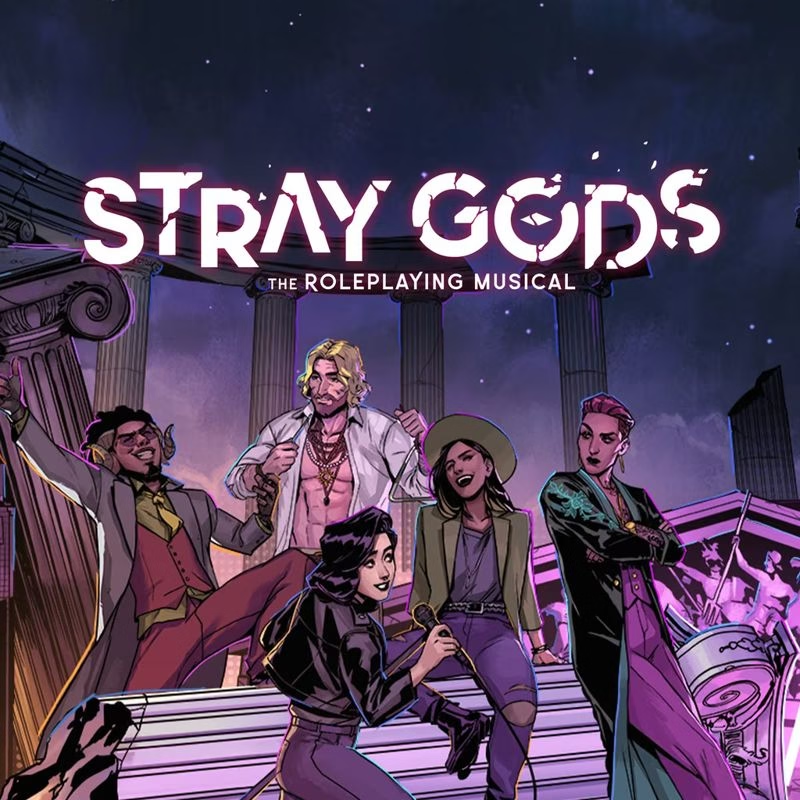
The hand-illustrated art suits the game’s theatrical, urban-fantasy tone. Its modern setting and Greek myth inspiration give the characters and supernatural world a storybook flavor rather than chasing realism, which keeps the focus on the cast and their shifting relationships.
Story
Grace’s predicament is a good engine for this kind of game. She is handed the power of a Muse and must uncover the truth behind her predecessor’s death before time runs out, all while entering a hidden society of gods and monsters. It gives the story stakes without losing the personal angle of a young woman trying to figure out where she belongs.
The Greek mythology hook works because Stray Gods is not content to simply recycle familiar names. It reframes them in a contemporary setting and lets Grace decide whom to trust, befriend, love, or oppose. That makes the mythology feel like a cast of difficult people rather than a museum display of references.
David Gaider’s writing is built around hope, self-discovery, and taking charge of your fate, themes that fit the branching structure unusually well. Four possible romantic paths add another layer for players who want them, but the larger strength is that Grace’s identity remains in your hands. You are not just investigating a mysterious death. You are deciding what kind of person has the nerve to solve it.
Overall Experience
Stray Gods is a confident hybrid of role-playing choices and musical theater. Its best idea is also its clearest recommendation: the songs are interactive, fully performed scenes where your decisions help determine the emotional route. When that combination clicks, it feels less like a game that occasionally has songs and more like a musical that understands why player agency matters.
The all-star cast and original music give the material the right sense of occasion, while the comedy and tragedy of the premise leave room for both lighter exchanges and more serious personal stakes. It is a particularly easy recommendation for gamers who love dialogue-heavy adventures, theater fans curious about games, and anyone tired of Greek mythology being treated as a fixed set of stories.
It will not convert everyone, because its pleasures depend on whether you enjoy its song-driven approach and character-first pacing. For the right player, though, that is precisely what makes it memorable. Grace’s choices can lead to different relationships, routes, and endings, so a second playthrough is not merely a chance to see missed scenes but a chance to perform a different version of her life. For more on its premise and interactive musical structure, see the publisher’s Stray Gods description.


Reviews
There are no reviews yet.