 Retro Replay Retro Gaming History, Reviews & Emulation
Retro Replay Review
Gameplay
The Last Cube earns your attention with its sticker system. Stamping powers onto different faces turns the cube itself into the central puzzle piece, so a solution often depends on planning several rolls ahead. When it clicks, the game produces that satisfying feeling of having understood a space rather than merely stumbled through it.
The core movement has more range than the premise initially suggests. Rolling remains the foundation, but dashing, hopping, cloning, and other introduced abilities keep asking you to reconsider what the cube can do. That steady stream of fresh mechanics is a real strength. It stops familiar ideas from becoming routine and makes each new obstacle feel like an invitation to learn a new trick.
The tradeoff is that this is a game built to make you stop and think. A puzzle can become frustrating when you know the destination but have not yet worked out the exact sequence of powers and orientation needed to reach it. If you enjoy methodically testing an idea, recognizing the flaw, and trying again, that friction is part of the reward. If you want a breezy platformer, the deliberate puzzle solving may wear thin.
Extra challenges, secrets, and bonus puzzles give the levels a welcome second layer. You can press forward when a solution is enough, or linger to chase a tougher task and dig further into the world. For puzzle fans, that makes the game feel generous rather than padded.
Graphics
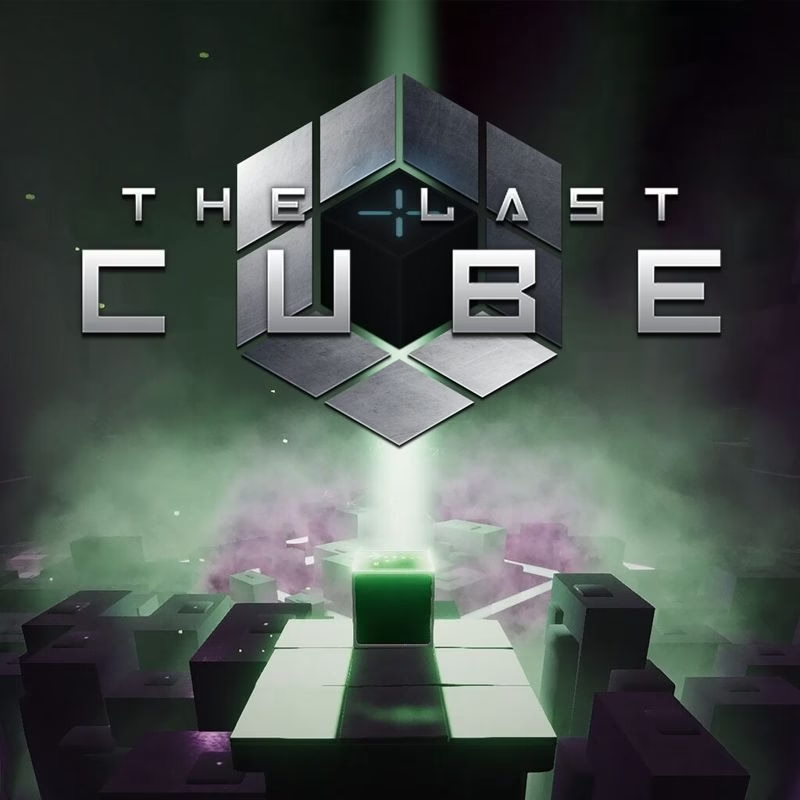
The cube planet has a striking range of locations: looming brutalist structures, foggy abyssal spaces, factories washed in lava light, and open natural areas where golden sunlight catches the mountains. Those shifts in color and scenery give the journey a stronger sense of place than the bare geometric hero might suggest.
The contrast between hard, artificial architecture and brighter landscapes is particularly effective. It gives the cube’s lonely trip through strange technology and damaged spaces a memorable look as you work through its puzzle environments.
Story
You play the Last Cube, a determined little survivor in a dying world. Its task is not merely to pass a set of abstract trials, but to prove its worth and save its home. That modest setup suits the game because it gives every strange ruin and obstacle a reason to exist beyond the immediate puzzle.
The story leans on exploration and lore rather than crowding the puzzle solving with constant plot interruptions. Hidden lore gives you a reason to investigate side paths, while the larger mystery asks what pushed this cube world toward ruin in the first place.
Do not come expecting a character-heavy science-fiction drama. The narrative works better as atmosphere and motivation, a quiet thread connecting the alien technology, ruined spaces, and the cube’s persistent forward motion. Gamers who like piecing together a setting on their own terms will get more out of it.
Overall Experience
The Last Cube stands out because it finds real depth in a clean concept. The sticker powers turn a rolling cube into a surprisingly flexible problem-solving tool, and the game understands the value of introducing a new possibility before your brain has fully settled into the previous one.
Its best moments are the ones where a route that looked impossible suddenly becomes obvious. You notice the side of the cube you need, see how to rotate into position, and execute the plan. That mental payoff is worth the occasional stall, especially if you like puzzle games that expect patience and reward observation.
Give it a chance if you want a thoughtful 3D puzzle adventure with a strong sense of place and plenty of optional discoveries. For more official detail on its sticker-based puzzles and cube world, read the publisher’s description of The Last Cube. It is a focused game, but a clever one, and it keeps finding new ways to make a tiny cube feel capable.


Reviews
There are no reviews yet.