 Retro Replay Retro Gaming History, Reviews & Emulation
Retro Replay Review
Gameplay
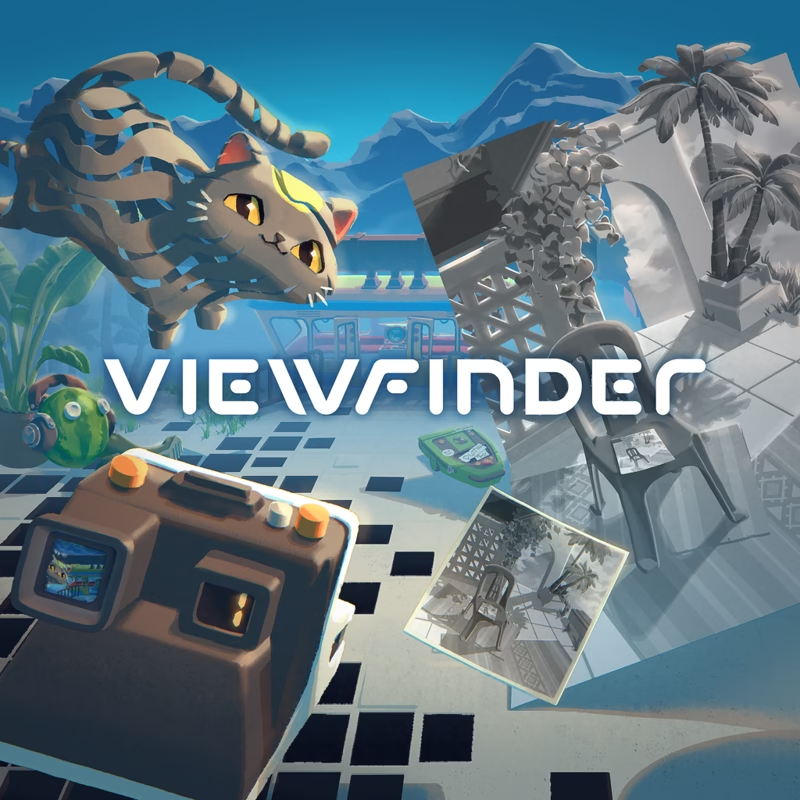
The first time you place a picture into the world and walk into it, Viewfinder has your full attention. Its central puzzle idea is wonderfully direct: images are not merely clues or decoration. They become real spaces, letting you reshape the route ahead by considering a scene from a new angle. It is the kind of concept that makes you want to test it immediately, even before a puzzle demands it.
What makes the game more than a one-note gimmick is the range of images it lets you use. Photographs, paintings, sketches, screenshots, and postcards all feed into the same reality-warping premise, so you are constantly encouraged to treat flat art as something physical. Solutions come from observation and experimentation, not from mastering an intimidating rulebook. When a route finally lines up, the satisfaction is immediate because you can see exactly why your idea worked.
The publisher page gives the cleanest overview of that picture-to-world premise, but the important thing is how approachable it feels in play. You can push forward by solving puzzles at your own pace, while the multiple hub worlds give exploration some room to breathe. Viewfinder is especially good for you if you like cerebral games that feel inventive without demanding the relentless precision of a hardcore puzzle game.
Graphics
Viewfinder’s strongest images are built into its puzzles: a photograph or other piece of artwork can become a solid part of the first-person world. That contrast between a flat framed image and a place you can step into gives the game a playful, surreal look that fits its reality-rewriting hook.
Story
There is a mystery running through Viewfinder, centered on the secrets left behind in its world and the question of why that world exists. The game wisely frames discovery as part of the journey rather than treating the narrative as a separate reward waiting at the end. As you explore, the setting gives your puzzle-solving a reason to matter beyond simply reaching another exit.
The storytelling is deliberately flexible. You can focus on the immediate pleasure of working out each challenge, or spend more time digging into the world’s larger questions. That player-driven balance is a real strength, since it does not force every curious detail on someone who just wants to keep moving.
Do not come to Viewfinder looking for a story that overwhelms its puzzles. Its mystery works best as a thread that pulls you through the hubs and makes you wonder what else the world is hiding. For a game about changing reality with images, that sense of searching for an answer to something impossible is a fitting direction.
Overall Experience
Viewfinder succeeds because it makes a wild idea feel understandable in your hands. You are not asked to admire a clever concept from a distance. You get to play with it, question the shape of a space, and discover that a solution may be sitting in plain sight from a different viewpoint.
Its gentler, exploratory approach will not satisfy anyone who wants a harsh endurance test of puzzle-solving. The tradeoff is that it is easy to settle into. You can explore the hubs and chase the world’s mysteries when curiosity takes over.
This is a smart, imaginative first-person adventure with a premise strong enough to carry its puzzles and a mystery that gives the journey extra texture. Give it a chance if you want that rare puzzle game that makes you feel clever without making you feel shut out.


Reviews
There are no reviews yet.