 Retro Replay Retro Gaming History, Reviews & Emulation
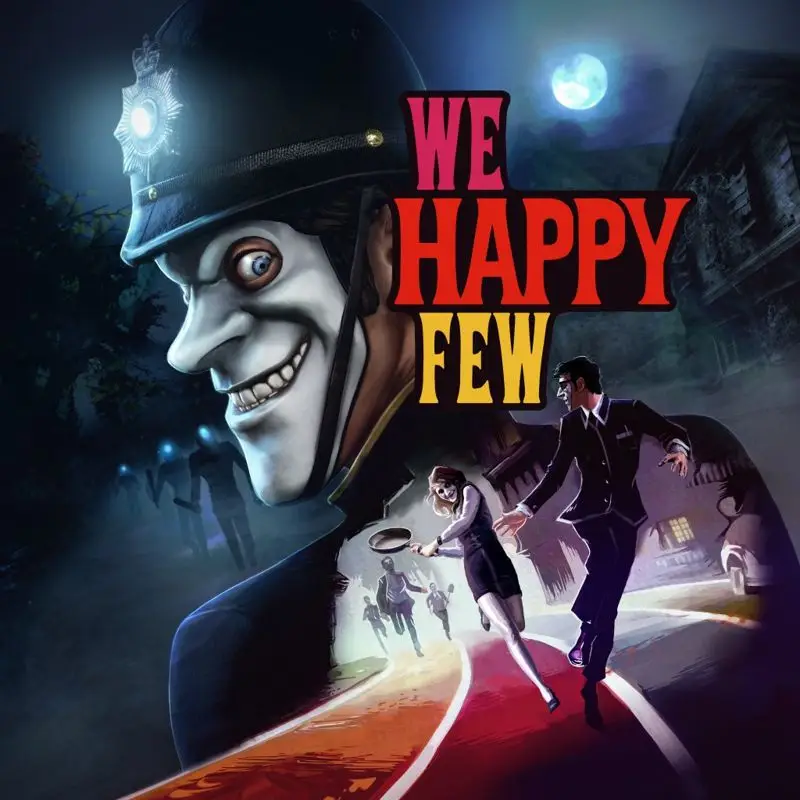
Game Overview
Gameplay
The strongest moments in We Happy Few come from trying to pass as someone you are not. Wearing the right outfit, taking Joy to quiet suspicion, and choosing a quieter route can make a trip through the city feel far more nerve-racking than a straightforward fight. It is satisfying when you slip through a hostile area by reading the situation, using a distraction, or finding a lockpicked or hacked alternative instead of swinging an improvised weapon.
That restraint is worth learning because combat sounds deliberately scrappy. Stamina limits how long you can press an attack, and direct confrontations are often a worse answer than staying hidden. The game gives you tools for a messier, more reactive kind of survival, from crafting and scavenging to environmental manipulation, but managing hunger, thirst, fatigue, and Joy can turn a focused objective into a long checklist. If you enjoy survival systems that make every outing feel risky, that pressure will keep you engaged. If you mainly want a fast-moving stealth adventure, it may wear you down.
Procedurally arranged areas add uncertainty to repeat runs by changing item placements, patrols, and hazards, while optional permadeath raises the stakes further. The skill trees also let you lean toward stealth, fighting, or social manipulation rather than forcing one approach. That flexibility helps, although the core loop is still demanding: gather what you need, stay inconspicuous, and decide when it is safe to stop pretending.
Story
Wellington Wells is an excellent place for a dystopian survival game. A city using Joy to bury wartime pain, then hunting anyone labeled a Downer, gives even routine conformity a sinister edge. Following three protagonists with separate histories and reasons to escape adds welcome perspective, and dialogue choices can shape individual encounters without losing the structure of their larger arcs.
Overall Experience
We Happy Few is more compelling when you meet it on its own anxious, survival-heavy terms. The fantasy is not simply escaping a cruel city. It is maintaining a public mask while supplies run low and a wrong move makes the people around you dangerous. Few games make social conformity feel so mechanically immediate.
Its ambition is also where frustration can set in. Stealth, crafting, survival upkeep, exploration, combat, and branching interactions all demand attention, so the pace can become uneven when you would rather chase the next story beat. The game is more likely to reward patience and improvisation than brute force or speed.
Give it a chance if the premise of a retrofuturist city built on compulsory happiness sounds more interesting to you than a perfectly streamlined action game. The payoff is a distinctive, uneasy escape story with enough systemic tension to make its world feel dangerous beyond the scripted plot. Anyone allergic to survival maintenance or repeated scavenging should think carefully before committing.



Reviews
There are no reviews yet.