 Retro Replay Retro Gaming History, Reviews & Emulation
Retro Replay Review
Gameplay
The first thing to understand is that Edith Finch does not ask you to conquer its world. There are no real puzzles to untangle and no inventory busywork to slow the pace. You explore from Edith’s first-person view, follow a largely fixed path through the family home and its surroundings, and uncover each branch of the Finch family history in a deliberate order.
That structure makes it unusually easy to settle into. A family tree gives the investigation a clear emotional shape, while letters, diaries, memoirs, photo albums, and slides gradually turn names into people. When Edith reads what a relative left behind, you step into that person’s perspective until the moment of their death. The result is less about testing your problem-solving skills than asking you to stay present for a series of personal recollections.
The tradeoff is real. If you need open-ended exploration, meaningful mechanical challenge, or the satisfaction of cracking a difficult puzzle, this can feel more like being led through an interactive book than playing a conventional adventure. But its stripped-down interaction is purposeful: you are rarely distracted from the next discovery, and each new room or document has room to land before the game moves on.
Graphics
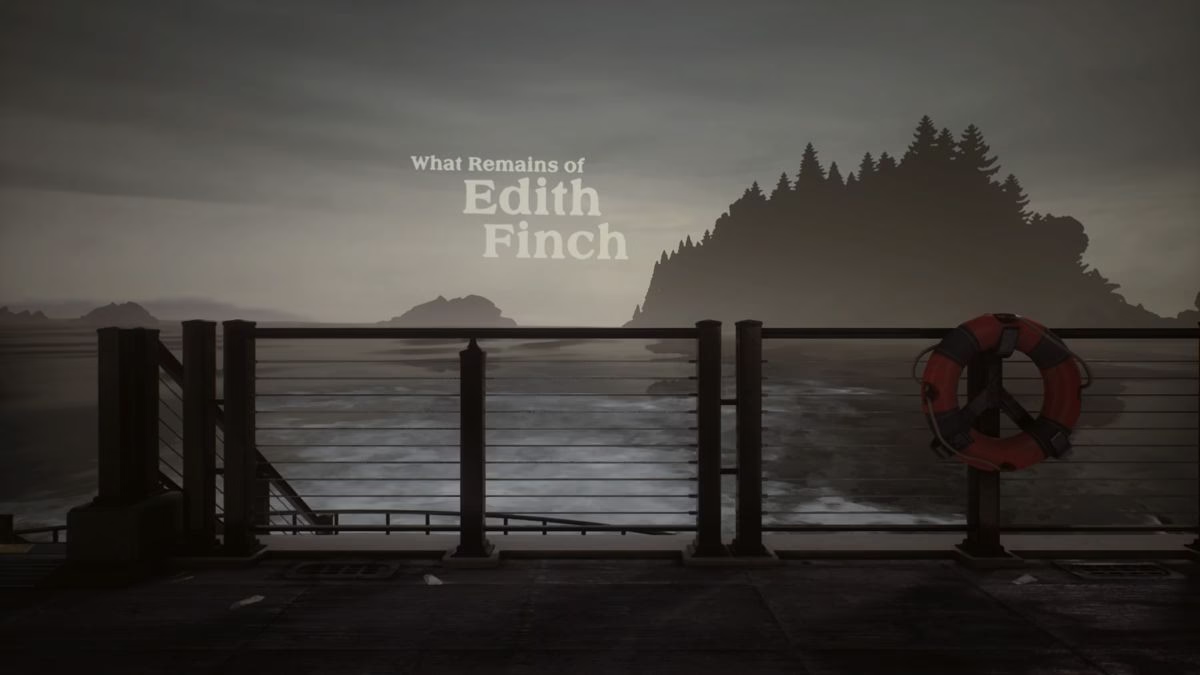
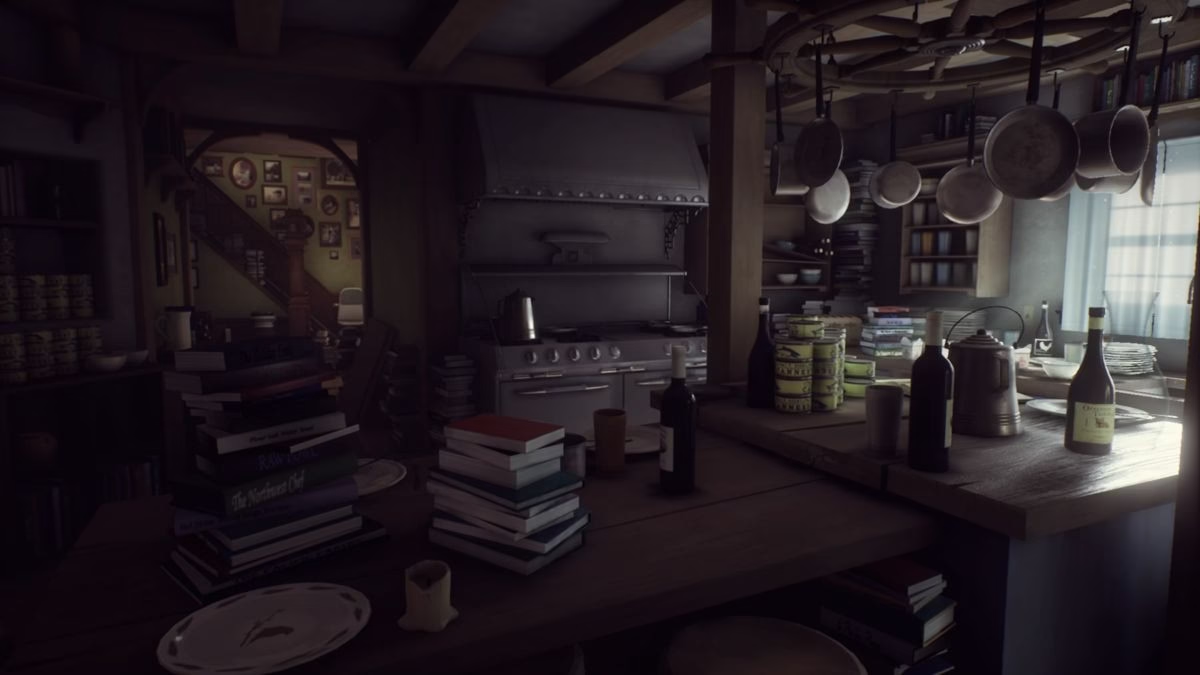
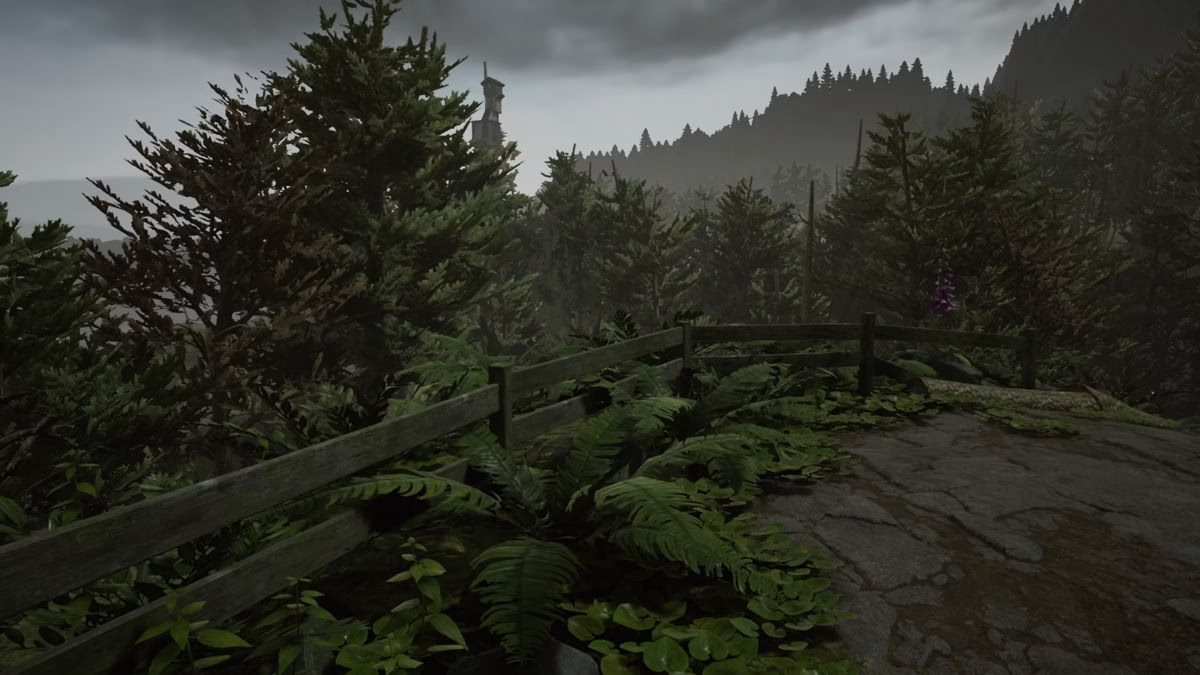
The island approach is moody and grounded, with wet stone, thick ferns, dark evergreens, and a gray sky framing the distant house. Inside, the kitchen looks convincingly lived in and cluttered: stacks of books, hanging pots, bottles, dishes, and worn wooden surfaces give the place a cramped, accumulated history rather than the polish of a generic haunted house.
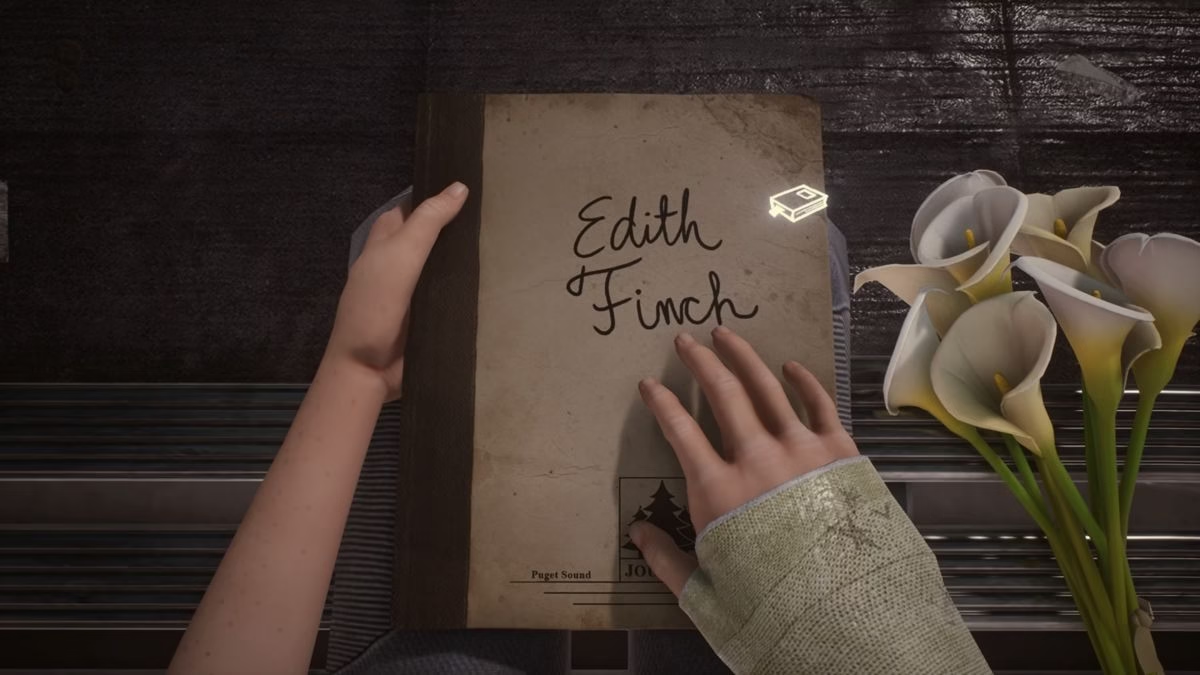
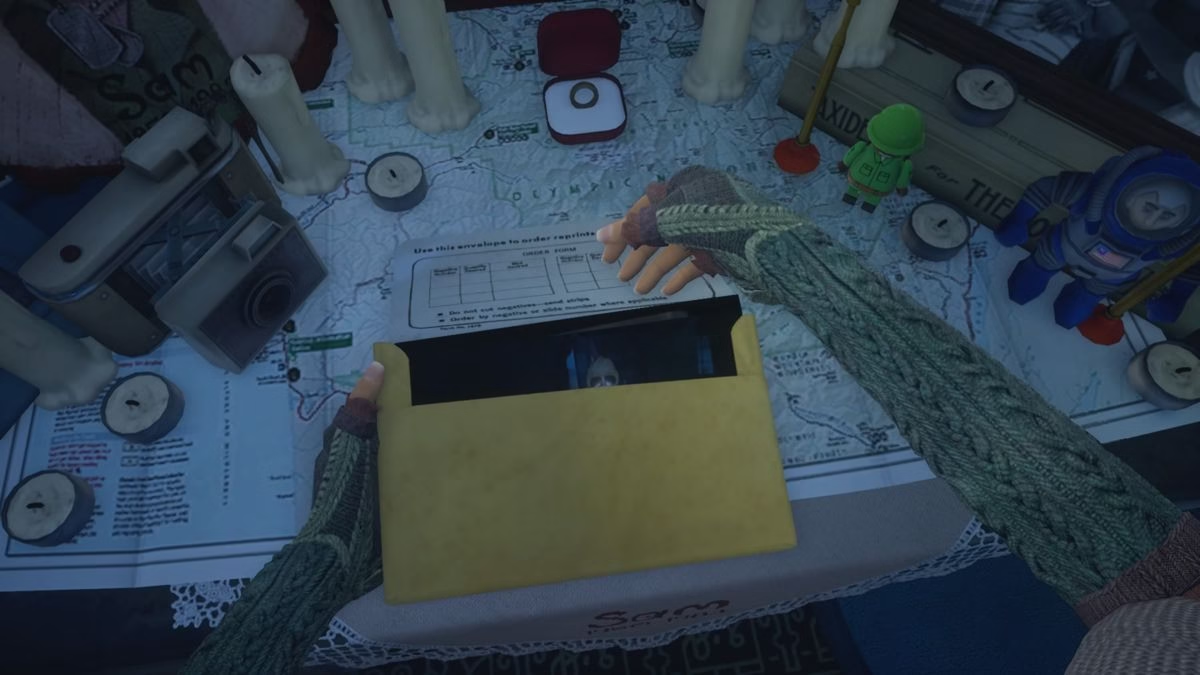
Small close-up details carry the same care. Edith’s hands hold a plainly labeled journal beside white flowers, while a tabletop memory scene layers maps, candles, keepsakes, and a camera around a photograph. The muted interiors and overcast coastline make the occasional personal object stand out.
Story
Edith is the last living Finch, returning to her grandmother’s house to learn what happened to the family members who came before her. It is a strong setup because the mystery is not merely who died, but how a family came to understand its repeated losses. The family tree turns that question into something tangible from the start.
Each recovered letter, diary, memoir, album, or set of slides offers a different route into the past. Letting you briefly inhabit the relative behind the keepsake gives the stories more weight than a stack of optional documents would. You are not just told that a name on the tree died. You are brought close enough to feel the human scale of that absence.
The linear order is a good fit for this particular story. Edith’s discoveries build on one another, and the home becomes more meaningful as the family history fills in. The game is direct about where it wants your attention, which helps it maintain its melancholy momentum instead of turning a story about remembrance into a scavenger hunt.
Overall Experience
What Remains of Edith Finch is an easy recommendation if you value narrative adventures that know when not to overcomplicate themselves. Its strongest moments come from the steady accumulation of details: a name, a room, a handwritten account, then a chance to experience a final piece of someone else’s life. The premise sounds grim, but the focus on individual memory gives it warmth as well as sadness.
You should skip it if your idea of a great adventure game begins with demanding puzzles or substantial player freedom. The route is narrow, and the interaction serves the narrative rather than challenging you for its own sake. There is little friction, which can make the experience feel slight if you come looking for systems to master.
For everyone else, this is the kind of game that can stay with you precisely because it refuses to bury its point under busywork. The Finches’ house, the family tree, and Edith’s search turn a simple walk through a painful history into something personal. Its payoff is not a triumphant victory lap. It is the quiet, uneasy feeling of having listened to a family long enough to understand why their stories mattered.


Reviews
There are no reviews yet.