 Retro Replay Retro Gaming History, Reviews & Emulation
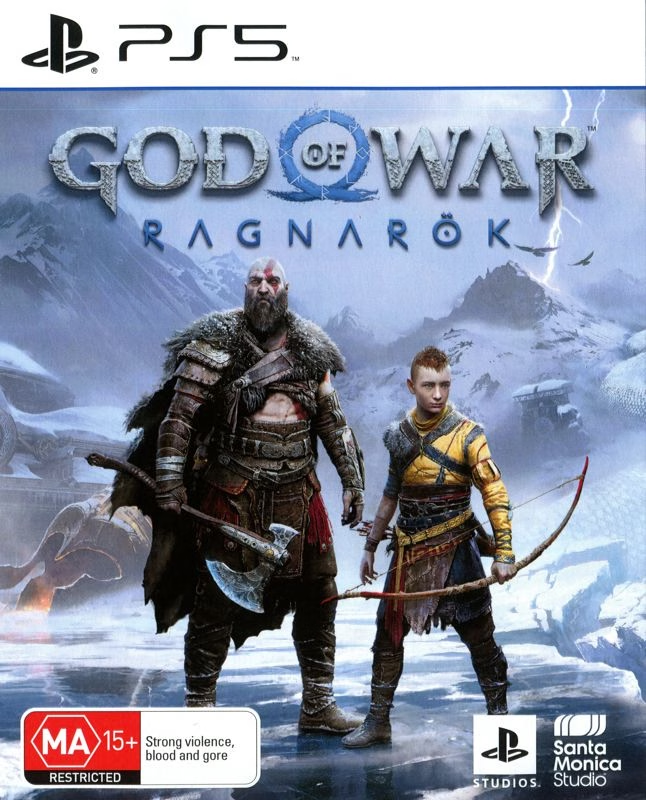
Game Overview
Gameplay
Ragnarök understands that the best part of its predecessor was not simply hitting enemies hard. It was the rhythm of deciding how to hit them. Kratos has three weapons with sharply different personalities: the ice-infused Leviathan Axe, the fiery Blades of Chaos, and the Draupnir Spear. Swapping between them gives fights a welcome tactical edge, especially as enemy types and mini-bosses become more varied. You are not just repeating one reliable combo until the room is clear.
The spear is a particularly smart addition because it broadens Kratos’s tool kit without pushing the older weapons aside. Each weapon has light and heavy attacks, runic abilities, and environmental uses, while traversal can now draw on Kratos’s arsenal too. The Blades can act as a grappling tool, and elevated positions create opportunities for plunging attacks. That makes exploration feel more connected to combat rather than like a separate checklist between battles.
There is plenty to dig into if you like tuning a build. Armor, weapon upgrades, crafting resources, skills, customizable shields, and three Spartan Rage modes give you options to favor aggression, defense, or healing. The tradeoff is that the RPG layer can become a lot to keep track of when you would rather stay focused on the next fight. Still, the transmog option is a welcome concession, letting you keep a look you like without throwing away useful stats.
Atreus’s playable sections are an important change of pace. His magical bow, melee attacks, spectral animal summons, and transformation-based rage abilities give him a different combat identity from Kratos. Story companions also contribute during combat, exploration, and puzzles, so the journey rarely feels like a solitary march. The semi-open structure and optional side content offer room to wander, though gamers who only want the main narrative can keep moving without treating every detour as mandatory homework.
Story
This is the conclusion to the series’ Norse era, with Ragnarök hanging over Kratos and Atreus from the outset. The stronger dramatic hook is their changing relationship: Kratos is still the central figure, but Atreus is no longer merely along for the ride. That father-and-son tension gives the mythological stakes a human center and makes the sequel feel like a continuation with purpose rather than an oversized repeat of the 2018 game.
Overall Experience
Ragnarök is the kind of sequel that starts from a proven foundation and earns its larger scale by improving the moment-to-moment play. The weapon roster is more versatile, the enemy lineup is broader, and the optional material gives the adventure more range. Even when the upgrade systems get a little crowded, they do not erase the simple satisfaction of a well-timed axe throw, a flurry from the chains, or a carefully placed spear detonation.
The continuous over-the-shoulder journey also helps the adventure feel cohesive as it moves between combat, puzzles, and exploration. You are usually doing something active, whether that means searching a route forward, working through an environmental obstacle, or preparing for another encounter. The pace will suit gamers who want a substantial action game with systems to explore, not a short, lean campaign that rushes from set piece to set piece.
If God of War (2018) worked for you, Ragnarök is absolutely worth your time. It retains the close-up, combo-driven action that made that game land while expanding Kratos’s choices and giving Atreus a more substantial role. It can be a busy game, and completionists may find the side content and progression demands more than they need, but its combat depth and character-focused premise make it one of the strongest big-budget action sequels on PlayStation 5.
Reviews
There are no reviews yet.