 Retro Replay Retro Replay gaming reviews, news, emulation, geek stuff and more!
Retro Replay Review
Gameplay
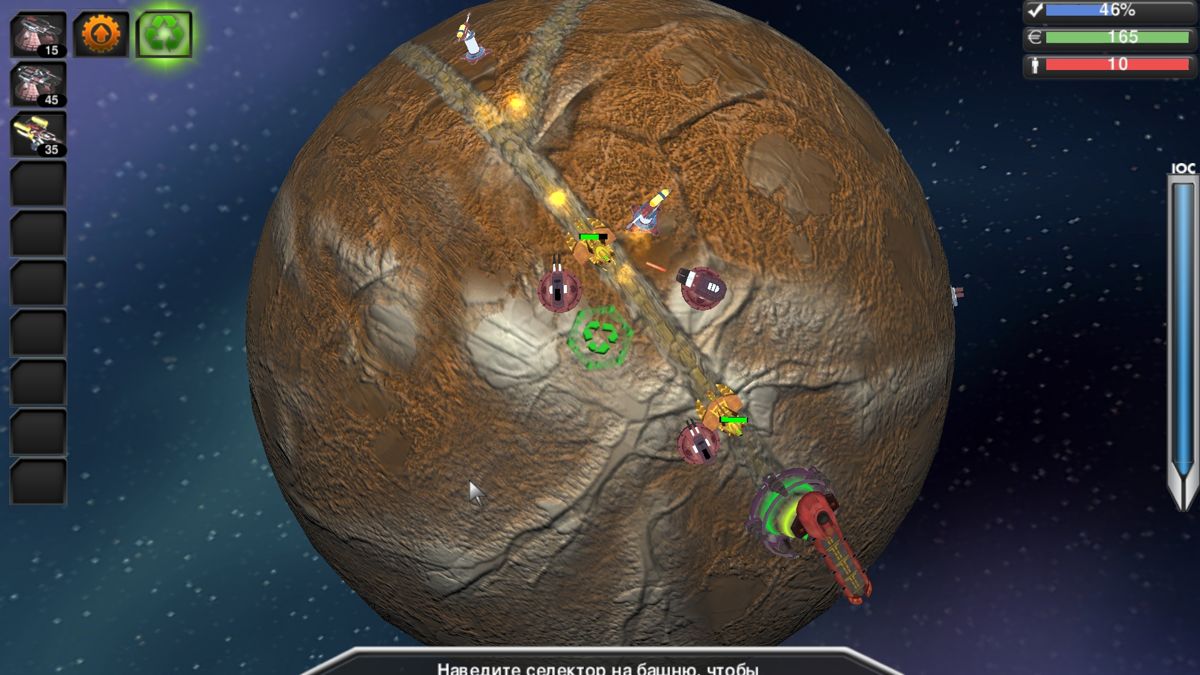
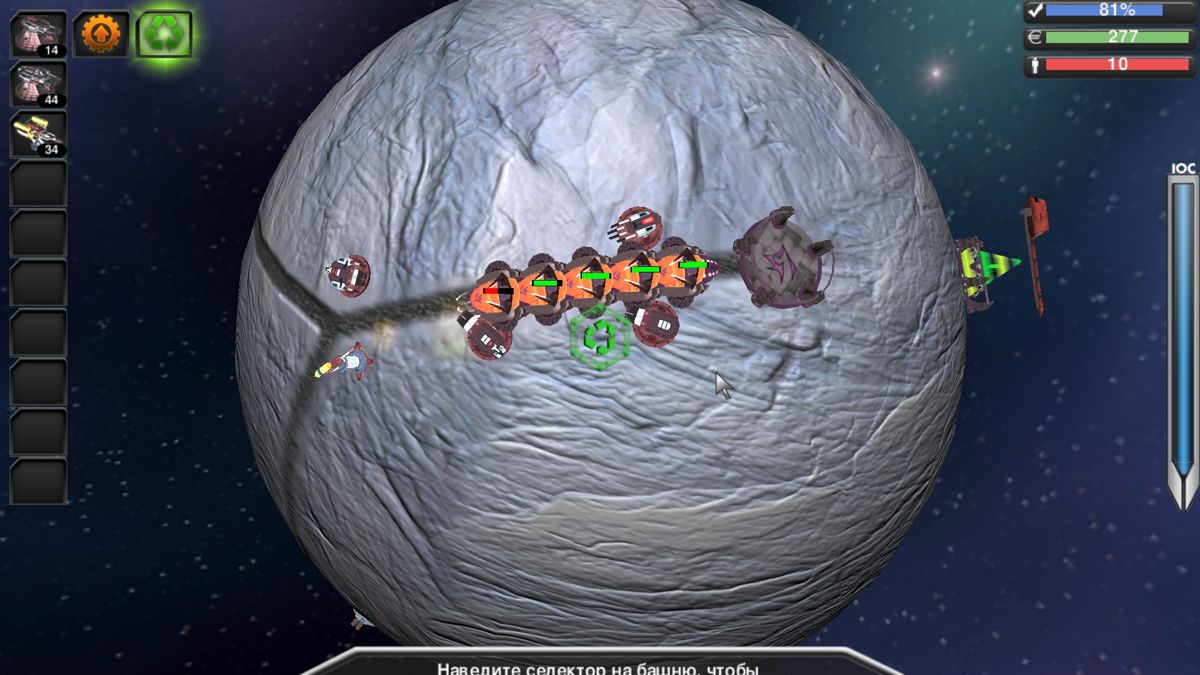
The first few minutes of Colony Defense put you in the familiar tower-defense hot seat, but the spherical map gives the task a more interesting shape. Several enemy landing bases can feed attacks toward peaceful colonies along connected roads, so you are reading routes and deciding where a limited number of towers can do the most work. Because towers must be kept apart, every placement matters. You cannot lazily stack firepower at one convenient intersection and call it a day.
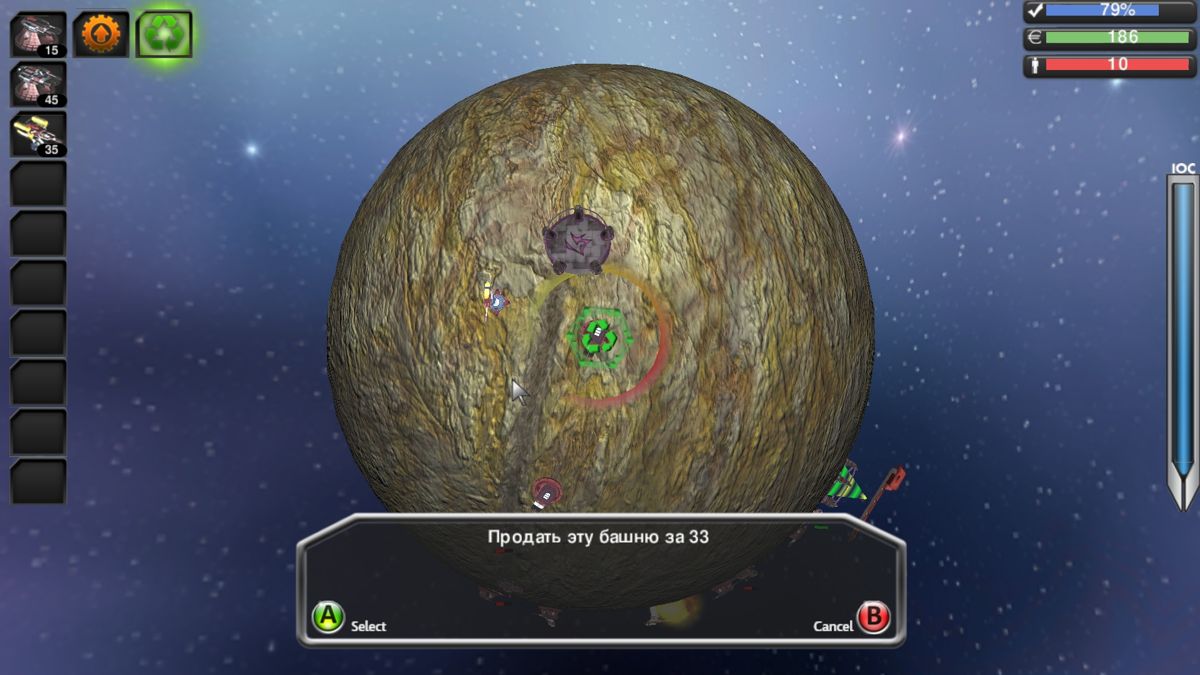
What makes the game more than a routine build-and-watch affair is the need to adjust when enemies become immune to particular damage types. Selling a tower is a practical tactical choice, not merely a cleanup option. That can sting when credits are tight, but it forces you to stay engaged with the enemy mix and reconsider a defense that worked a moment ago. If you like tower defense most when it asks you to adapt rather than merely upgrade, this is the hook.
Credits are the sole resource, which keeps the economy direct: buy towers, improve them, or hold money for the next problem. The orbital ion cannon is the useful release valve. It cannot be fired constantly, so it works best as a saved answer for the moment a route is about to collapse, rather than a substitute for planning. Expect frustration if you spend too freely early; the game’s structure rewards leaving yourself room to respond.
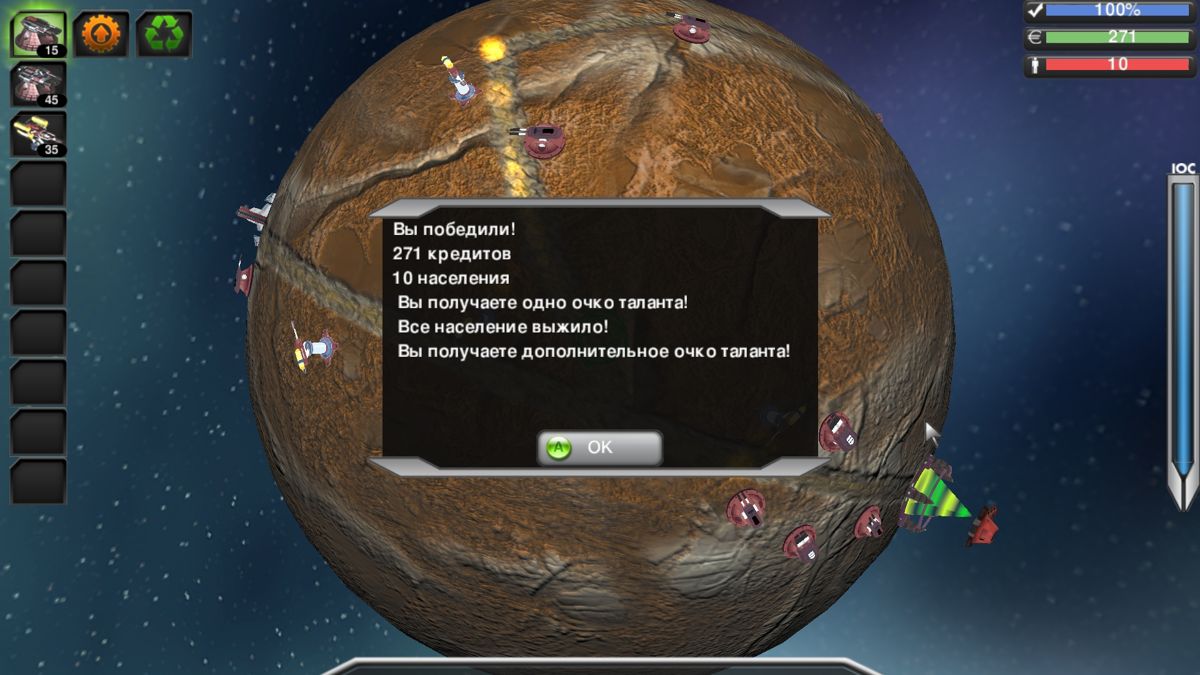
Mission rewards also give the campaign a reason to care about more than simple completion. You receive a talent point after a mission, with an extra point for letting no civilians die, then spend those points on benefits such as cheaper construction or stronger damage. That zero-loss bonus should make you chase cleaner solutions on later attempts, while the broader talent upgrades offer a welcome sense that your commander is improving alongside your own decision-making.
Graphics
The action is viewed from above on spherical battlefields, with roads linking enemy landing bases to the civilian colonies you must protect. That layout is the key visual feature: it puts the invasion routes and threatened settlements in front of you, making the map’s geography easy to assess while you decide where a tower belongs.
Story
The fiction is straightforward military sci-fi. You are a graduate of the GalCon war academy, sent to protect human populations on distant planets in the year 5736. It is a functional setup, but it suits the game’s immediate priorities: civilian colonies are in danger, aliens are arriving, and you are the one assigning the guns.
There is a modest tension built into that assignment because civilians are not just background stakes. Their survival affects mission rewards, and a perfect defense earns an extra talent point. That connection gives the premise a practical edge; saving every colony is both the heroic goal and the smarter long-term play.
Do not come to Colony Defense for a sprawling narrative or elaborate character drama. Its story exists to frame a sequence of defensive operations, and the commander progression gives that framework a little continuity. For this kind of compact strategy game, that is enough: the real narrative is whether your plan holds when the next wave exposes its weak point.
Overall Experience
Colony Defense earns its place through disciplined tower-defense fundamentals and a few rules that prevent complacency. The spherical road network makes placement more deliberate, tower spacing curbs easy solutions, and changing enemy immunities ensure that a successful build cannot always stay untouched. It asks for attention throughout a mission instead of rewarding pure setup.
The payoff is strongest when you recover from a defense that is starting to fail: sell the now-wrong tower, redirect your credits, and reserve the ion cannon for the point where it can save a colony rather than merely add damage. That is a satisfying tactical rhythm, even if the need to rebuild under pressure can feel punishing when your credit reserve is thin.
Give it a chance if you want a focused sci-fi tower-defense game where protecting civilians cleanly matters and flexibility is as valuable as raw firepower. It is especially suited to you if you enjoy revising a plan on the fly. If your favorite tower defense games are the ones where a single perfected layout runs untouched to the end, the immunity system and spacing rules may feel more restrictive than rewarding.


Reviews
There are no reviews yet.