 Retro Replay Retro Gaming History, Reviews & Emulation
Retro Replay Review
Gameplay
The first few steps into Pangaea’s unmapped dungeon tell you exactly what kind of ride this is. You do not simply discover a fixed corridor; entering a new square triggers a roll that determines what belongs there. That makes exploration feel like a tabletop session in motion. Every unexplored edge is an invitation, but it is also a risk, because the dungeon can hand you a fight, a trap, treasure, or another path at the whim of the dice.
Nearly everything runs through that same gamble. Monsters, attack results, item effects, treasure contents, and the shape of the dungeon all come down to rolls. If you enjoy adapting to bad luck and squeezing value out of an imperfect run, Pangaea has a distinctive pull. If you want dependable tactical outcomes, though, frustration can arrive early. A strong decision can still meet an ugly roll, and the game is not interested in pretending otherwise.
Party-building gives that uncertainty some welcome texture. You can bring up to four adventurers and freely mix Fighters, healing Priests or Priestesses, trap-disarming Thieves, and magic-using Sorcerers or Sorceresses. That makes the familiar balanced-party instinct matter: physical damage, healing, trap insurance, and magic each cover a different danger. Characters keep their own experience, gold, and items, however, and cannot trade with one another, so you need to think ahead about who carries what and who is growing stronger.
The central choice is a good one: keep exploring to exhaust every route, or leave through the entrance while you still can. Completion pays a bonus based on dungeon size, giving larger expeditions a real reason to tempt fate. Back in town, you can heal wounded party members, buy and sell equipment, rearrange the team, and save. It is a clean cycle of preparation, risk, retreat, and another attempt—less about conquering a handcrafted maze than managing a run that refuses to behave.
Graphics
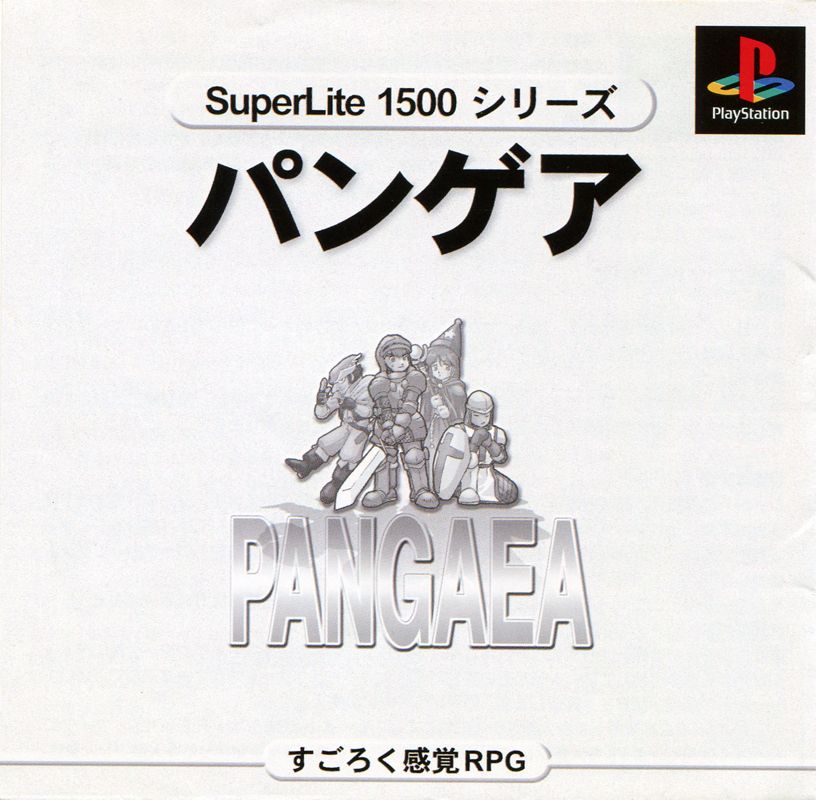
Pangaea uses an isometric, anime/manga-leaning fantasy look. The angled dungeon view fits its board-game concept well, since exploring is built around claiming and revealing squares rather than racing through an action-oriented world. Its character classes also give the party a straightforward fantasy shape: armored fighters, holy healers, thieves, and spellcasters.
Story
There is no story to carry you from dungeon to dungeon. Pangaea does not offer a grand quest, named conflict, or scripted destination beyond exploration, treasure, experience, and survival.
That absence makes the run itself the narrative. The memorable moments come from deciding whether a battered team should risk one more unknown square, or turn back with what it has earned. For some gamers, that is enough: a compact adventure built from decisions and dice rather than dialogue.
Others will feel the lack of a larger purpose quickly. The town is a useful staging area, not a dramatic hub, and the dungeons are places to probe rather than chapters in a tale. Come for the board-game dungeon loop, not for character writing or plot momentum.
Overall Experience
Pangaea is a stubbornly pure experiment in turning dungeon RPG exploration into a roll-driven board game. Its best moments come when uncertainty creates a tense decision: you have made progress, your party has gained something worthwhile, and the next unexplored square might improve the run or unravel it. That push-your-luck tension is real, and it gives routine dungeon crawling a sharp edge.
It is also a game that asks you to accept its unfair streaks. Because dice determine so much, success is never solely an expression of party composition or planning. Smart preparation still matters, especially when choosing a mix of classes and deciding when to retreat, but it cannot erase chance. That will either be the whole charm or the reason you bounce off.
Give it a chance if you miss the feeling of physically rolling dice, revealing a map one piece at a time, and making do with whatever the dungeon hands you. Skip it if you need authored story beats, reliable tactical control, or a sense that every setback could have been avoided through better play. For the right mood, Pangaea’s gamble-heavy expeditions have a pleasingly old-school bite.


Reviews
There are no reviews yet.