 Retro Replay Retro Replay gaming reviews, news, emulation, geek stuff and more!


Retro Replay Review
Gameplay
The first stretch has a strong, familiar pull: Christine steps onto a remote island to rescue the grandfather she barely remembers, and almost immediately you are picking through an asylum that has clearly gone badly wrong. You move through locations from her perspective, collecting useful objects, looking for places to use them, and gradually opening the way forward. It is a classic hidden-object adventure loop, but the abandoned-institution setting gives all that rummaging a better reason to exist than a random sequence of cluttered rooms.
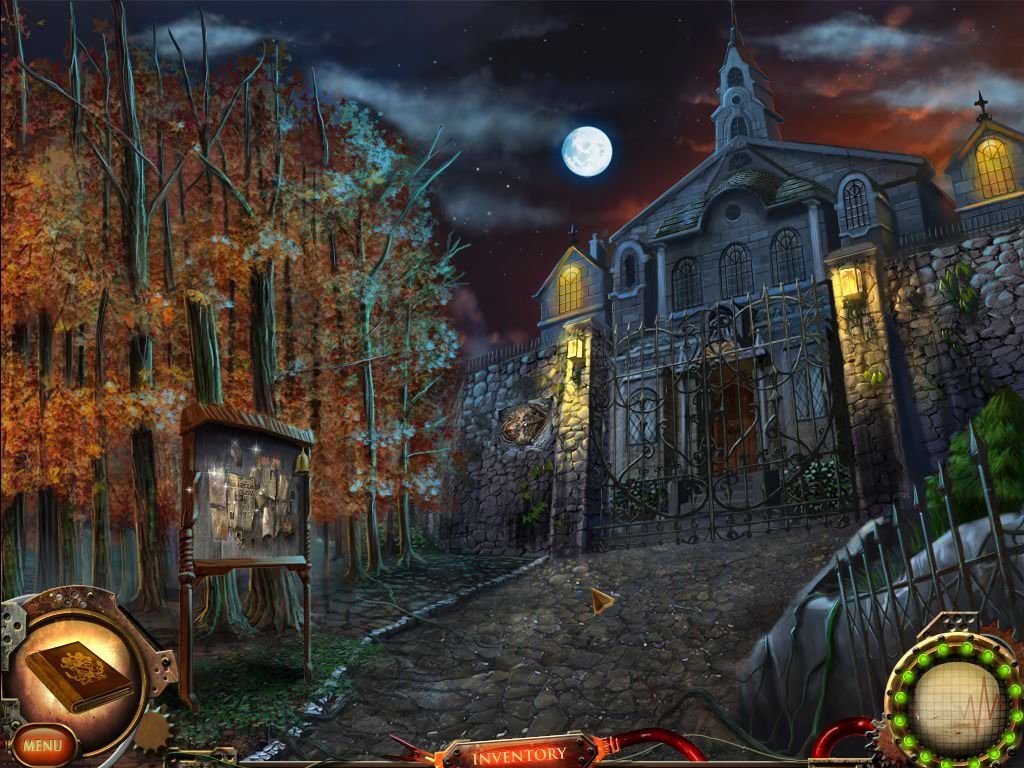
Most puzzles come down to noticing what a location needs, finding the right item, and dragging it from the inventory onto the scenery. The inventory tray hides at the bottom of the screen until you move the cursor toward it, which is a small but welcome touch: you can inspect the background without a permanent bar cutting across it. Progress feels satisfying when a collected object finally solves a blockage, especially after you have carried a few leads from room to room and begun to understand how the spaces connect.
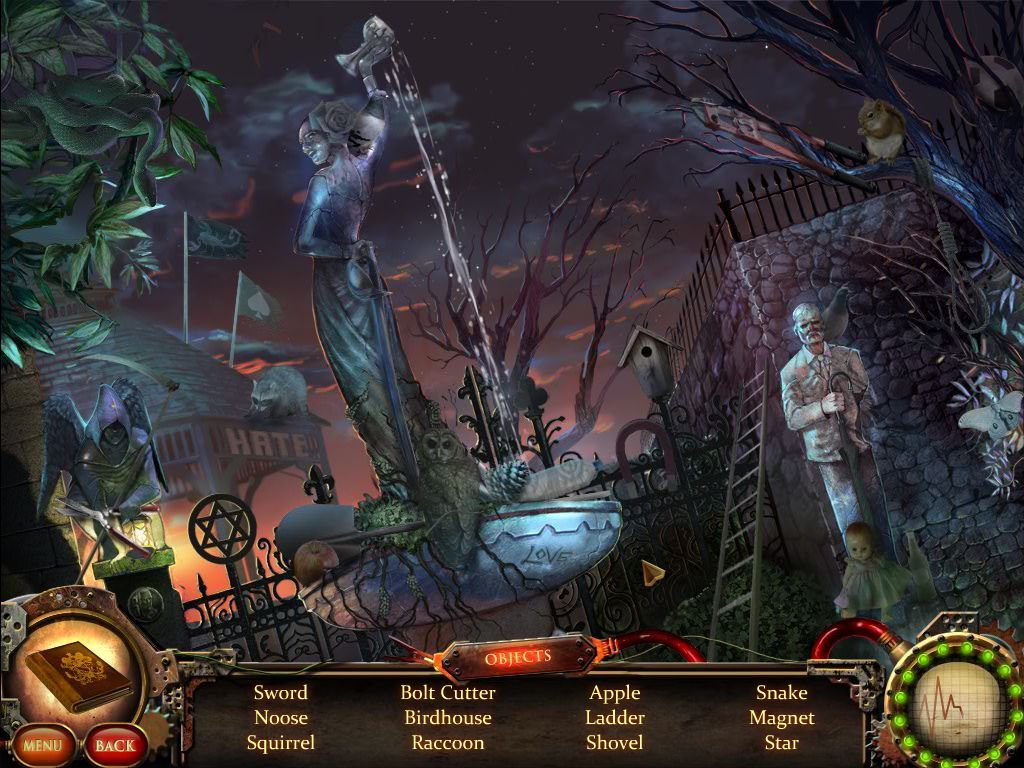
The hidden-object scenes are the genre’s more direct side. A list asks you to locate items amid piles of assorted paraphernalia, while separate mini-games occasionally ask you to manipulate a mechanism or solve a self-contained puzzle. That mixture keeps the search from becoming only inventory trial and error, though your patience for cluttered object lists will largely determine how much you enjoy the middle of the game.
When you hit a wall, the radar-shaped hint button points out one required object, then needs time to recharge. It is useful without becoming an instant escape hatch, so you still have a reason to study a room before using it. The trade-off is predictable: if an object is buried in the clutter or you cannot see the next interaction, waiting on the hint can turn a spooky investigation into a brief stall. Go in ready to search carefully rather than expecting fast-paced puzzle solving.
Graphics
The game leans into detailed backgrounds: vacant asylum rooms, a damaged main building, and ruined outdoor grounds give you plenty to scan. Hidden-object screens are deliberately crowded with scattered odds and ends, which suits the scavenger-hunt format even when it makes the last listed item hard to spot. Christine’s first-person viewpoint keeps the camera fixed on the places you are investigating, letting the decayed island environment carry the mood.

Story
The personal hook is stronger than a generic haunted-building setup. Christine is not simply sent to investigate; she has discovered that her estranged grandfather is alive and travels to save him with only faint memories and an old photograph to guide her. That gives each new clue a human purpose, even as the asylum itself starts to take over the mystery.
The story unfolds through exploration rather than a rush of exposition. The empty building, wrecked grounds, and evidence Christine uncovers suggest a dark past piece by piece. It is a good fit for this kind of game because searching drawers, rooms, and puzzle devices feels like part of the investigation instead of a detour from it.
Do not expect the premise to stop being a hidden-object adventure’s frame. The central momentum comes from finding the next clue and unlocking the next area, not from constant dramatic turns. Still, the missing-grandfather goal and remote asylum make a more focused backdrop than many object hunts manage.
Overall Experience
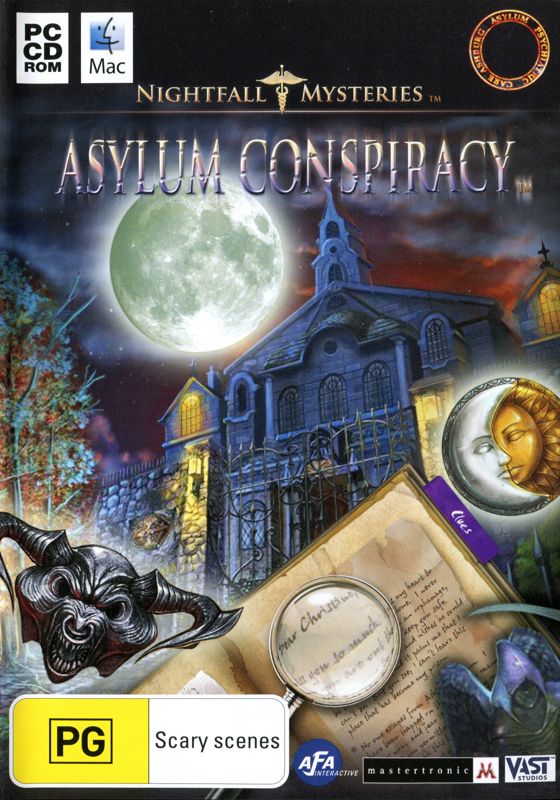
Nightfall Mysteries: Asylum Conspiracy is an easy recommendation for you if the pleasure of a hidden-object game is in patiently clearing a location, matching inventory items to obstacles, and letting an eerie mystery unfold one room at a time. Its strongest quality is how neatly its investigation, object searches, and gloomy asylum premise fit together.
It is less likely to win over anyone already tired of item lists and heavily cluttered search scenes. The occasional mini-games and the inventory-based adventure structure add variety, but they do not change the game’s fundamental rhythm. That is not a flaw so much as a clear statement of intent: this knows the kind of adventure it is.
For fans of the format, the payoff is a solid, darkly themed scavenger mystery with a personal stake at its center. Take your time with the backgrounds, use the hint radar as a nudge rather than a crutch, and the gradual uncovering of the asylum’s past should keep you engaged through the search.


Reviews
There are no reviews yet.