 Retro Replay Retro Gaming History, Reviews & Emulation
Retro Replay Review
Gameplay
The first few matches of Rakugaki Showtime have the scrappy thrill of a playground fight where nobody brought the same weapon. You are not merely trading basic attacks: missiles, rocks, grenades, land mines, black holes, and smiley balls keep forcing you to react to what is flying around the arena. That makes a single round feel less controlled than a traditional head-to-head fighter, but it also gives the game its character.
Once you start recognizing the value of the charged Smiley Balls, the chaos gains a useful rhythm. Attacking charges them, then grabbing a fully charged one opens the door to a character’s Super Smiley Attack. That risk-reward chase is a smart focal point amid all the loose projectiles, since you have to decide whether to press the fight or make a dash for a potential payoff.
The character roster is another reason to stick with it. You begin with four choices, and each has strengths and weaknesses that can help or hinder you depending on your habits. Defeating God Hand unlocks more fighters, eventually reaching 16, so experimenting is part of the long-term hook rather than an afterthought. Spend some time in training mode before judging a favorite; this is a game where familiarity with your moves matters.
Four-player Versus battles are where the design should be at its most gleefully crowded. With several fighters chasing weapons and Smileys around a 3D arena, clean plans can evaporate quickly. If you want a stern, tightly disciplined fighter, that volatility may grate. If you like brawlers that reward opportunism and let a bad situation turn around in seconds, it is exactly the sort of disorder you want.
Graphics
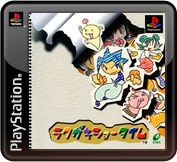
The fighters are rendered as pencil drawings, giving Rakugaki a hand-drawn look that fits its imaginary-world premise. Seeing these sketch-like characters run around 3D arenas is a charming mismatch, and the unusual ammunition—especially black holes and smiley balls—keeps the action from looking like an ordinary fistfight.
Story
Rakugaki Showtime has a premise far more playful than its basic fight-to-the-finish structure suggests. Yukiwo, Sasami, Pitan, Tsubohachi, and the other inhabitants of Rakugaki are supposedly bound to the fates decided by their creator, God Hand. When the final battle begins, they refuse to simply carry on with the script.
That rebellion gives the combat a clear emotional frame: the cast is fighting not just Daddy’s enemy army, but the authority that controls their entire world. It is a familiar escape-from-the-creator setup, yet the pencil-drawing angle makes it feel appropriately mischievous instead of grandiose.
The story mostly works as a reason to push toward God Hand and unlock the rest of the cast. Do not come expecting the narrative to overshadow the matches. Come because the idea of cartoon doodles taking their lives back is a fun excuse for a weird fight game, and because that premise keeps the tone light even when the objective is to beat down an army of enemies.
Overall Experience
Rakugaki Showtime earns its place through imagination and momentum. The best moments come when the arena turns into a scramble over weapons and charged Smileys, and you suddenly find the opening for a decisive Super Smiley Attack. It feels designed to make you laugh at the mess before asking you to learn how to survive it.
Its frustration is tied to the same quality. Projectile-heavy fights and character-specific drawbacks mean you will not always feel like every exchange is neatly under your control. That can be irritating when you want precision, but it is also why matches avoid becoming routine. Learning the roster turns apparent randomness into choices about positioning, pressure, and timing.
Give it a chance if you enjoy eccentric multiplayer fighters with unlockable characters and a strong sense of playfulness. Solo play has a real progression target in God Hand and the expanding roster, while Versus is the natural destination for a group willing to embrace a little mayhem. Rakugaki Showtime is not interested in behaving like a standard fighter, and its refusal to do so is its strongest argument.


Reviews
There are no reviews yet.