 Retro Replay Retro Gaming History, Reviews & Emulation
Retro Replay Review
Gameplay
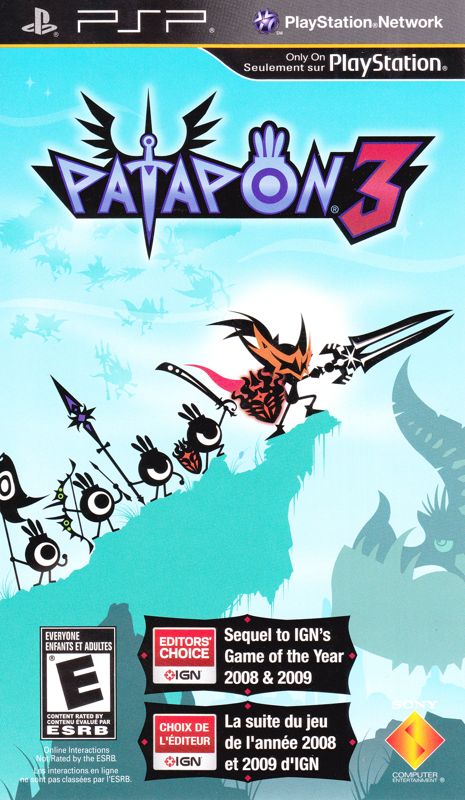
The first hour of Patapon 3 is a test of whether its rhythm-command loop gets under your skin. You beat out holy-drum patterns to tell your force what to do, and there is real tension in maintaining the music while trying to react to a fight. It is not a strategy game where you leisurely inspect every option; decisions have to arrive in time with the beat. That pressure is exactly what makes a successful run feel so good.
The move from larger squad management to a four-unit group makes the action feel more centered on your chosen leader. You resurrect Taterazay, Yumiyacha, or Yarida as your Uberhero: shield, bow, and spear give you a sensible starting choice based on whether you favor sturdiness, ranged attacks, or direct aggression. The three disciples—Ton, Chin, and Kan—round out the force, and their skills, equipment, and experience mean that quests are about more than simply surviving the next encounter.
Customization gives the rhythm battles useful long-term texture. Your Uberhero can equip masks that grant different abilities, while every unit can be adjusted through gear and skills. That is enough to make experimentation worthwhile, especially when a favored approach stops working. Still, the central demand never changes: you need to hold the beat. If rhythmic games make you tense or you want complete freedom to pause and rethink a tactic, Patapon 3 can feel unforgiving rather than clever.
Co-op is the sequel’s biggest swing. Every level supports up to eight people, turning the familiar cadence into a group effort rather than a solo act. Pata-Text supplies a dedicated way to communicate, but the real language is still the drums: a group that keeps time has a natural shared momentum. It is a strong fit for friends willing to learn the patterns together; playing well alongside others should feel more rewarding than merely bringing a stronger character.
Graphics
Patapon 3 uses a 2D side-view battlefield, keeping your army and its opposition lined up across the action. That clear lateral view suits a game built around repeated commands and quick recognition of where the fight is moving.
Story
This is a direct sequel, but its story hook is simple and functional: you are no longer the all-mighty Patapon god. Instead, you take the role of an Uberhero and lead the Patapon army toward its destiny. The change puts a character at the center of the campaign without pulling focus away from the battles.
Your opening resurrection choice gives that role a little personal definition. Taterazay, Yumiyacha, and Yarida are not just menu labels, since each establishes the type of hero leading the army. It is a clean way to make your preferred combat style part of the journey from the outset.
Do not come in expecting the narrative to compete with the game’s rhythmic tactical hook. Patapon 3’s story works best as a reason to keep marching into quests and improving the small party. The real sense of progress comes from growing that force and mastering the commands needed to carry it forward.
Overall Experience
Patapon 3 is an inventive hybrid that earns its 7.2 reputation by making rhythm feel consequential. The drum patterns are not a detached minigame pasted onto strategy; they are how you attack, move, and keep command of the battle. Once the timing clicks, few games offer quite the same sensation of steering a fight through a beat.
Its frustrations are inseparable from its strengths. You cannot simply out-plan a bad sense of timing, and a momentary lapse can turn a confident sequence into a scramble. Yet that same friction gives victories weight, especially as skills, equipment, masks, and levels open up more ways to shape the party.
Give it a chance if you want a PSP action-strategy game that demands your hands and your tactical instincts at the same time. The hero choice, compact customizable group, and eight-player co-op give the formula more room to grow than a straight repeat of earlier Patapon ideas. For gamers willing to meet it on its rhythmic terms, the payoff is a distinctive campaign with an unusually social battle rhythm.


Reviews
There are no reviews yet.