 Retro Replay Retro Gaming History, Reviews & Emulation
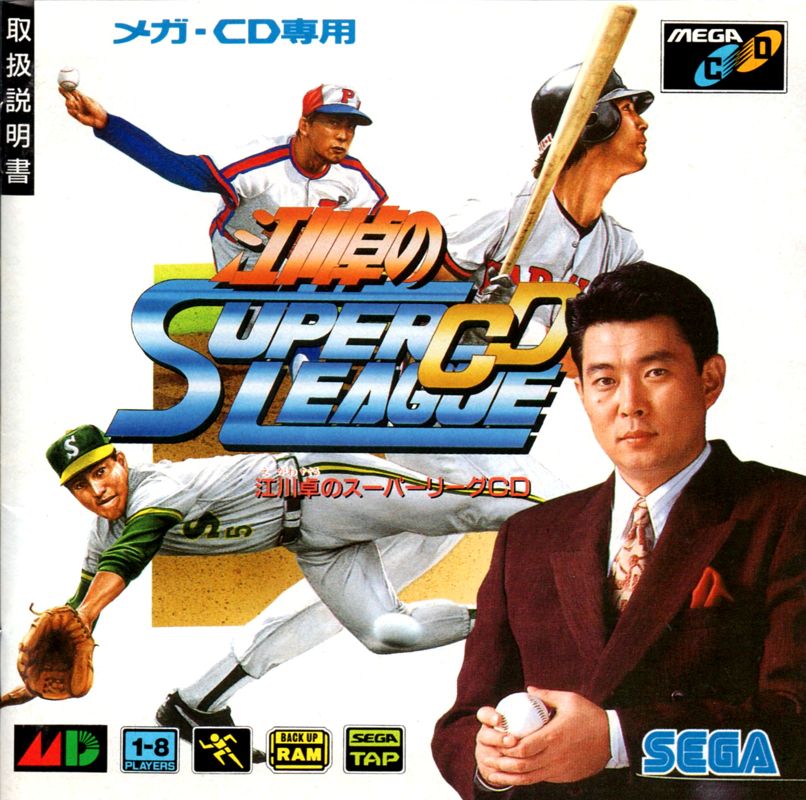
Retro Replay Review
Gameplay
The first few at-bats put the emphasis exactly where a baseball game should: on the tense, repeatable exchange between pitcher and hitter. Egawa Suguru no Super League CD uses a catcher’s view for both batting and pitching, so you spend most of your time reading the confrontation straight ahead rather than managing a detached field diagram. That makes the action immediate and easy to settle into, particularly if you want a direct console baseball game instead of something overloaded with management.
Pennant Race is where the package has the most staying power. Having all 12 Pacific and Central League teams and their full 1993 rosters gives you a complete NPB season framework, while Exhibition is there for the nights when you only want a quick matchup. The All-Star teams also add another ready-made way to sample the league’s talent without committing to a season.
The biggest caveat is also the clearest editorial judgment: this is not a dramatic overhaul of the earlier Super League formula. If you wanted the fourth entry to radically change how Sega’s baseball plays, you will not find that here. The new Home Run Contest is a smart, low-pressure diversion, though, and the team database gives roster-minded fans a reason to linger beyond the next game. It is a solid fit for someone who values a complete 1993 NPB lineup and dependable match play over novelty.
Graphics
The baseball action is framed through the catcher’s view during both pitching and batting, keeping the batter, pitcher, and incoming ball at the center of each encounter. That consistent angle makes the game’s core duel easy to follow, even if it leaves the visual focus firmly on the plate rather than on elaborate field coverage.
Story
There is no authored sports drama pushing you from game to game. The hook comes from representing a real 1993 NPB field of teams, with Suguru Egawa’s endorsement tying the game to one of the Yomiuri Giants’ notable former pitchers and a prominent commentator.
Pennant Race supplies the closest thing to a narrative arc: you pick a club and let the season’s results build their own momentum. That is a better source of investment than a forced fictional plot would be in a game this focused on individual baseball confrontations.
Exhibition and Home Run Contest deliberately strip away even that seasonal context. They are for the immediate satisfaction of a single matchup or a slugging session, so your enjoyment depends less on narrative stakes and more on whether you enjoy returning to the plate again and again.
Overall Experience
Egawa Suguru no Super League CD feels like a confident final refinement of a known series rather than a bold new direction. Its strengths are practical: every 1993 NPB team is present, the core viewpoint is consistent, and there are enough modes to support both a full Pennant Race and shorter sessions.
The payoff is strongest if the licensed league matters to you. Full rosters, league All-Stars, and the team database make it more than a generic baseball game with fictional clubs; they give it the appeal of a specific snapshot of Japanese professional baseball. That historical specificity carries a lot of the experience.
If you want a radically updated sequel, the largely unchanged gameplay may feel too safe. If you want straightforward 16-bit baseball built around the pitcher-hitter battle, plus a complete 1993 NPB lineup and a welcome Home Run Contest side mode, this is an easy game to recommend. It is a focused, worthwhile closer for Sega’s Super League series.


Reviews
There are no reviews yet.