 Retro Replay Retro Gaming History, Reviews & Emulation
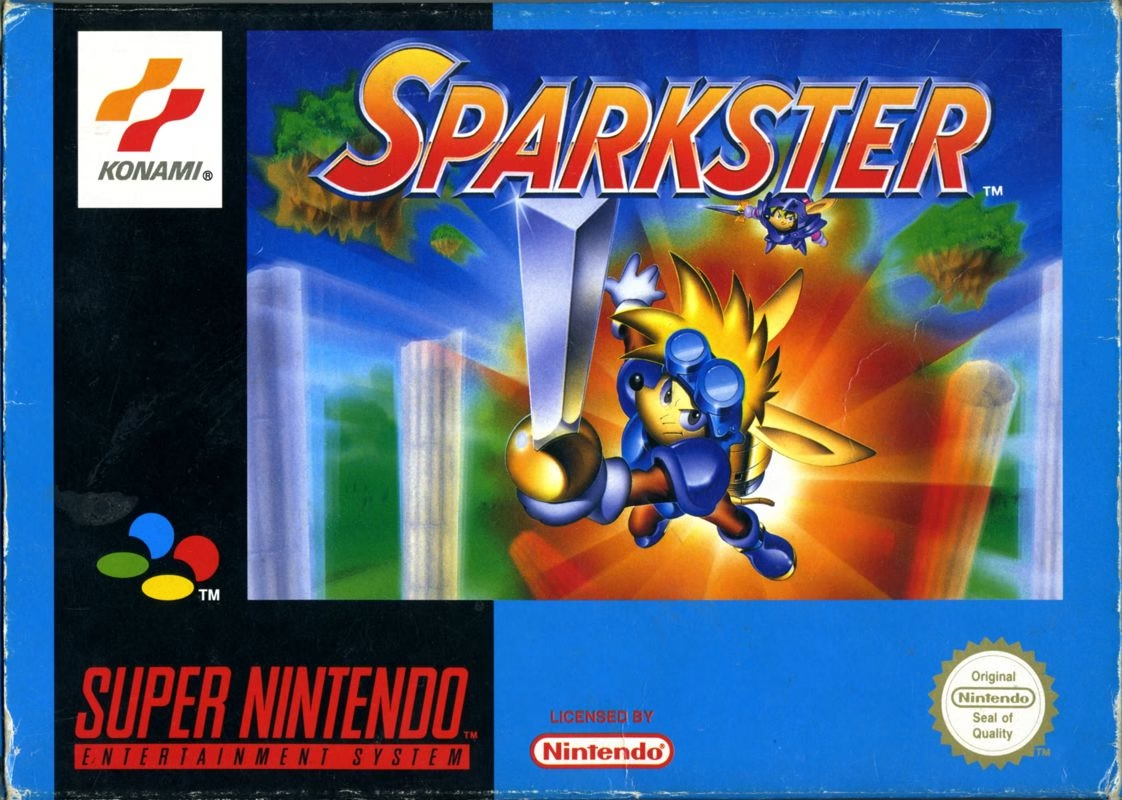
Game Overview
Gameplay
The first few minutes make Sparkster’s appeal immediately clear: you have a sword, a rocket pack, and a broad set of movement options that are much more interesting than simply hopping from platform to platform. Sword slashes send circular projectiles forward, which lets you pressure robot enemies without always standing right beside them. Then the charged rocket meter starts to matter. Hold the attack button long enough and you can burst left, right, or upward over a large gap, ricochet diagonally from walls, or unleash a stationary attack.
That upward burst is especially important to understand as movement, not a ranged attack. Sparkster has regular jumps, can duck, and can hang from branches or rails, but the charged rocket moves are what give the game its distinct rhythm. You are constantly weighing whether to spend time charging up or keep attacking with the sword. When a route has room for a big dash or a carefully placed ricochet, the game feels wonderfully kinetic.
Most of the adventure sticks to side-scrolling platform action, and that focus is welcome. Robots come in often, diamonds reward collection, and apples restore the heart meter when a rough section has drained you. Bosses appear at the end of every level, with many mid-level bosses breaking up the journey too, so the game rarely lets you coast for long. It does change pace with a robot-bird ride and top-down, vertically scrolling flying sequences. Those diversions keep the nine-level run from becoming too samey without replacing the core platforming for long.
Frustration can set in when a charged move feels necessary but leaves little room for a sloppy approach. The game expects you to learn how far each dash carries Sparkster and when a wall ricochet is safer than a direct leap. That is part of the fun if you enjoy platformers built around practiced movement. The password system also makes it easier to return for another attempt instead of treating the whole game as one exhausting sitting.
Graphics
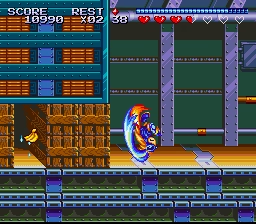
The inspected mechanical room has the dense, colorful look you want from a SNES action game. Sparkster’s small blue armored body stands out against blue metal panels, orange vents, purple columns, dark green recesses, riveted edges, and patterned brown machinery. When he dashes, a bright orange-and-blue circular effect surrounds him, making the move easy to pick out amid all that hardware.
Story
Sparkster keeps the story lean. An elderly man captures a girl and carries her away in an airship, Sparkster sees it happen, and the chase begins. It is a clean excuse to get the hero moving, rather than a plot that competes with the action.
If you know Sparkster from Rocket Knight Adventures, recognize this as a separate SNES spin-off rather than a direct continuation. The returning opossum, rocket pack, and sword give it a familiar starting point, but this game has its own levels, enemies, and gameplay approach.
That stripped-down setup works because the game does not pretend the rescue premise needs a lot of explanation. The real narrative momentum comes from the chase itself: pushing onward through each level, meeting another boss, and following the airship-bound objective to its conclusion. Come for Sparkster’s movement and action, not for a heavily developed tale.
Overall Experience
Sparkster is a strong action-platformer because its rocket pack is more than decoration. The charged dashes, upward movement, and wall ricochets give you a toolkit that rewards experimentation, while the sword projectile keeps ordinary enemy encounters active rather than fussy. It feels best once you stop treating every obstacle like a standard jump and start looking for a rocket-powered route.
The game also knows when to change the flavor. Bosses and mid-level bosses add regular spikes of pressure, while the robot-bird and top-down flying sections offer short breaks from the usual side view. The variety is practical rather than distracting, since the central appeal remains controlling Sparkster through compact, enemy-filled levels.
Give it a chance if you like 16-bit platformers with a little more bite than a straightforward run-and-jump game. Its higher difficulties even hold back the last two levels, giving dedicated players another reason to return. The thin story and demanding movement will not suit everyone, but the payoff is a lively, distinctive SNES adventure that earns its reputation on the strength of its rocket-powered platforming.


Reviews
There are no reviews yet.